Top brands in Water Pumps




Showing all 13 resultsSorted by latest
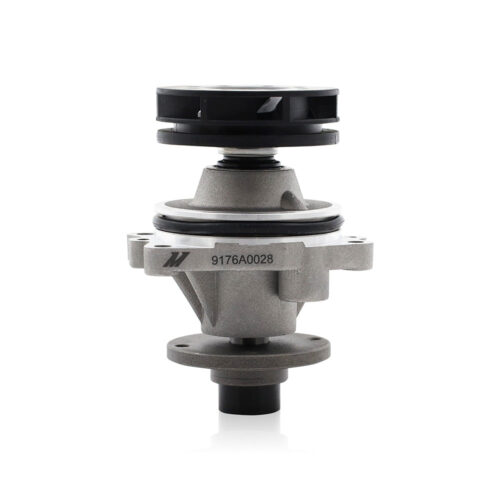


RMT Racing Competition Electric Water Pump – 12V, 90 L/min Flow Rate

ARP Pontiac SS Polished Hex Timing Cover And Water Pump

ARP Pontiac SS 12pt Timing Cover And Water Pump Kit

ARP Ford 289-302 Alum SS Timing Cover And Water Pump Kit

ARP Ford Cast Iron Hex Timing Cover And Water Pump Kit

ARP Ford SS Hex Timing Cover And Water Pump Kit

ARP Ford SS 12pt Timing Cover And Water Pump Kit

ARP Ford Alum 12pt Timing Cover And Water Pump Kit

ARP Ford 289-302 Alum SS Timing Cover And Water Pump Kit
Water Pumps guide
The water pump circulates coolant through the engine, radiator and heater, and its flow decides how quickly heat reaches the radiator. Mechanical and electric pumps are listed, along with timing cover and water pump bolt kits and aluminium coolant tanks.
An engine-driven pump turns with the crankshaft, so its flow follows engine speed: low at idle with the car standing, and high enough at high revs to risk cavitation. Cavitation forms vapour bubbles at the low-pressure inlet, which cut flow and erode the impeller. The pressure held by the radiator cap helps suppress it.
An electric pump sets its flow independently of engine speed. It needs no mechanical drive, can keep running after shutdown to limit heat soak, and lets a controller hold the coolant temperature. Its rated flow is measured against little resistance, so the engine, radiator and hoses of a real circuit bring the actual figure down.
Decide between mechanical and electric drive first.
- Mechanical pumps: direct replacements listed by engine family in the title, for a worn or leaking original.
- Electric pumps: the 12 V pump in the range moves up to 90 L/min at 0.1 bar of head and works from −30 to +105 °C. It uses Ø38 mm hose connections and needs a relay, fuse and cable sized for its current.
- Pressure rating: the electric pump is rated for system pressure up to 2.0 bar, so choose a radiator cap that opens at or below that figure.
- Bolt kits: timing cover and water pump bolt kits, many in stainless steel and some polished, with hex or 12-point heads for a 3/8 in. socket, listed for aluminium or cast-iron covers.
- Coolant tanks: aluminium tanks of 0.75 and 2.2 litres are listed here too.
Renew the pump’s gasket or seal, and with a belt-driven pump the belt and tensioner if they have aged with it. Some timing cover and pump bolts reach into coolant passages and need thread sealant; on the rest, anti-seize helps stop stainless steel galling or seizing in aluminium. Before fitting a mechanical pump, turn it by hand to check for smooth rotation and no shaft play.
Fill and bleed the system before running either type, because a pump that runs dry quickly damages its seal. A weep from the drain hole, play in the shaft or a growling bearing means the pump is due for replacement.

Store Information
TrackTool Factory
Sluispolderweg 7A
1505 HJ Zaandam
The Netherlands
Chamber of Commerce (KVK): 97296902
VAT: NL867990375B01