
Fuel System
AN Hose Adapters (Angled)
- 290 products
- 2 brands
- Ships from EU stock
- AN Hose Adapters (Angled) guide
Top brands in AN Hose Adapters (Angled)


Showing 1–48 of 290 resultsSorted by latest





AN Hose Adapters (Angled) guide
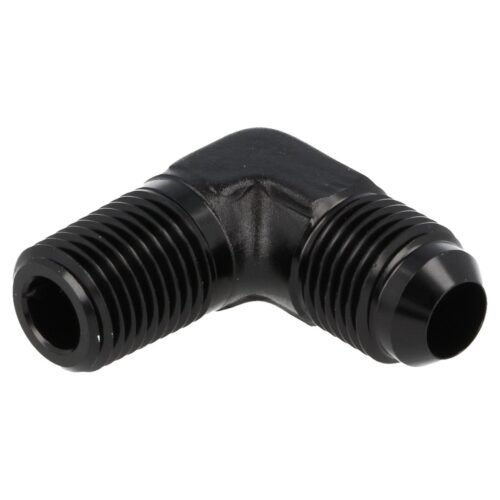
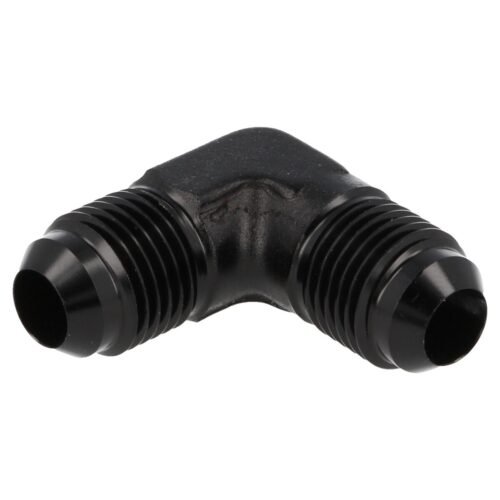
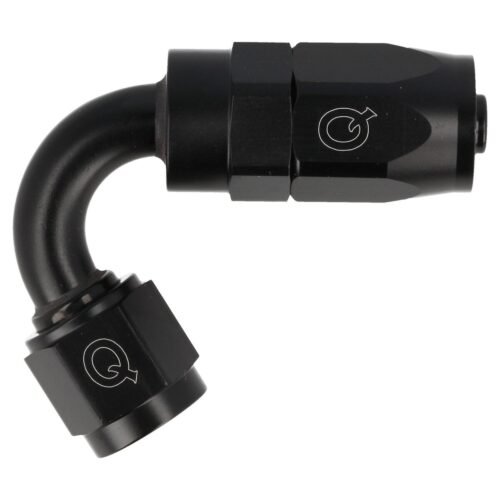
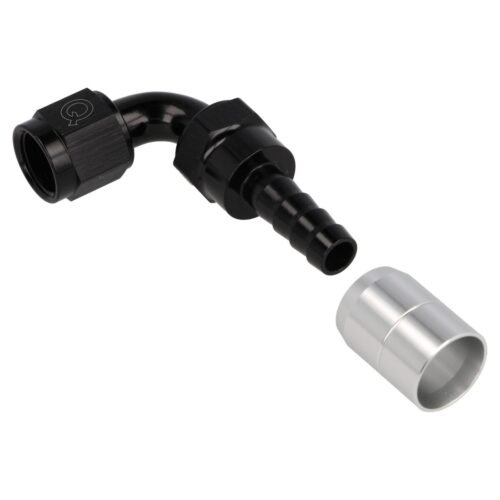
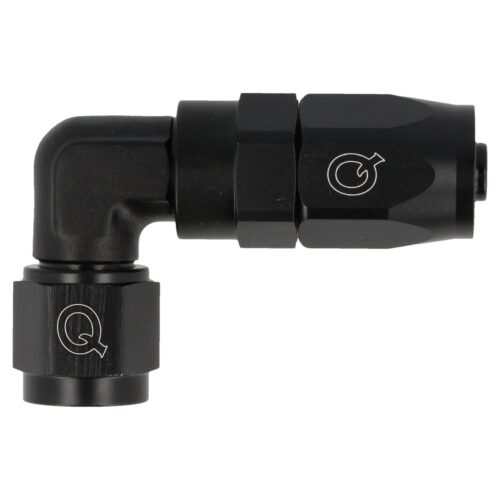
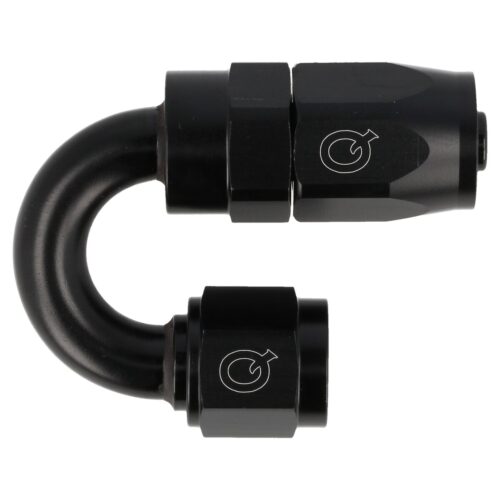
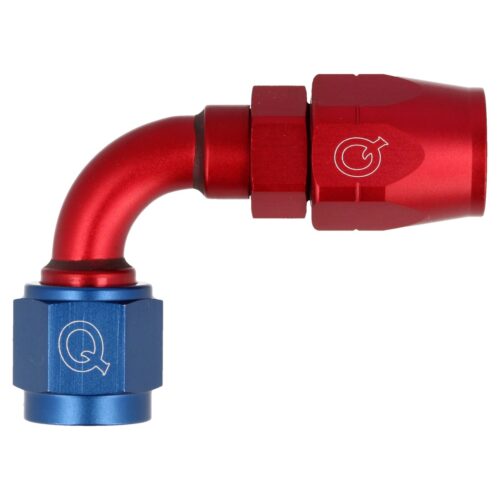
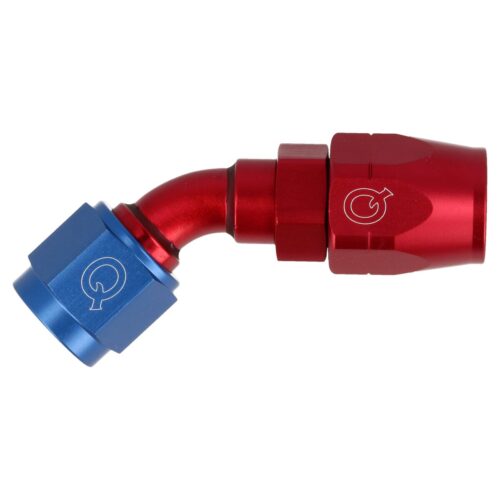
Angled AN hose adapters, usually called hose ends, connect a flexible hose to a male AN fitting and turn the line through a fixed angle at the port. This lets a fuel, oil or breather hose leave a component in the right direction without a tight bend. The category holds ends from 30° to 180°, with matching sleeves, nuts, tube adapters and hose pillars.
A hose end does two jobs. The socket and nipple grip the hose and braid, while the swivel nut draws the end’s 37° seat onto the male flare to seal metal to metal. The thread only clamps, so tape and sealant have no place here, and overtightening crushes the aluminium flare rather than sealing better.
Braided hose has a minimum bend radius, and bent tighter at the socket its liner kinks and its braid fatigues. Each elbow also costs some pressure, more so with sharper turns and higher flow. Forged bodies, named in some titles, are compact but turn the flow at a sharper internal corner than bent-tube ends.
Start from the hose, then the angle:
- Hose family: ends suit one hose type only. Besides plain ends, titles name lightweight, aramid-braided, PTFE, push-on and “shrink” types.
- Construction: PTFE ends clamp the liner with an olive, and push-on ends hold hose on barbs for low-pressure lines. For shrink-type ends, check the listing for how they attach to the hose.
- Angle: 30°, 45°, 90°, 120°, 150° and 180°. The widest angles turn a line back on itself, for example from a filter to a pump beside it.
- Size: AN3 (3/8-24 UNF) to AN20 (1 5/8-12 UNF), matching the hose and the male fitting.
- Material: aluminium, plus stainless steel in some small sizes; finishes are two-tone blue/red, black, silver or blue.
- Tube and barb: female 45° adapters for 7.94 mm tube, and 90° hose pillars from a 3/8 NPT male thread to an 8 or 12 mm hose tail.
Tape the cut point and cut braided hose square with a fine-toothed blade or cut-off wheel. Push the hose fully into the socket, mark it at the edge, then oil the nipple and screw it home. If the mark has moved, the hose has backed out and needs refitting.
Flush each hose, as cutting debris ends up in filters and injectors. Set each angle with the hose hanging relaxed, never twisted, and hold the body with a second spanner while tightening. Check every joint under pressure before the engine runs and again after the first heat cycles.

Store Information
TrackTool Factory
Sluispolderweg 7A
1505 HJ Zaandam
The Netherlands
KvK 97296902
BTW NL867990375B01
