
Top brands in Wheel Studs


Showing 1–48 of 88 resultsSorted by latest
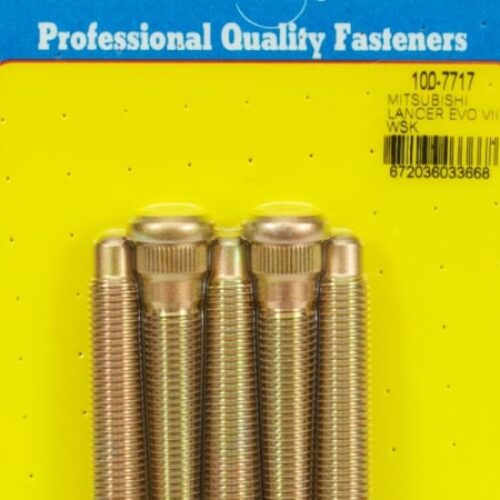
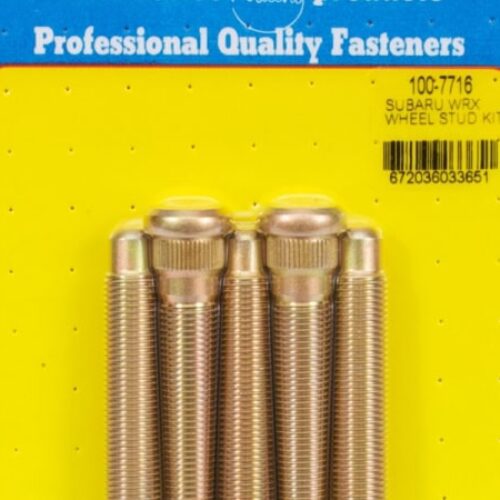


ARP 5/8in -18in NASCAR Wheel Stud Nut Kit (pack Of 10)

ARP 5/8-11 X 4.031 Wheel Stud Kit (pack Of 5)


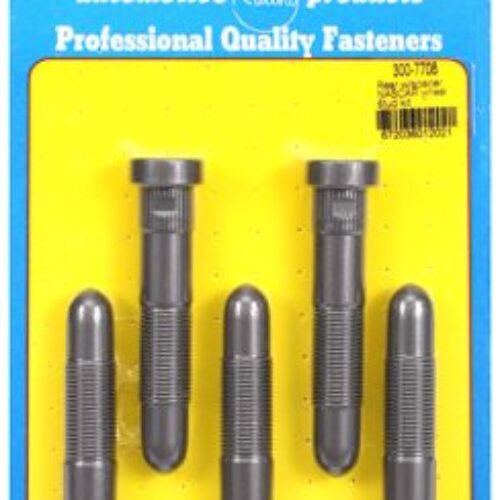
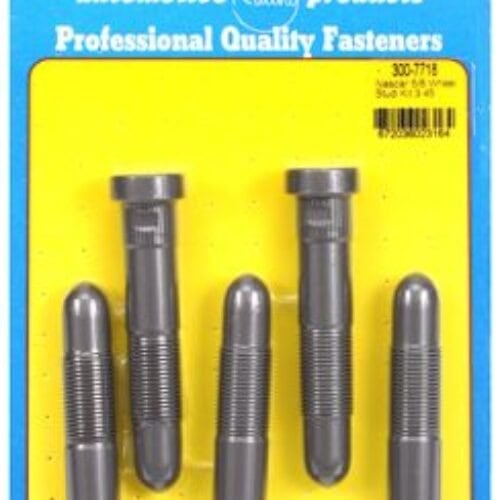
ARP 5/8-18 NASCAR Wheel Stud Kit (pack Of 5)
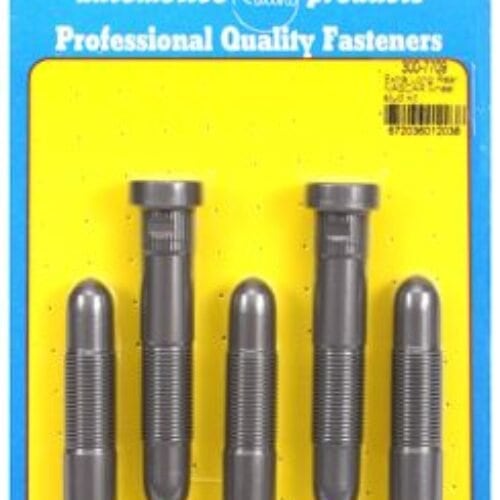

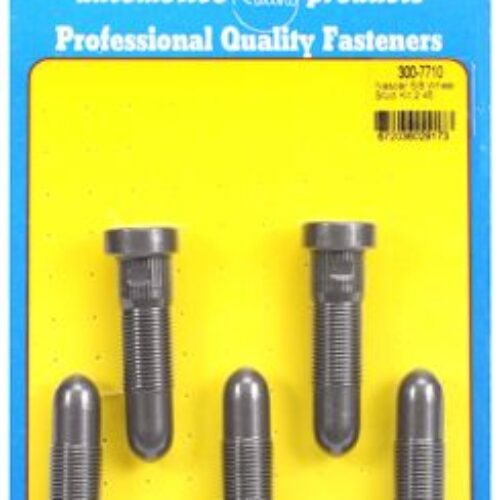
ARP 5/8-18 NASCAR Wheel Stud Kit (pack Of 5)

ARP Full Thread 12pt 1.5 – 20 X 2.700 UHL Thread-In Wheel Stud Kit

ARP Full Thread-In 12pt 1.5 – 20 X 1.950 UHL Wheel Stud Kit
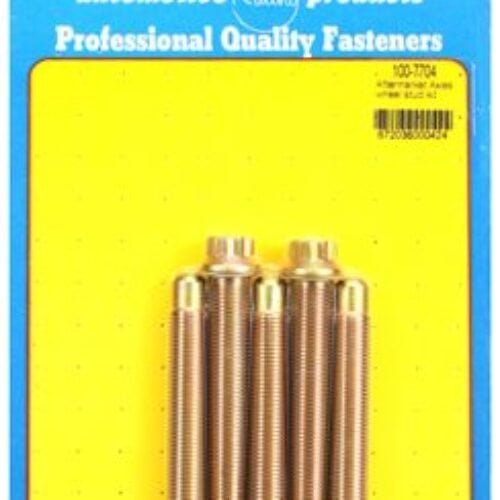
ARP 1/2in X 20 Thread 3in Long Wheel Stud Kit (5 Studs)

ARP 5/8-18 X 3.35 Wheel Stud Kit (pack Of 5)
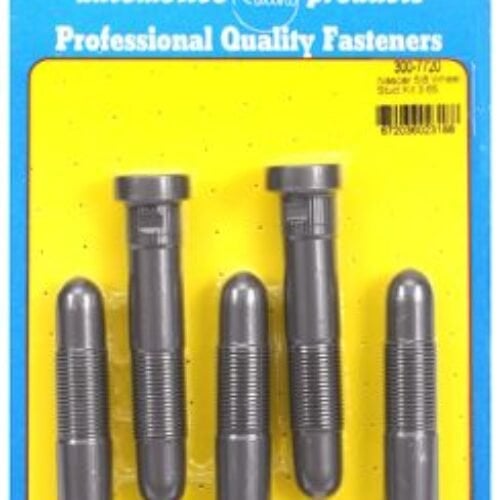
ARP 5/8-18 X 3.65 Wheel Stud Kit (pack Of 5)
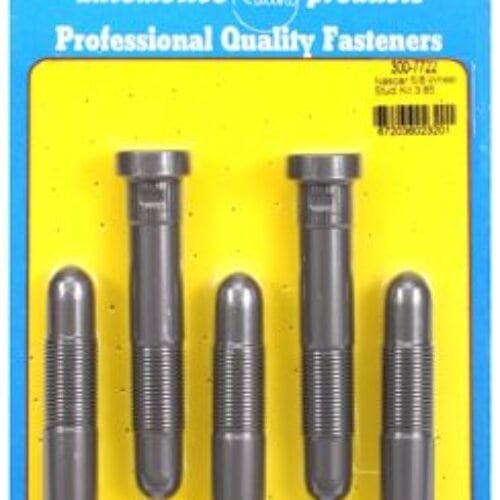
ARP 5/8-18 X 3.85 Wheel Stud Kit (pack Of 5)
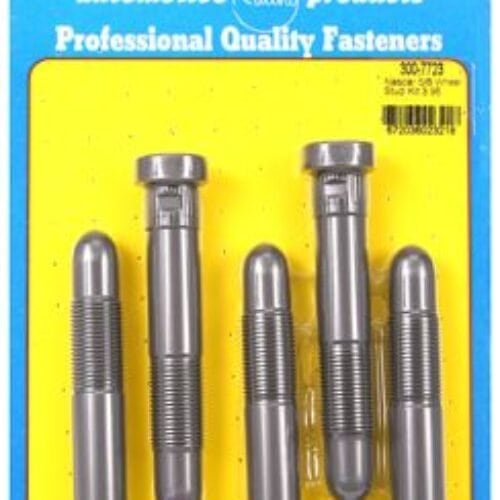
ARP 5/8-18 X 3.95 Wheel Stud Kit (pack Of 5)
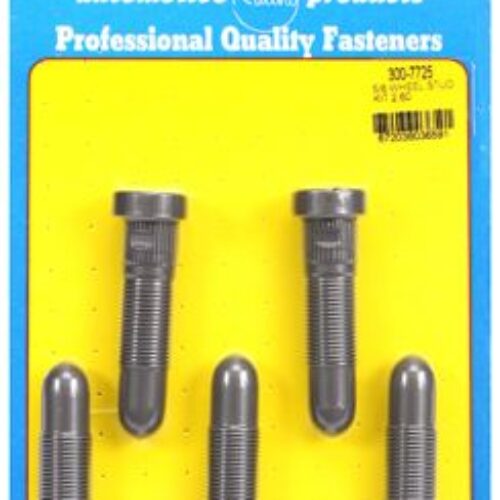
ARP 5/8-18 X 2.60 Wheel Stud Kit (pack Of 5)

ARP 5/8-18 X 3.70 Wheel Stud Kit (pack Of 5)
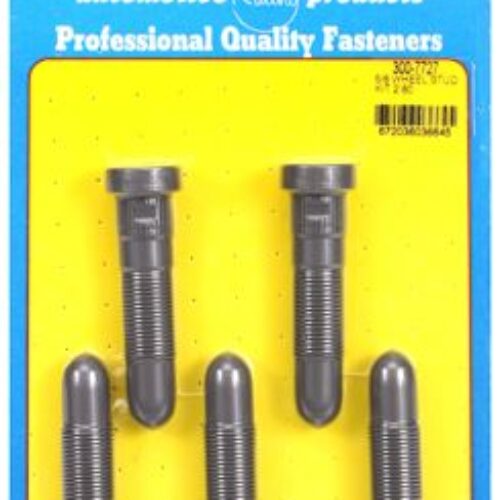
ARP 5/8-18 X 2.80 Wheel Stud Kit (pack Of 5)

ARP Mustang II 1/2in 20 Front Wheel Stud Kit
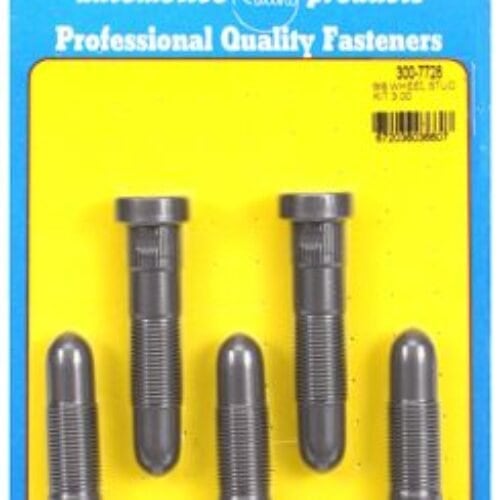
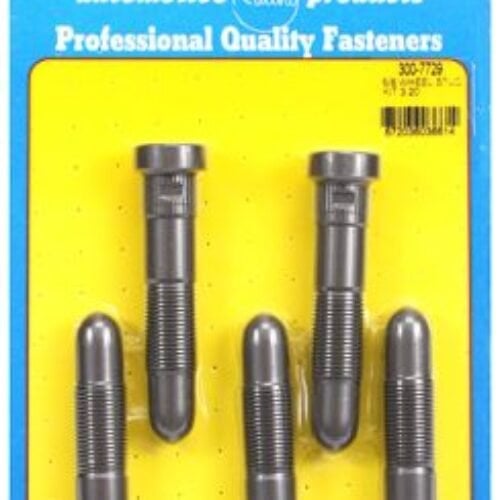
ARP 5/8-18 X 3.00 Wheel Stud Kit (pack Of 5)



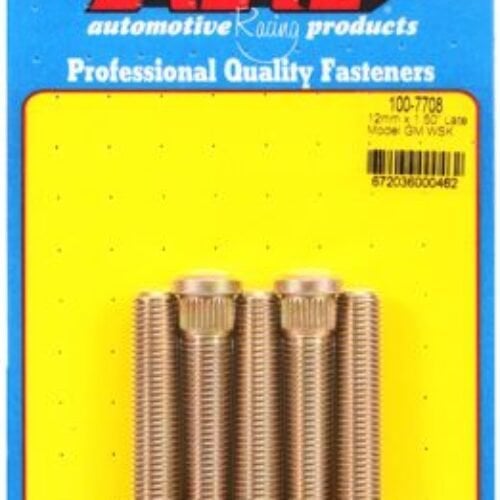
ARP Late Model GM M12x1.50inch Wheel Studs Kit (5 Studs/One Wheel)
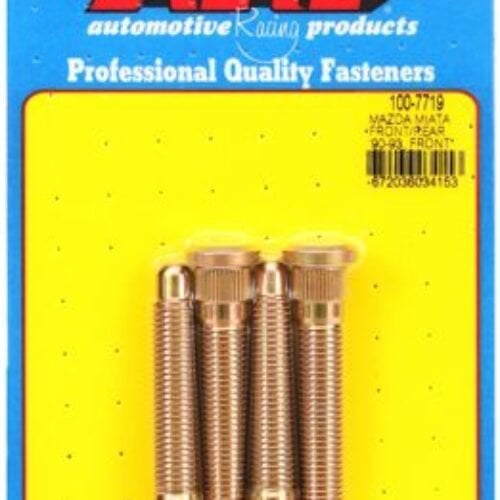

ARP 94-05 Miata Rear Wheel Stud Kit (4 Studs)
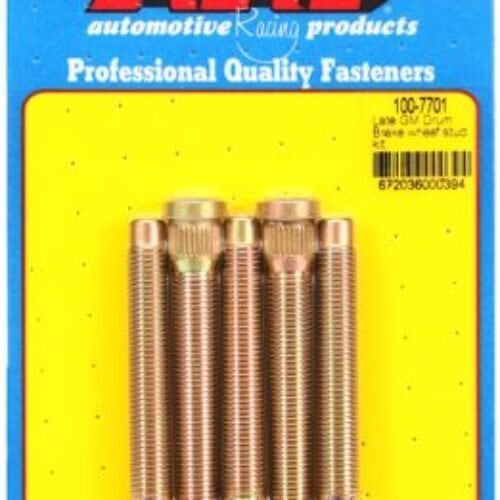
ARP Late Model GM Drum Brake Wheel Stud Kit

ARP Front / Rear 1/2in-20 2.200 UHL Wheel Stud Kit
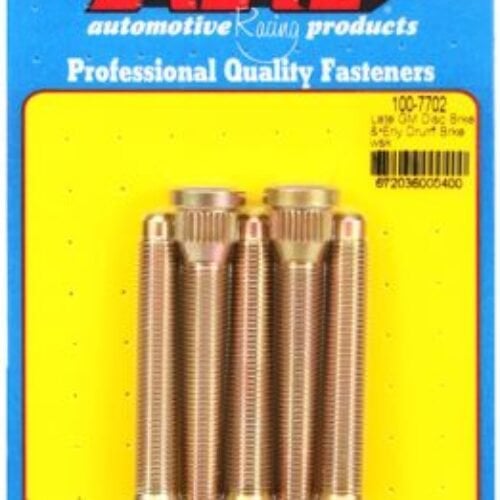
ARP Late Model GM Disc Brake Early Drum Brake Wheel Stud Kit
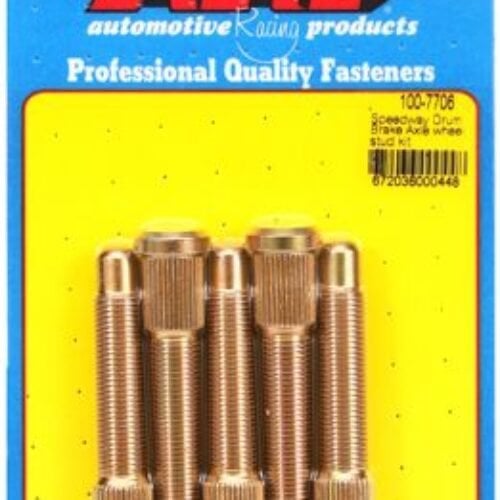
ARP Speedway Pro 1/2in-20 2.97in Length .568 Knurl Disc Brake Wheel Stud Kit
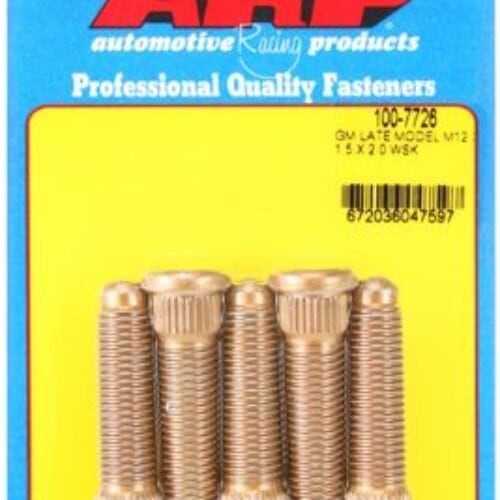
ARP GM Late Model M12 X 1.5 X 2.0 Wheel Stud Kit
Wheel Studs guide
Wheel studs stay fixed in the hub, and the wheel is held on by nuts rather than bolts. This category holds press-in stud kits listed by thread and under-head length, thread-in studs for hubs built for bolts, longer studs for spacers, and matching nuts.
Studs suit cars whose wheels come off often. The wheel hangs on the studs while the nuts go on, which makes it quicker to line up, and the hub’s own threads are no longer used at every change. The nut takes the wear instead and is easily replaced.
A press-in stud has a knurled shank, a band of fine splines that is pressed into the hub flange and stops the stud turning. The knurl must suit the hole: too small and the stud spins, too large and it can crack or distort the flange. A thread-in stud screws into a hub drilled for bolts, so no pressing is needed.
Choose by these points:
- Thread: metric M12x1.25, M12x1.5 and M14x1.5, and imperial 1/2-20, 5/8-11 and 5/8-18. Several of the heavy 5/8-18 kits are made for stock-car racing.
- Under-head length: measured from under the head to the tip, and listed in inches, such as 1.950, 2.700 or 3.200 in. Studs half an inch or an inch over standard length make room for spacers or thicker race wheels.
- Knurl: some kits give the knurl size, such as .568 in, or its length, such as 1.550 in. Compare it with the original stud before pressing.
- Material: some kits use 8740 chrome moly steel, a heat-treated alloy.
- Nuts and heads: 5/8-18 and 5/8-11 nut kits, closed conical nuts in M12x1.5 and M12x1.25, and a 12-point head on some kits.
- Vehicle kits: many kits are listed for one model and axle, front or rear, so start from the title.
Press studs in with a press, or draw them in with a nut and spacer, never by hammering on the threads. Check that each head sits flat against the back of the flange. Nut engagement at least equal to the stud’s diameter is a common minimum, so check it with the wheel in place. Torque the nuts to the stated figure, with the threads dry or lubricated as that figure assumes. Re-check after the first session, and replace any stud that is stretched, bent or damaged.

Store Information
TrackTool Factory
Sluispolderweg 7A
1505 HJ Zaandam
The Netherlands
KvK 97296902
BTW NL867990375B01
