Exhaust
V-Band Connectors & Clamps
- 124 products
- 7 brands
- Ships from EU stock
- V-Band Connectors & Clamps guide
Top brands in V-Band Connectors & Clamps






Showing 1–48 of 124 resultsSorted by latest

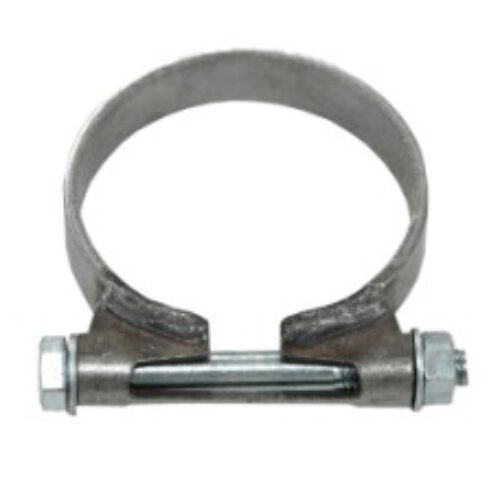


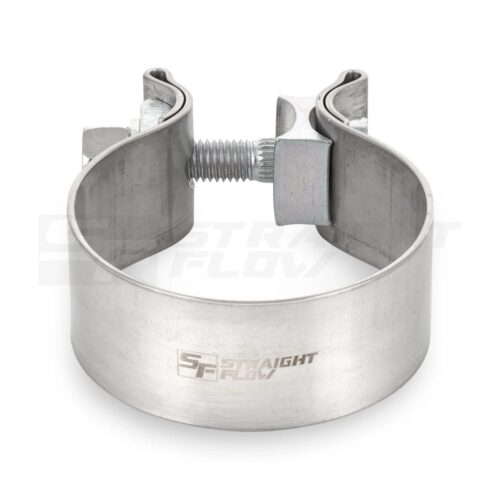
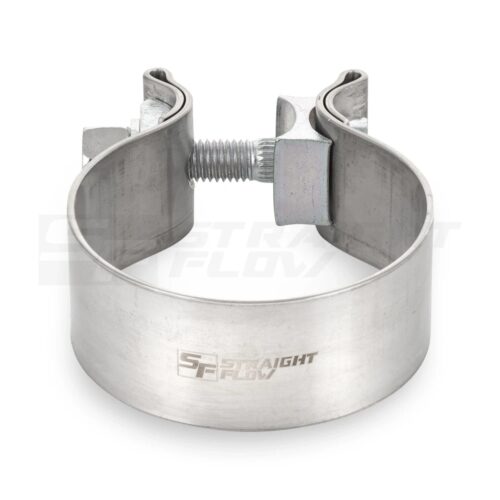


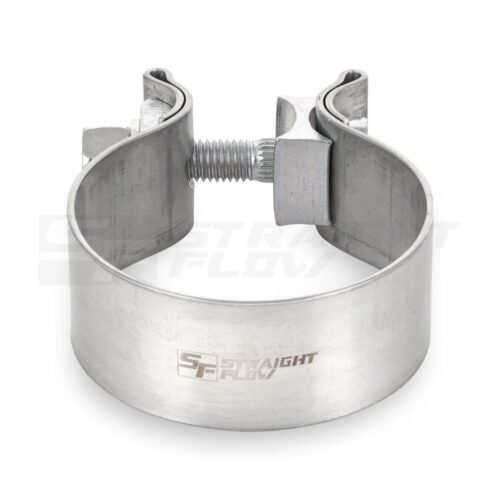


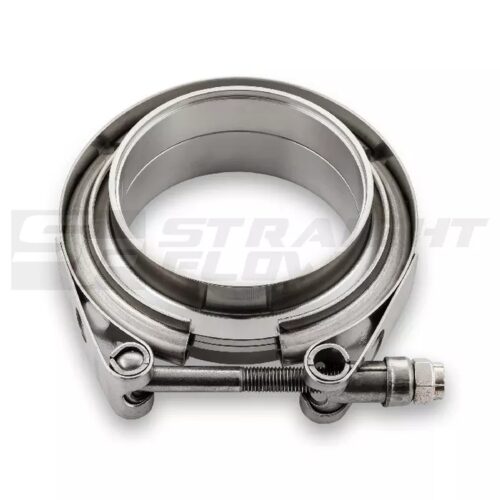

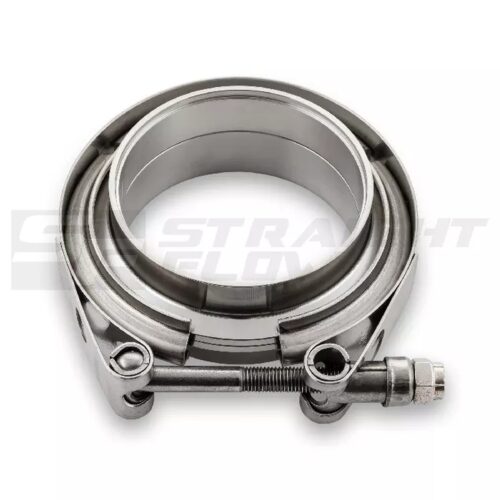


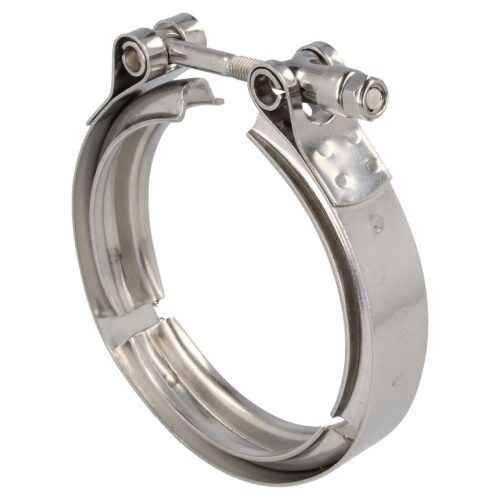


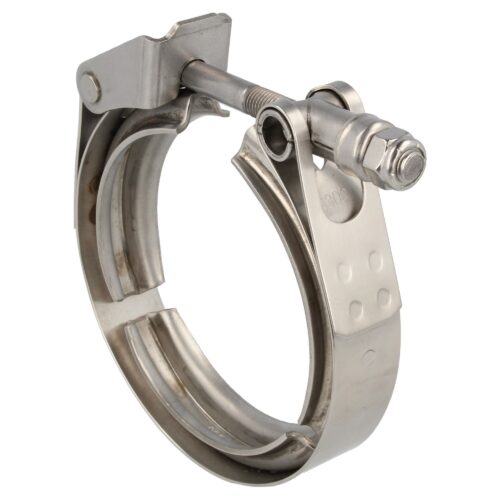

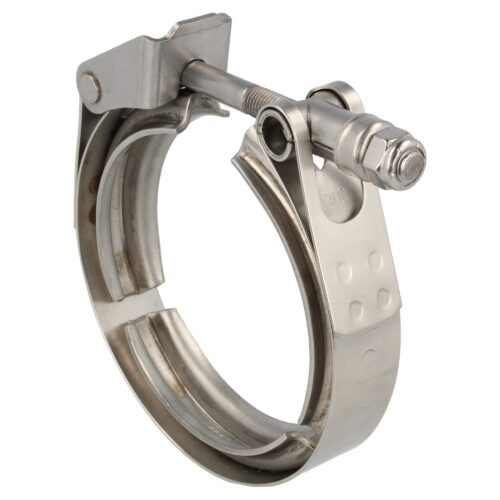


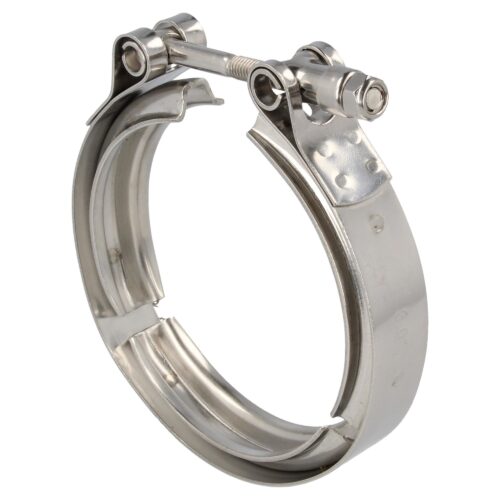
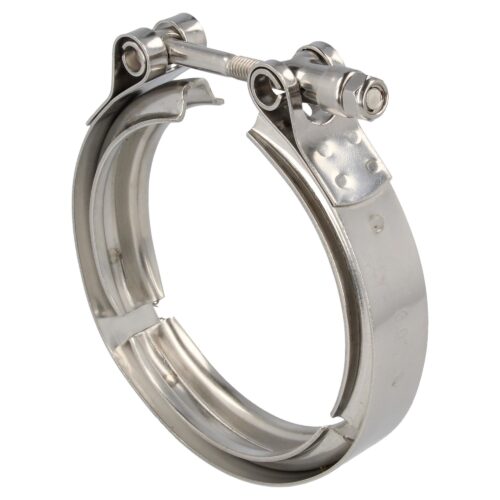

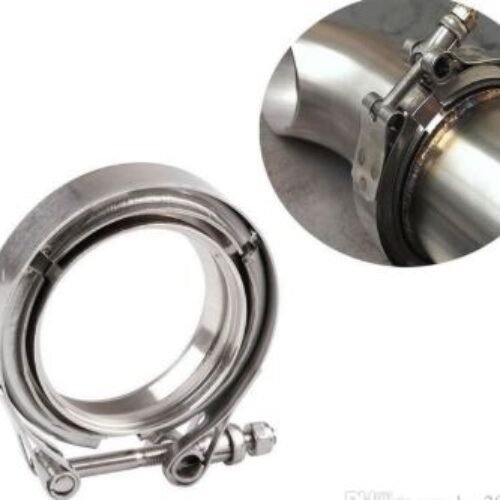
RMT Parts V-Band Exhaust Clamp – Quick Release
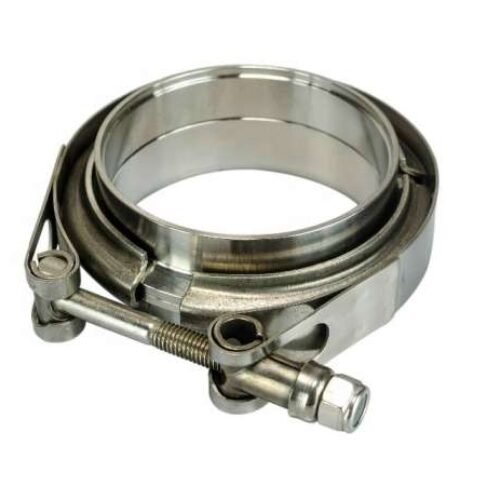
RMT Parts V-Band Exhaust Clamps – 5.0 inch (125 mm)
V-Band Connectors & Clamps guide
A V-band joint connects two pipes with a pair of profiled flanges and a single clamp, so it can be opened and closed quickly, often without a gasket. This section holds V-band clamps, flange sets and turbo flanges, plus other exhaust joints: band clamps, U-clamps, cone-and-cup connectors and two-bolt pipe connectors.
Each flange has a tapered lip, and the clamp’s V-shaped groove wedges the two lips together as it tightens. The wedge turns the band’s tension into an even clamping force all the way round. The joint can also be turned to any angle before tightening, which is one reason it is common on turbine housings, wastegates and downpipes.
Male-female flanges locate one face inside the other, which keeps the bores aligned and helps the seal. Profiles differ between makers, so match each clamp to its flanges.
Choose by size and job:
- Size: listed by the outside diameter of the pipe, from 38 mm (1.5″) to 125 mm (5.0″). Common sizes include 51, 63, 76 and 89 mm.
- Set or parts: complete couplings contain two flanges and a clamp, and clamps and flanges are also listed on their own. Flanges with a listed material are stainless steel, some in the T304 grade.
- Clamp type: standard clamps tighten with a nut, while quick-release clamps suit joints you open often.
- Turbo flanges: weld flanges for the turbine inlet and outlet are listed by frame size. There are also compressor outlet kits, turbine housing and compressor cover clamps, and outlet V-bands for external wastegates.
- Other joints: band clamps seal a slip joint without crushing the pipe, so they can be reused. U-clamps with M8 threads are simple but deform the pipe. Cone-and-cup connectors tolerate slight misalignment.
Tack each flange onto its pipe and assemble the joint before final welding, so the faces stay square. Weld in short runs to limit distortion, and keep spatter off the sealing faces. The clamp should close the joint, not pull misaligned pipes together, so support the pipework to keep bending loads off it.
Tighten the nut in steps while tapping round the band to seat it, then re-check after the first heat cycles. High-temperature anti-seize on the thread makes the clamp easier to undo later. Replace a clamp whose band has stretched or whose thread has galled.

Store Information
TrackTool Factory
Sluispolderweg 7A
1505 HJ Zaandam
The Netherlands
Chamber of Commerce (KVK): 97296902
VAT: NL867990375B01