Top brands in AN Bulkhead & Fittings

Showing 1–48 of 51 resultsSorted by latest







AN Bulkhead & Fittings guide
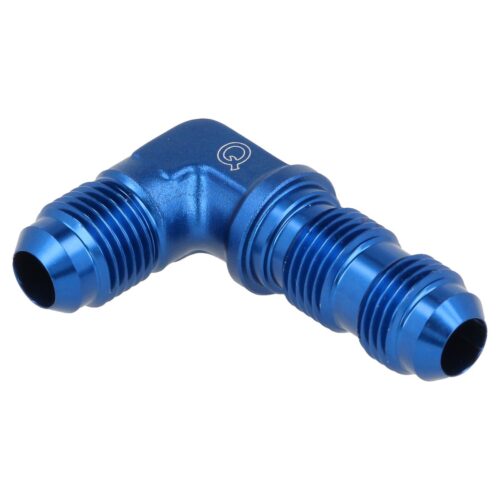
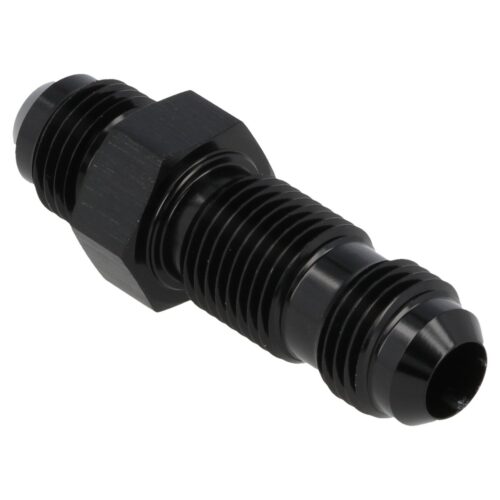
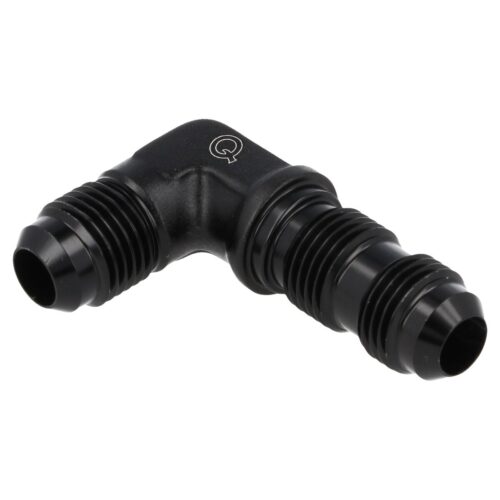
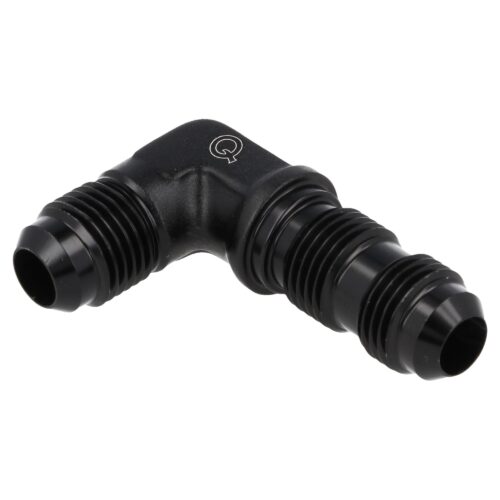
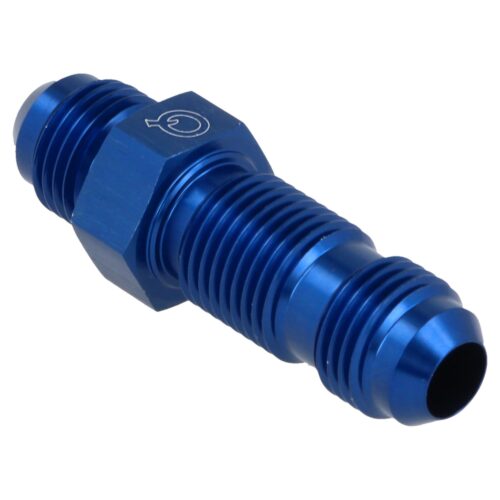
An AN bulkhead fitting takes a line through a panel such as a firewall, boot floor, fuel cell plate or seat-back bulkhead. Its long threaded body passes through a drilled hole and a locknut clamps it to the panel, leaving a male AN end on each side. This category also holds aluminium tube sleeves for flared hard line, 90° female NPT couplings and push-on rubber hose.
A bulkhead gives the line a fixed, sealed exit, so no hose rubs on the edge of a hole. It also splits the line at the panel, which lets an engine, gearbox or tank come out without removing whole lines. Many competition rules restrict joints in fuel lines inside the cockpit, and placing them at bulkhead fittings in the panels is a common way to meet those rules.
Select by size, direction and connection:
- Straight or angled: aluminium bulkheads come straight or at 90° from AN3 to AN16, in black or blue. Stainless steel AN3 versions come straight, at 45° or at 90°, for small high-pressure lines.
- Size: AN3 (3/8-24 UNF) to AN16 (1 5/16-12 UNF), matching the hose or tube on both sides of the panel.
- Tube sleeves: the sleeve sits behind the flare on a hard line and supports it inside the tube nut. Sleeves are sized to the tube, from a 4.94 mm bore for AN3 to 25.55 mm for AN16.
- NPT couplings: 90° aluminium couplings with female threads from 1/8 to 3/4 NPT, for pipe-threaded ports and adapters.
- Push-on hose: rubber hose in AN4 (6.4 mm), AN6 (9.5 mm), AN8 (12.7 mm) and AN12 (19.0 mm), which grips barbed push-on ends without clamps. A 90° AN12 push-on end is also listed.
Drill the hole to suit the body thread, deburr it, and stiffen thin sheet with a doubler plate so the panel cannot flex around the fitting. Where the panel separates the cabin from fuel or the engine bay, fit a sealing washer under the shoulder so the panel still stops fire and fumes. Hold the bulkhead body with a spanner whenever a hose end is tightened, or the whole fitting turns in the panel.
Push-on hose relies on its barbs alone, so keep it to breathers, vents, returns and low-pressure feeds within its rating, and run injection feeds in braided hose with threaded ends. Pressure test the finished circuit and check both sides of every panel, where a leak can go unnoticed.

Store Information
TrackTool Factory
Sluispolderweg 7A
1505 HJ Zaandam
The Netherlands
Chamber of Commerce (KVK): 97296902
VAT: NL867990375B01