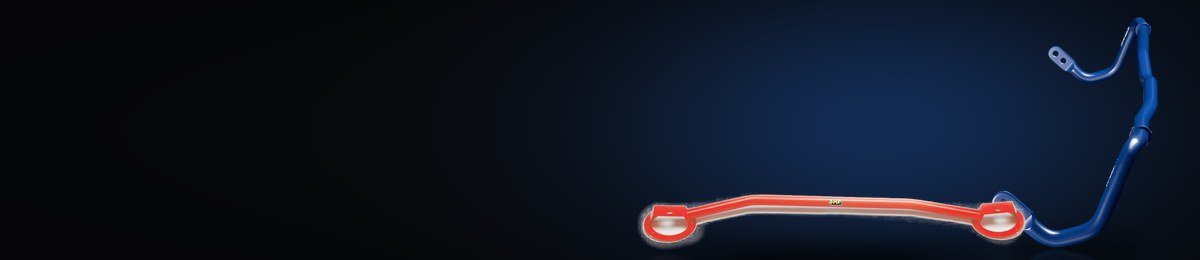
Top brands in Strut Bars


Showing 1–48 of 50 resultsSorted by latest


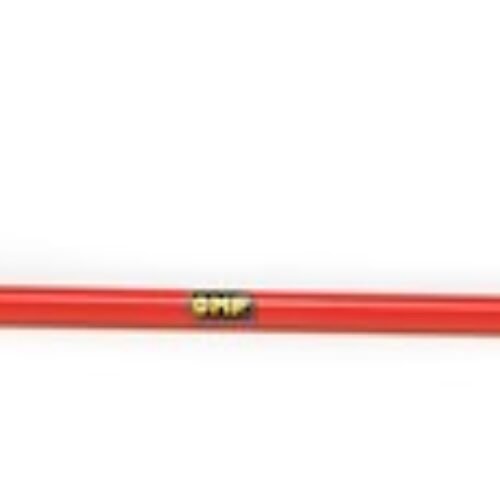
OMP Strut brace for Seat Ibiza 2nd series

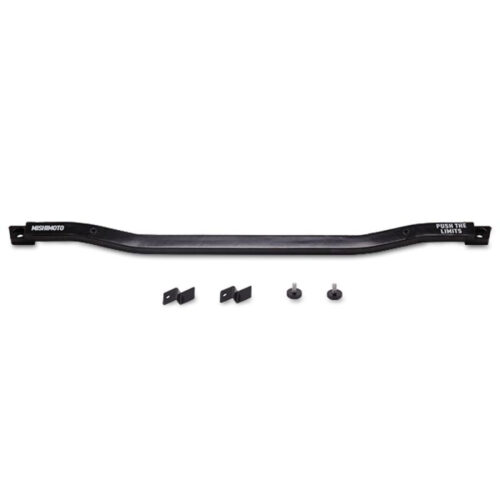
Ford Fiesta 14+ ST Trunk Brace – MMSTB-FIST-14TB


Strut Bars guide
A strut bar, or strut brace, ties the tops of the two suspension towers together, so the cornering load at one tower is shared with the other. The category also covers rear upper and mid lower braces, boot and pillar braces, and a universal harness bar.
On a strut-type suspension, the top mount feeds much of the cornering and braking load straight into the tower. Under that load the towers move a little relative to each other and to the bulkhead, and the loaded wheel loses some of its negative camber. A bar between the towers turns two separate loads into one shared load, which steadies the camber and makes the steering response more consistent.
The gain is largest where the shell is the weak link: older shell designs, wide engine bays, and cars on stiff springs and high-grip tyres. Two-point bars span the towers, while three-point designs add a leg to a third mounting, forming a triangle that also resists fore-and-aft movement.
When comparing bars, look at:
- Front or rear: front bars act on steering precision, while rear upper and boot braces steady the rear suspension mounts. Pillar braces stiffen the large tailgate opening of a hatchback.
- Space: check what shares the engine bay with the bar, such as the intake, battery and brake master cylinder, and make sure the bonnet still closes.
- Material: the product data names aluminium for one brace and stainless steel for the harness bar. For a given tube size, steel is stiffer and heavier, and the end brackets matter as much as the tube itself.
- Harness bar: the universal harness bar is a shoulder-strap anchor rather than a brace, and it gives no rollover protection. Mount it to strong points, at a height that gives the strap angle the harness maker specifies.
Strut bars usually share the top-mount studs. Fit them with the car on its wheels, so the bar does not lock the towers in an unloaded position, and torque the top-mount nuts to the maker’s figure. Recheck them after the first drive.
Camber plates and some adjustable top mounts move or change the studs, so confirm that the bar’s brackets still fit. A strut bar ties only the top of the suspension; lower braces complete the load path at the bottom, and the two complement each other.

Store Information
TrackTool Factory
Sluispolderweg 7A
1505 HJ Zaandam
The Netherlands
Chamber of Commerce (KVK): 97296902
VAT: NL867990375B01