Top brands in Dashes & Displays


Showing all 22 resultsSorted by latest



RMT Racing Steering Wheel Push Button Panel – 4 Button

RMT Racing Steering Wheel Push Button Panel – 8 Button

RMT Parts Carbon Steering Wheel Push Button Panel – 6 Button

RMT Parts Carbon Steering Wheel Push Button Panel

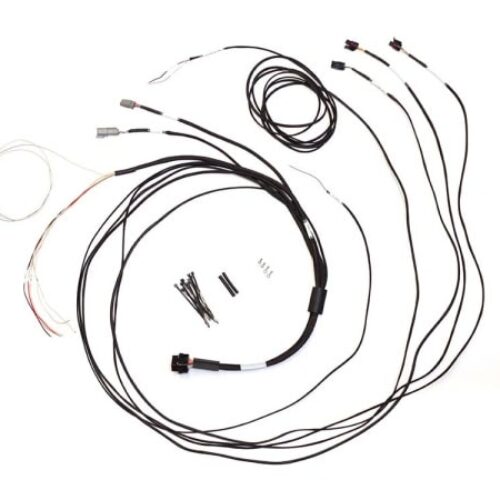
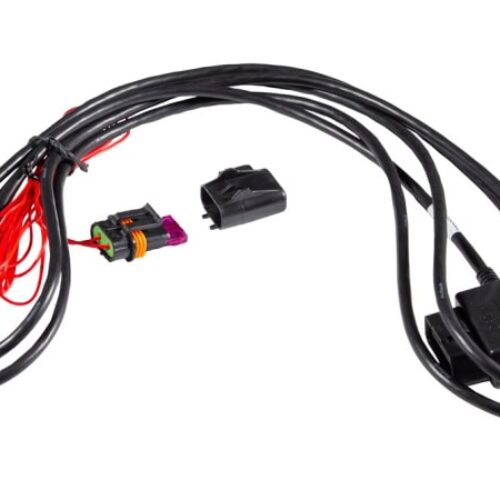
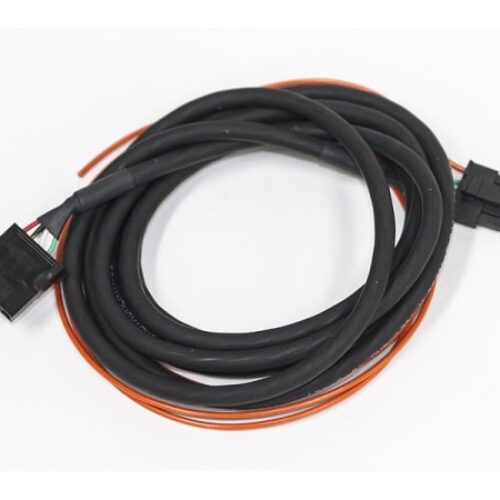
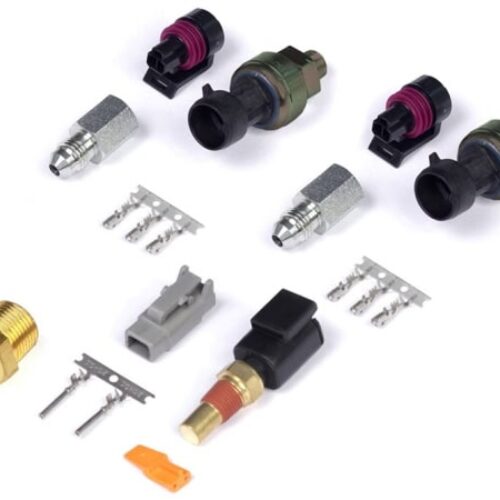
Haltech Semi Terminated Harness for IC-7 Display Dash
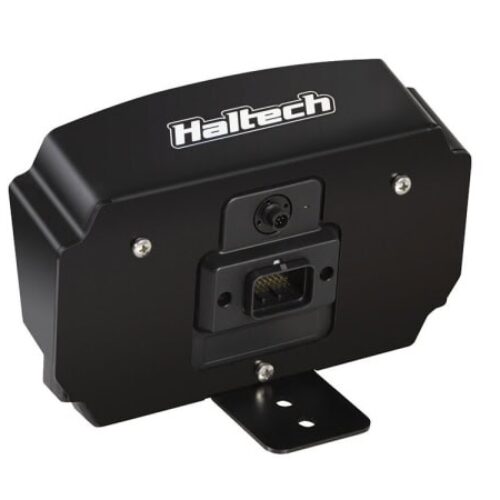
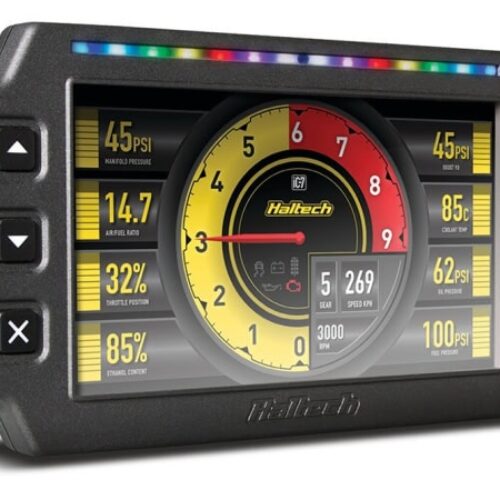
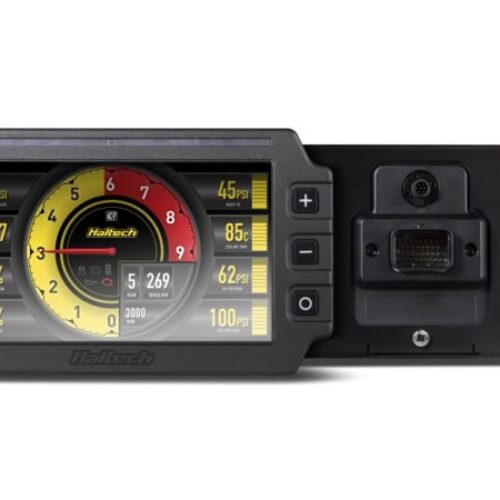
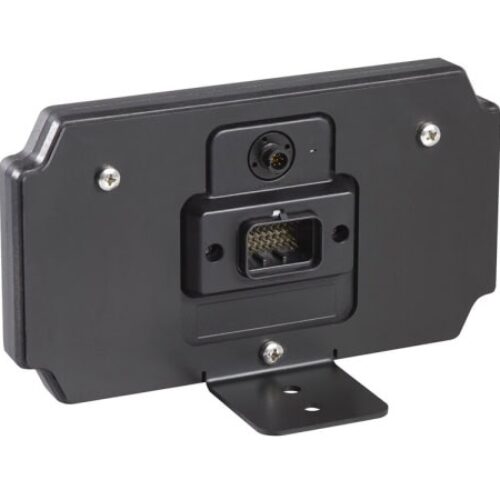
Haltech IC-7 Mounting Bracket with Integrated Visor
Dashes & Displays guide
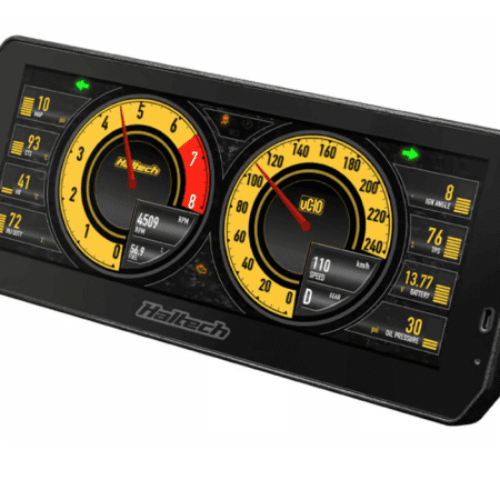
A digital dash replaces separate gauges with one programmable screen that takes its data from the ECU over CAN. This section holds 7-inch and 10-inch dashes, a 52 mm CAN gauge, steering wheel button panels, and the mounts, harnesses and cables that go with them.
Because the dash reads the network, any channel the ECU sends over CAN can appear on screen without extra senders: pressures, temperatures, lambda, gear or boost. Pages can be laid out for warm-up, qualifying and racing, and an alarm can take over the screen when a value leaves its safe band.
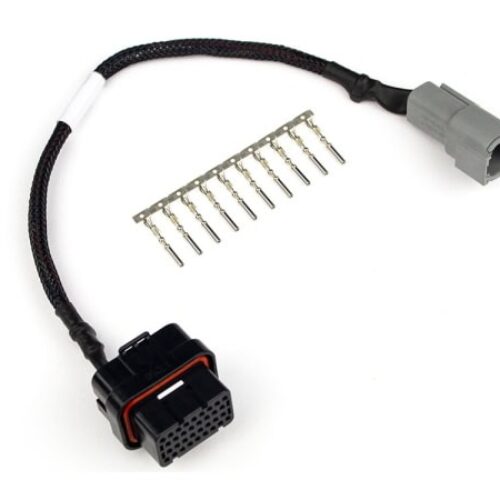
A dash can also work without a compatible ECU. The 7-inch unit has a stand-alone install kit, a semi-terminated harness with a sensor pack, and a 1400 mm OBDII-to-CAN cable for reading data from a factory engine computer.
Choose the screen, then the parts to mount and connect it:
- Screen: a 7-inch colour dash or a 10-inch digital dash. The larger screen fits more channels on one page but needs more panel space and a clear view past the wheel rim.
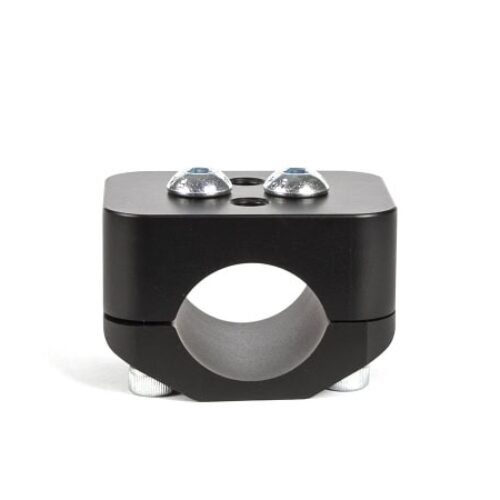
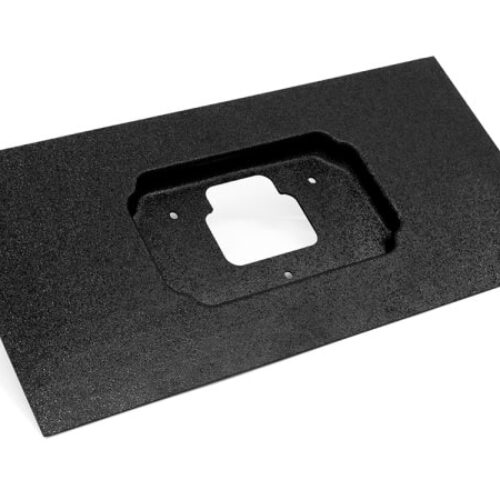
- Mounting: moulded panel mounts for both screens, and for the 7-inch unit a standard bracket, a bracket with an integrated visor against glare and a 1.25 in tube mount.
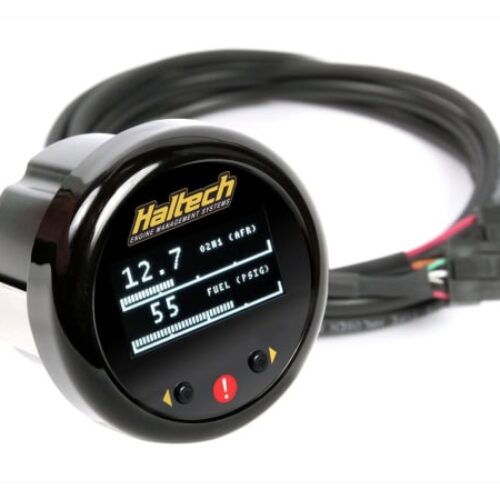
- CAN gauge: a configurable 52 mm OLED gauge for a standard gauge hole, with daisy-chain and extension cables for running several.
- Button panels: steering wheel panels with 4, 6 or 8 buttons, in black or carbon. The carbon panel with knobs adds two eight-position rotary controls and uses the six-hole 70 mm bolt pattern.
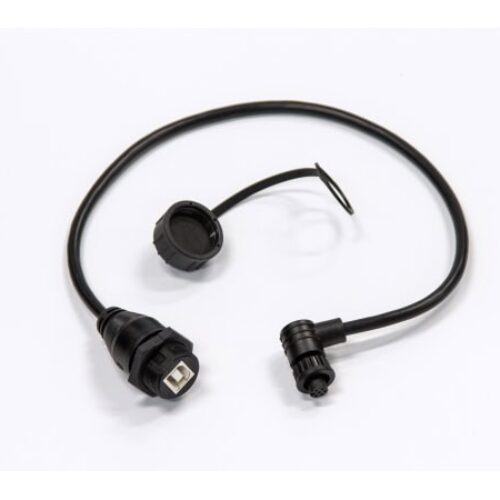
- Extras: a reversing camera kit, an auxiliary connector kit and USB cables for setting up.
Mount the dash where a glance reaches it, below the line of sight over the bonnet, with room behind for cables and air. Feed it from a fused ignition supply and ground it at the same point as the ECU, so both share one reference.
The panel buttons are rated for light loads, so wire them to ECU or keypad inputs, never straight to a pump or fan. Run the panel cable through a coiled lead or a quick-release with contacts, leaving slack for full lock. Set alarm thresholds from the engine builder’s figures, and test each one before the car runs.

Store Information
TrackTool Factory
Sluispolderweg 7A
1505 HJ Zaandam
The Netherlands
Chamber of Commerce (KVK): 97296902
VAT: NL867990375B01