
Top brands in Exhaust Flanges





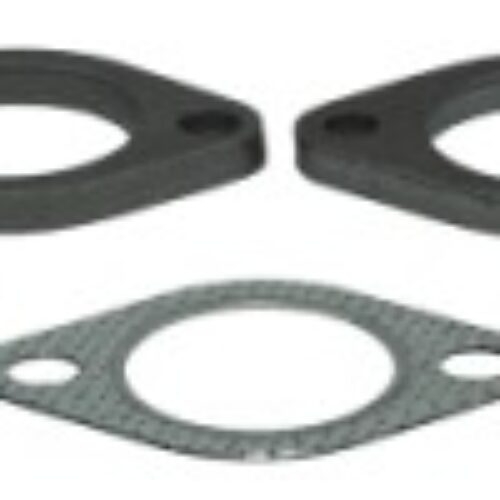
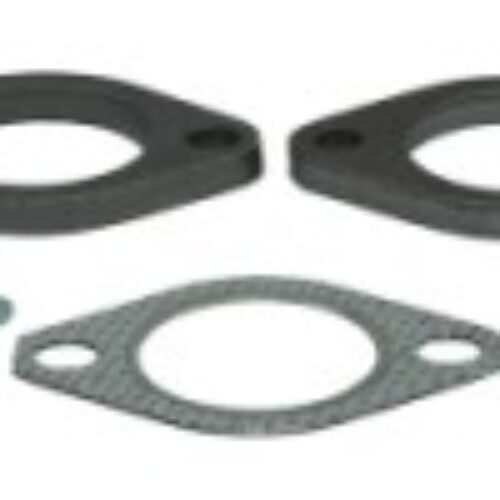
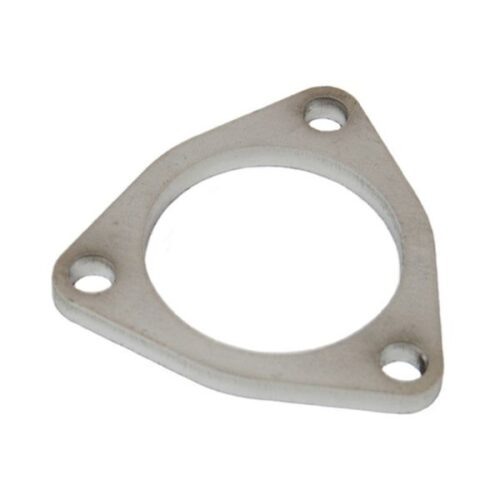


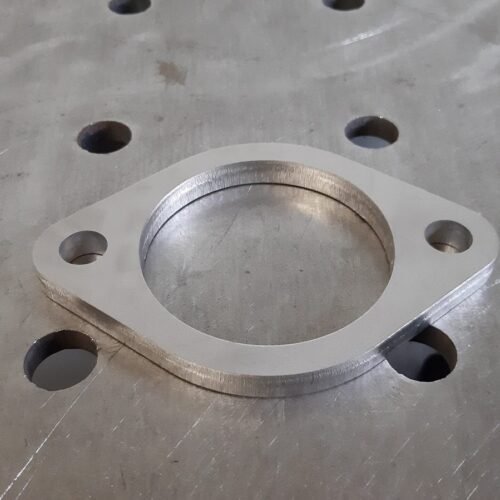
RMT Racing Stainless Steel Exhaust Flange – 3.5 inch / 89mm, 2 Bolt




Exhaust Flanges guide
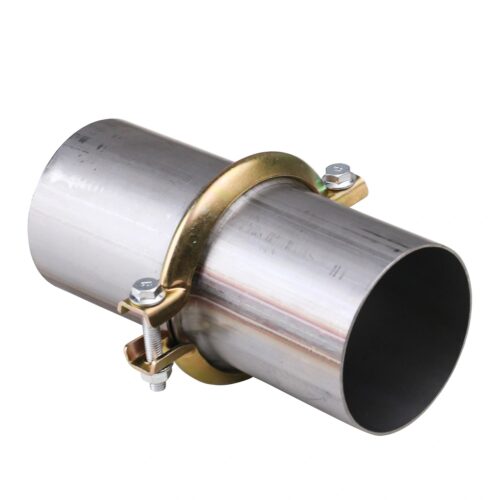
Exhaust flanges make the bolted joints in a system: manifold to downpipe, turbo to pipe, or one section to the next. This category holds weld-on flanges with and without a gasket or sleeve, flange spacers, donut and conical flanges, flange plates for two-piece headers, cone-and-cup connectors, and flanges made for particular engines, in stainless and mild steel.
A flanged joint seals only as well as its clamping load and the flatness of its faces. Heat cycling works against both: the flange grows and shrinks, the fasteners relax, and a thin flange can bow between its bolts. More bolts spread the load more evenly around the joint. Donut, conical and cone-and-cup joints seat a curved face in a matching recess, so the pipes can meet at a slight angle and move with the engine.
Match these details to the joint:
- Flange type: the Flange type filter sorts the flanges by kind, from plain flanges and kits to spacers, curved-seat flanges, header plates and the engine-specific flanges.
- Bolt pattern: use the Bolt Holes filter to match the flange you are joining, and check the hole spacing in the listing.
- Pipe size: universal flanges are listed by the outside diameter of the pipe they take; use the filters on this page to find yours.
- Engine-specific flanges: listed by engine code, some as separate left and right flanges, and one for a diesel particulate filter. Check the code on the engine itself rather than the car model.
- Spacers: a flange spacer adds length at a bolted joint.
- Material: stainless or mild steel. Weld like to like, or use a filler suited to both.
Fit a new gasket every time a joint is opened, and clean both faces back to bare metal. Check a welded flange with a straight edge, because welding heat can pull the face out of flat; a skim or a file restores it. Put high-temperature anti-seize on the studs and tighten the nuts evenly in steps, so the flange pulls down square, then re-check them after the first heat cycles. A ticking at cold start that fades as the engine warms up is the classic sign of a leaking flange.
Gaskets for these joints are listed under Exhaust Gaskets, reducers and sleeves under Reducers & Sleeves, and turbo and wastegate flanges under Turbo › Turbo Flanges & Clamps.
Recently Viewed Products

KW Coilover V3 Mazda 35275008

Store Information
TrackTool Factory
Sluispolderweg 7A
1505 HJ Zaandam
The Netherlands
Chamber of Commerce (KVK): 97296902
VAT: NL867990375B01