
Top brands in Control Arms

Popular cars in Control Arms
- BMW 3 Series E36Control Arms for the BMW 3 Series E36: 1 product
- Honda Civic MAControl Arms for the Honda Civic MA: 1 product
- BMW Z3 E36Control Arms for the BMW Z3 E36: 1 product
- Ford Focus Mk2Control Arms for the Ford Focus Mk2: 1 product
- Honda Civic MBControl Arms for the Honda Civic MB: 1 product
- Nissan Skyline R34Control Arms for the Nissan Skyline R34: 1 product
- Nissan Skyline R33Control Arms for the Nissan Skyline R33: 1 product
- Mazda 6 GHControl Arms for the Mazda 6 GH: 1 product
Showing all 24 resultsSorted by latest
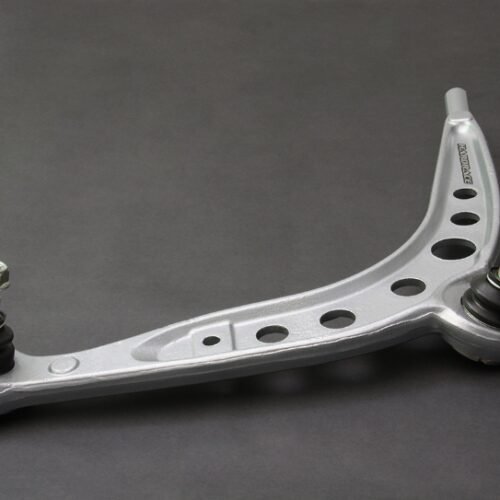

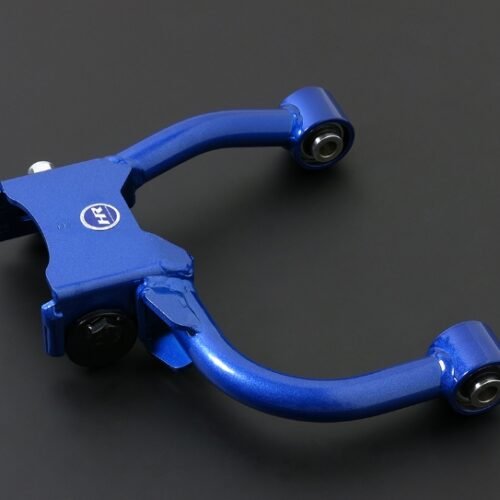
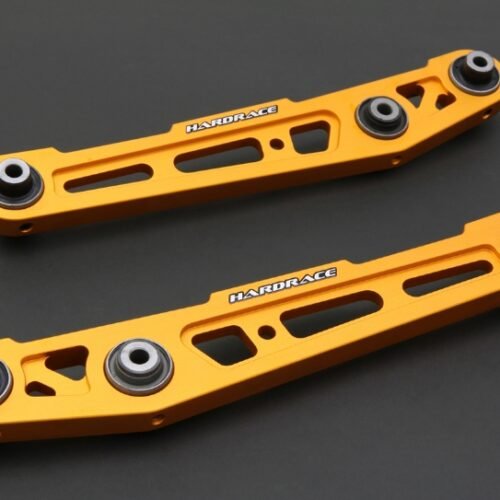


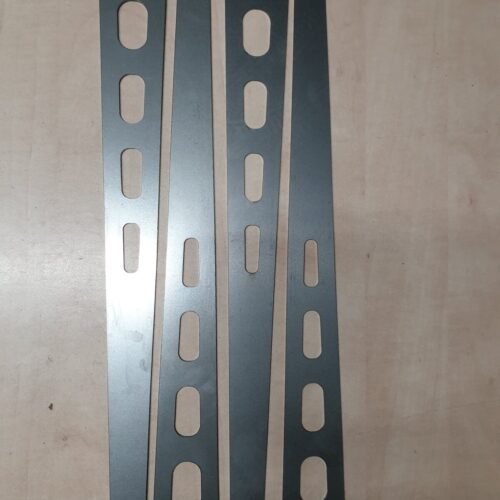
RMT Racing BMW E46 Rear Lower Control Arm Reinforcement Set
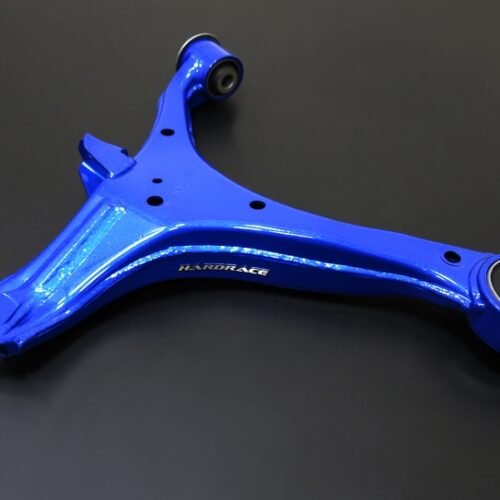
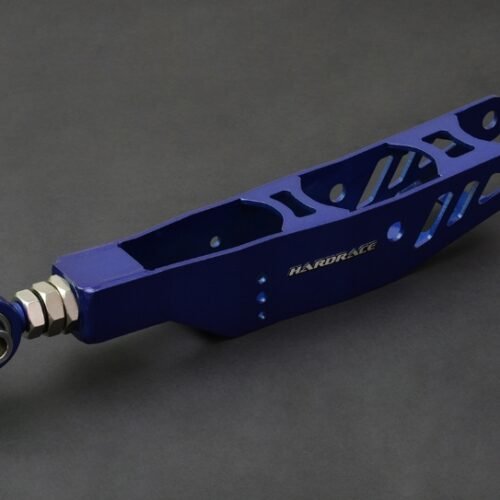
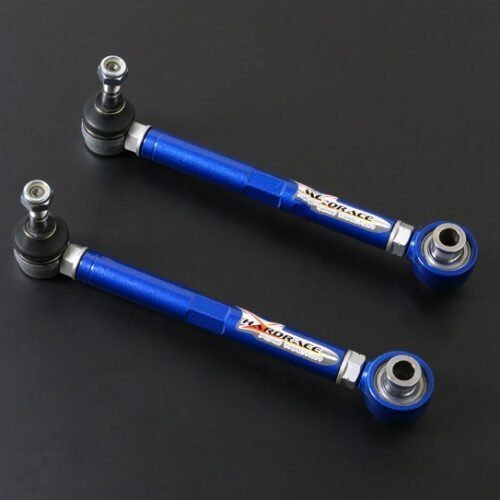


Control Arms guide
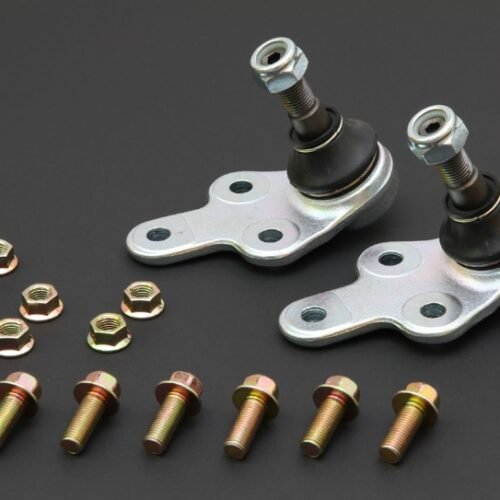
Control arms locate each wheel hub to the car and decide how it moves as the suspension works. This category holds camber kits, toe arms and toe kits, lateral arms, upper and lower control arms, a lower ball joint and a weld-on reinforcement set.
The length and pickup points of each arm set camber, castor and toe, and how they change through the suspension travel. Lowering a car changes the arm angles, and camber or toe can move outside the range the factory adjusters can correct. Adjustable arms restore that range, so the alignment can be set for the car as it now sits.
Arms also carry braking, traction and cornering forces. Rubber bushes let them deflect under those loads, so toe and camber shift slightly as the car brakes or turns in. Arms with firmer bushes or spherical joints hold the geometry more steadily, at the cost of more noise and vibration in the cabin.
Start from the alignment readings, then choose by:
- What needs correcting: front and rear camber kits for camber, and rear toe arms or toe kits for rear toe.
- Position: titles name front or rear and upper or lower, and some give the arm’s place on the axle, such as the front side of a rear lateral arm.
- Replacement or adjustment: complete control arms and the lower ball joint replace worn or weak parts, while camber and toe kits add adjustment.
- Reinforcement: the steel reinforcement set is welded onto the original lower arms, on cars whose arms are known to crack under hard use.
Before fitting an adjustable arm, set it to the length of the part it replaces, so the car can be driven to the alignment check. Tighten rubber-bushed pivot bolts only with the car at ride height, or the bushes stay twisted and wear early. Then have a full alignment done and lock every adjuster with its jam nut.
Ball joints need clean, dry tapers and a new self-locking nut or split pin. Reinforcement plates call for a competent welder and rust protection over the finished welds. Recheck adjusters and pivot bolts after the first drive, and treat any new knock as a sign of a loose or worn joint.

Store Information
TrackTool Factory
Sluispolderweg 7A
1505 HJ Zaandam
The Netherlands
KvK 97296902
BTW NL867990375B01
