Top brands in Brake Master Cylinders


Showing all 4 resultsSorted by latest


Brake Master Cylinders guide
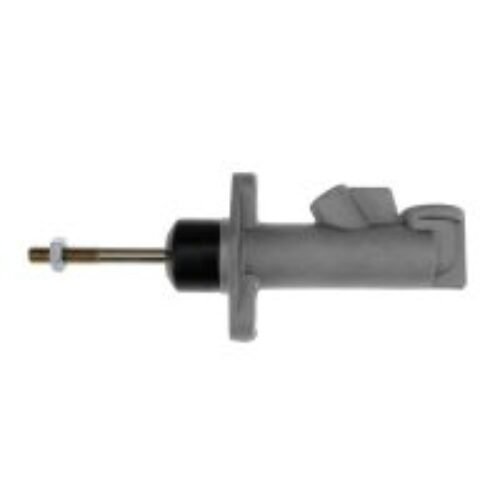
A brake master cylinder converts the push on the pedal into hydraulic pressure. Steel cylinders come in 0.625, 0.70 and 0.75 inch bores, alongside a non-integral cylinder fed from a remote reservoir, for pedal boxes and other race installations.
Pressure equals force divided by piston area, and area grows with the square of the bore. For the same pedal force, a 0.625 in bore therefore makes about 44% more pressure than a 0.75 in bore. It also has to travel further to move the same volume of fluid, so a smaller bore gives a lighter pedal with more travel. With one cylinder per axle in a pedal box, the bores chosen front and rear set the basic balance, and the balance bar trims it.
Choosing comes down to three points:
- Bore: the 0.625 in bore gives more pressure and a lighter pedal. The 0.75 in bore gives a shorter, firmer pedal that needs more effort, with 0.70 in between.
- Reservoir: the non-integral cylinder has no reservoir on its body and takes a hose from a remote one, useful where space above a pedal box is tight.
- Use: the same non-integral design also serves hydraulic clutches and hydraulic handbrakes.
Bench-bleed a new cylinder before fitting so it does not start full of air. Set the pushrod with a little free play, so the piston returns fully and uncovers the port that refills it from the reservoir. Mount the reservoir above the cylinder, check the outlet thread before ordering fittings, then bleed every circuit and test the pedal before driving.

Store Information
TrackTool Factory
Sluispolderweg 7A
1505 HJ Zaandam
The Netherlands
Chamber of Commerce (KVK): 97296902
VAT: NL867990375B01