
Top brands in Fuel Injectors


Showing all 17 resultsSorted by latest




Fuel Injectors guide
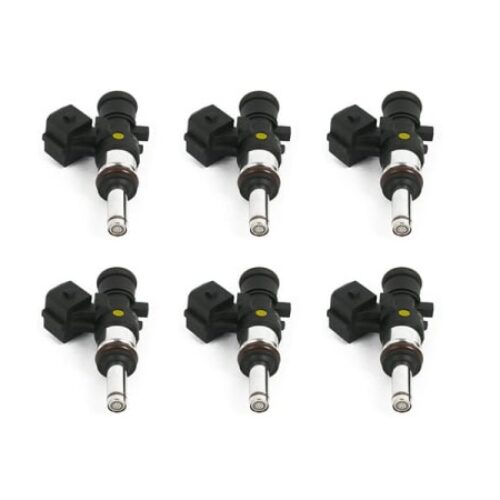
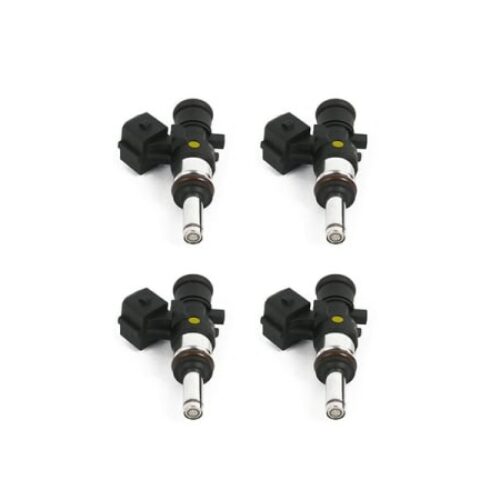
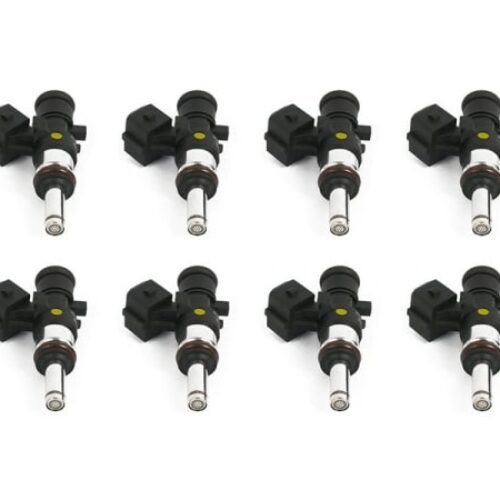
A fuel injector is an electrically opened valve that sprays a metered amount of fuel into the intake port or cylinder every cycle. This category holds high-flow injectors rated at 980 and 1462 cc/min in flow-matched sets of four, six or eight. Adapters, hats and connector parts let an injector fit a rail or manifold built for another.
An injector’s flow depends on its nozzle and on the pressure difference across it. Flow rises only with the square root of that difference, so raising fuel pressure gains less than it seems. Ratings are quoted at a stated test pressure, so compare injectors at the same one. Flow-matched sets flow almost identically, so each cylinder gets very nearly the same fuel.
Oversizing has a cost: the larger the injector, the shorter its pulse at idle, where opening time is least linear. Each injector type also needs its own ECU data, covering flow rate, dead time against battery voltage and short-pulse corrections. Without it, idle and part-throttle fuelling go wrong even when full load looks right.
Start from fuel demand, then check the physical and electrical fit:
- Flow: 980 or 1462 cc/min. Size for target power with headroom, and allow considerably more for ethanol blends, which need more fuel by volume.
- Set size: four, six or eight to match the cylinders; keep a matched set together.
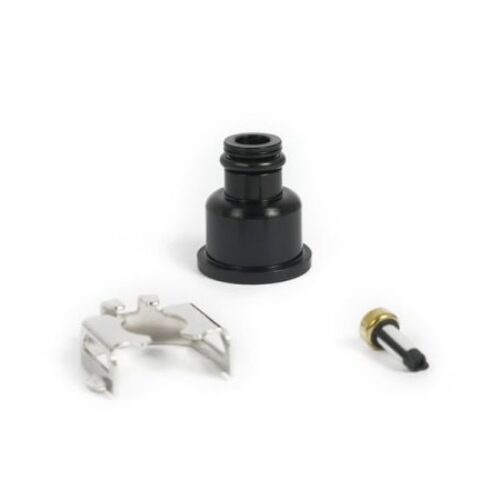
- Length: adapters bring a shorter injector to a longer standard: 1/2 to full, 3/4 to full, or 1/2 to 3/4 length.
- Seals and bases: adapters listed by seal size (10.5, 11 or 14 mm) and base adapters match injector to rail and manifold. Injector hats suit injectors moved to another engine family.
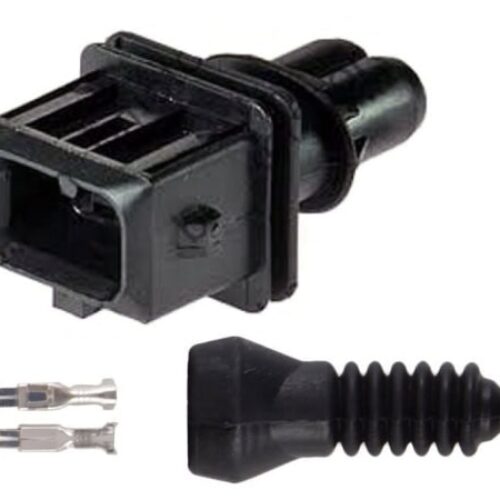
- Connector: plug-and-pin parts build adaptors where the injector’s plug differs from the loom. Also check that its impedance suits the ECU’s drivers.
Relieve fuel pressure before removing the rail, and plug open lines. Fit new O-rings lightly oiled with clean engine oil, push each injector in straight without rolling the seal, and check that clips seat fully. Prime the pump several times and inspect every seal before cranking.
Enter the new injector data into the ECU before the first start, then check idle, cruise and full-load mixture on a wideband sensor. A fine filter ahead of the rail protects the small nozzle passages, and new lines should be flushed first.

Store Information
TrackTool Factory
Sluispolderweg 7A
1505 HJ Zaandam
The Netherlands
KvK 97296902
BTW NL867990375B01
