Top brands in Banjo Bolts

Showing all 46 resultsSorted by latest
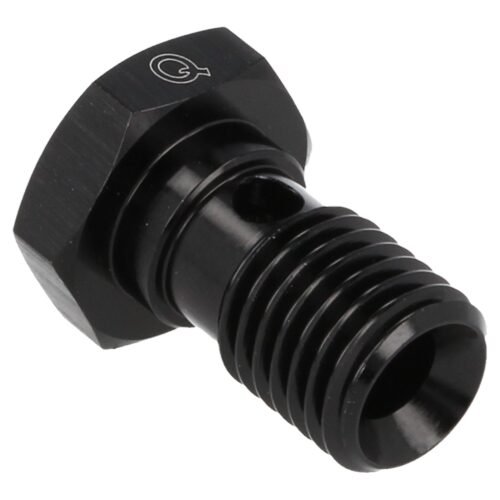


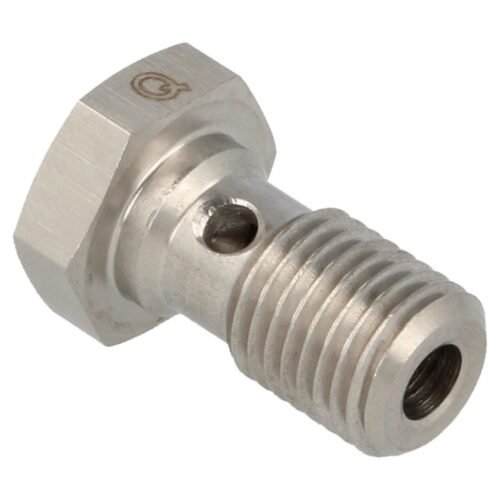


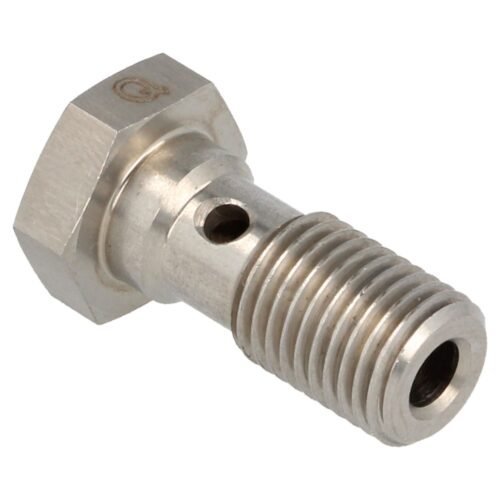


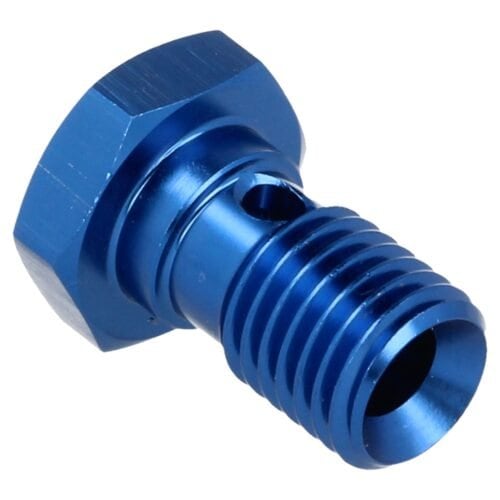






Banjo Bolts guide
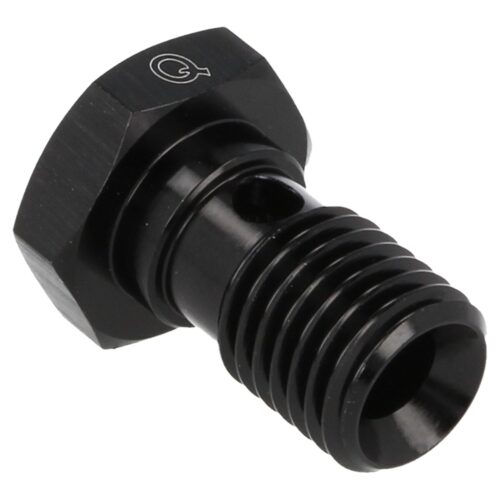
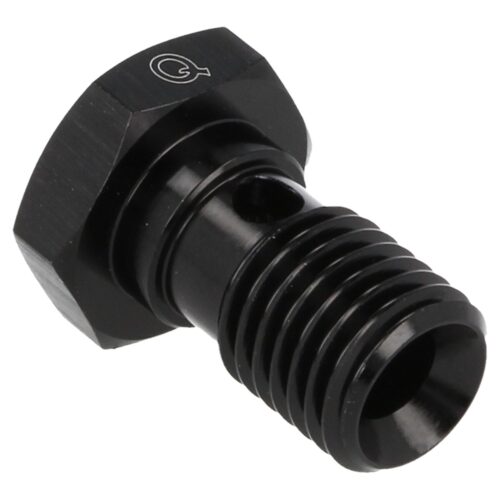
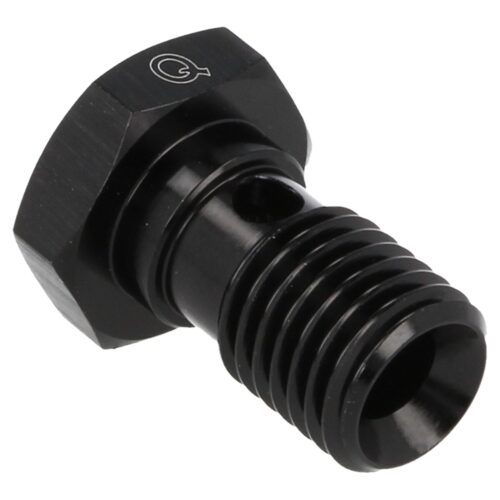
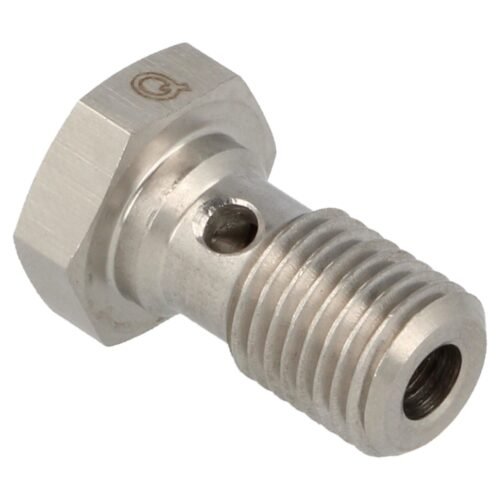
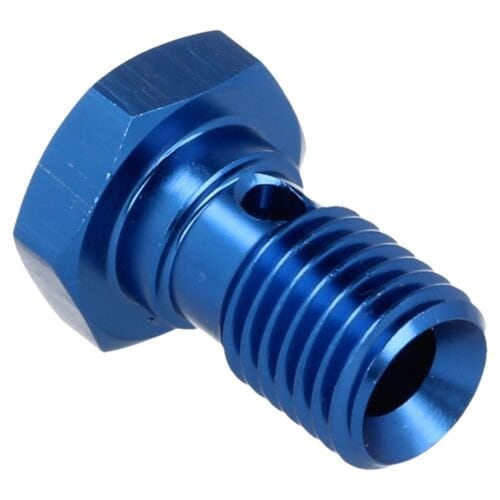
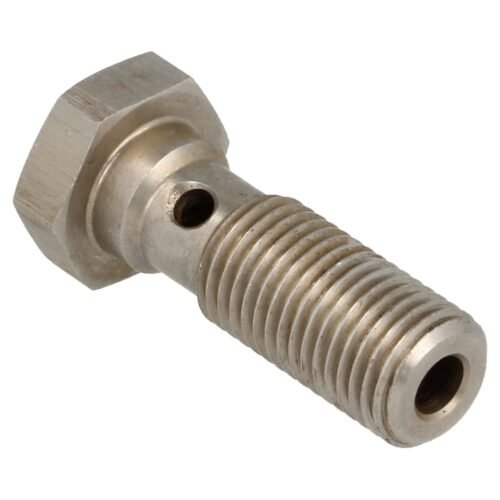
A banjo bolt is a hollow bolt that clamps a banjo eye to a component and carries the fluid through its own centre. Fuel, oil or brake fluid passes between eye and component through cross-drillings in the shank and a bore along its axis. The bolts here are stainless steel or aluminium, in metric and UNF threads, and in single and double versions.
The bolt is often the weakest part of the connection. Its hollow core removes much of the cross-section a solid bolt would have, so it stretches or snaps sooner when overtightened. Its bore and cross-holes are also usually the narrowest passage in the line, which counts on a high-flow fuel feed.
Match each point to the component and the eye:
- Thread and pitch: metric M8×1, M8×1.25, M10×1, M10×1.25, M12×1, M12×1.25 and M12×1.5. Also M14×1.25, M14×1.5, M16×1.5, M18×1.5 and M22×1.5, plus 3/8-24 UNF (AN3), 7/16-20 UNF (AN4) and 7/16-24. Pitches such as M10×1 and M10×1.25 look alike, so confirm with a pitch gauge.
- Length: stainless single bolts at 20, 25 and 32 mm and double bolts at 30 and 38.5 mm; some aluminium bolts state lengths such as 29 or 32 mm. Too short, and thread engagement suffers; too long, and the bolt bottoms before it clamps the washers.
- Single or double: a double bolt has a longer shank with two sets of cross-holes, so two eyes share one port, such as a feed and a gauge line.
- Material: stainless steel, in silver, for brake and other high-pressure lines; aluminium, in blue or black, for fuel and oil where loads are light and weight counts.
Keep aluminium banjo bolts out of brake and clutch hydraulics; use steel bolts there. Use fresh copper or aluminium sealing washers on both sides of each eye, and check that the eye bore suits the bolt diameter. Clean the threads in the component, run the bolt in by hand for several turns to prove the pitch, and tighten to the component’s specified torque.
On a double bolt, both eyes must sit over a set of cross-holes before the bolt is tightened. Bleed brakes after any change, pressure test fuel and oil joints, and check them again once hot. Replace any bolt with stretched or damaged threads, or one that has ever been overtightened.

Store Information
TrackTool Factory
Sluispolderweg 7A
1505 HJ Zaandam
The Netherlands
Chamber of Commerce (KVK): 97296902
VAT: NL867990375B01