
Top brands in Radiator Caps



Showing all 11 resultsSorted by latest
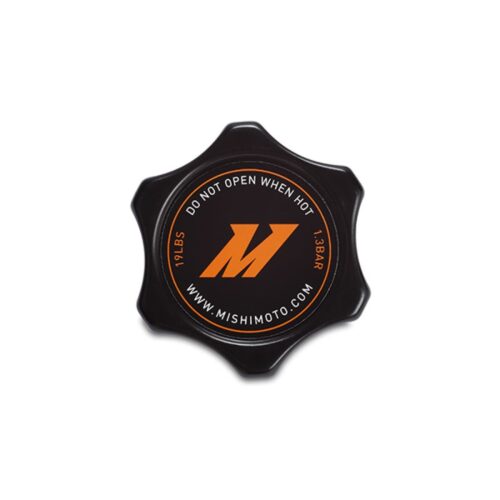



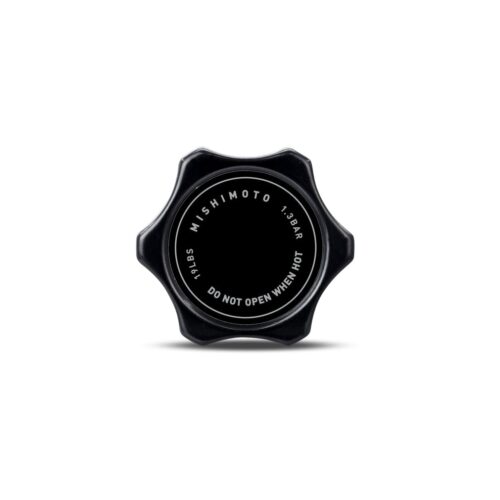
High-Pressure 1.3 Bar Radiator Cap, Small, Non-Directional – MMRC-13-SMC
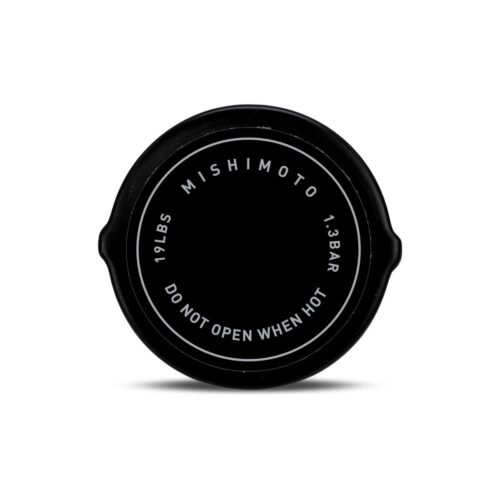
High-Pressure 1.3 Bar Radiator Cap, Small, One-Way – MMRC-13-ONWY

1.3 Bar Carbon Fiber Radiator Cap Small (Import) – MMRC-13-SMCF
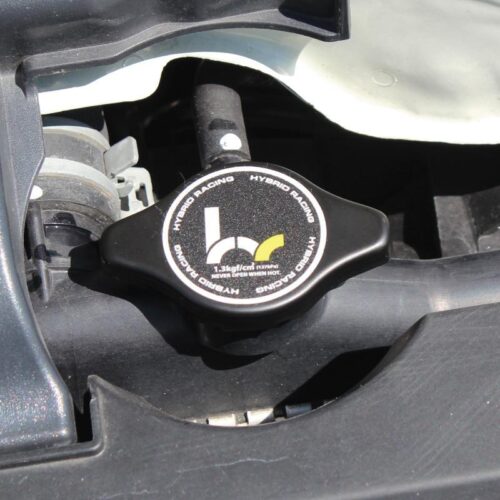





Radiator Caps guide
A radiator cap seals the cooling system and sets its working pressure. That pressure raises the coolant’s boiling point, which gives the engine a margin against boiling at the hottest spots in the head. Caps are listed at 1.3, 1.6 and 2.0 bar for small and large necks, including aluminium caps sized by diameter.
A typical cap has two valves. The pressure valve opens at the rated pressure and releases coolant to the overflow or expansion space, and the vacuum valve lets it back in as the system cools. Cap ratings are gauge pressures, above atmospheric. With plain water, a 1.3 bar cap lifts the boiling point to about 125 °C, and a 2.0 bar cap to about 134 °C. A glycol mix raises both figures further.
A cap that no longer holds its rating lets coolant boil early at hot spots, and the first sign is often coolant lost to the overflow. A higher-rated cap adds margin but loads hoses, radiator seams, heater matrix and tank harder, so it suits a system in good condition. It will not cure overheating from poor airflow or a failing pump, and pressure that builds fast from cold points to combustion gas in the coolant.
Match the cap to the neck first, then choose the pressure.
- Neck size: caps come for small and large necks, and the aluminium caps are listed as 32 or 42 mm. The cap must match the neck’s diameter and sealing depth, so measure before ordering.
- Pressure: 1.3, 1.6 or 2.0 bar. Stay with the factory rating or a modest step above it, within what the radiator and tank are built for.
- Special versions: titles name variants such as a one-way cap and a cap with a carbon-fibre top. Check that the valve design suits the system.
Only open the cap when the engine is cold, since coolant under pressure flashes to steam when released. Check the seals for cracks or flattening and the neck’s sealing seat for nicks and corrosion, because a cap only seals on a clean seat. Where the system carries its cap on the expansion tank, the radiator needs no pressure cap of its own, so fit the cap where the design puts it.
The seals and spring in a cap age with heat. Replace a cap whose spring or seal has weakened, and test it with a cap pressure tester where possible.

Store Information
TrackTool Factory
Sluispolderweg 7A
1505 HJ Zaandam
The Netherlands
KvK 97296902
BTW NL867990375B01
