
Top brands in Compressor Wheels

Showing all 21 resultsSorted by latest


Upgraded 9 Blade Turbine Wheel for 300 Series Turbos

Upgraded 9 Blade Turbine Wheel for 300 Series Turbos


Upgraded 9 Blade Turbine Wheel 96*88mm for 400 Series Turbos – Journal

Turbine Wheel for 400 turbos – 87.4/81.7mm
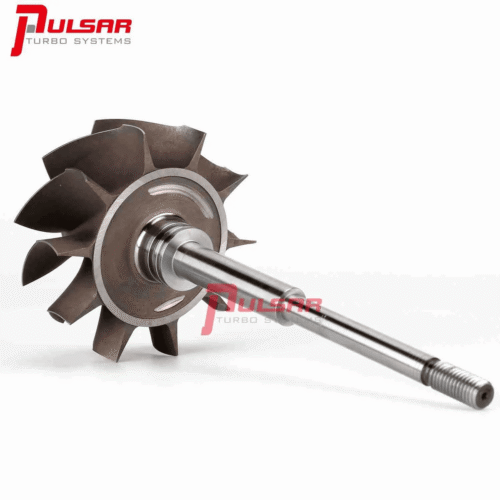
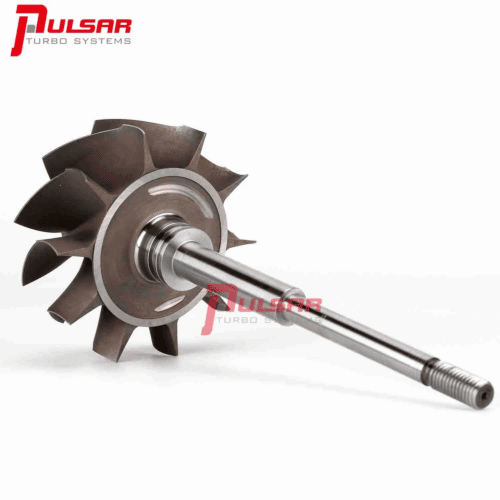


PULSAR 05-07 6.0 Powerstroke 10 Blade Drop-in Upgrade Whistle Turbine Wheel

Upgraded 9 Blade Turbine Wheel for 300 Series Turbos

Upgraded 9 Blade Turbine Wheel 96*88mm Drop In S410SX S478 S480 C15 EngineTurbo
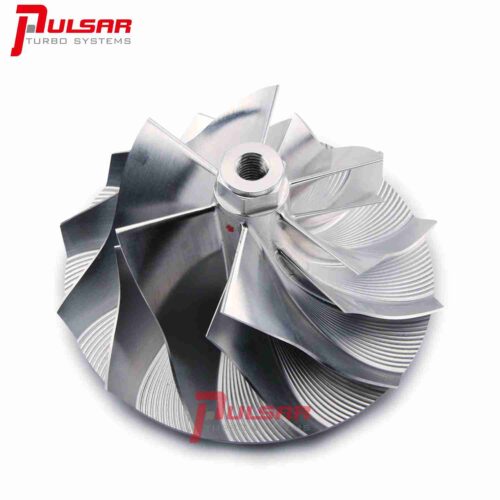
PULSAR 6.0 Powerstroke Billet Compressor Wheel – 2005-2007

PULSAR 6.0 Powerstroke Billet Compressor Wheel – 2003-2004

Billet compressor wheel for PTX GEN II – PSR3582 GEN II

Billet compressor wheel for PTX GEN II – PSR3576 GEN II

Billet compressor wheel for PTX GEN II – PSR3071 GEN II

Billet compressor wheel for PTX GEN II – PSR3076 GEN II

Billet compressor wheel for PTX GEN II – PSR2860 GEN II

Billet compressor wheel for PTX GEN II – PSR2867 GEN II

Billet compressor wheel for PTX GEN II – PSR3584 GEN II
Compressor Wheels guide
Compressor and turbine wheels are the rotating heart of a turbocharger. The turbine wheel turns the shaft with exhaust energy, and the compressor wheel uses that power to pressurise the intake air. This section holds billet compressor wheels and replacement or upgraded turbine wheels, for rebuilding a turbo or changing how it flows.
A compressor wheel is defined by its inducer, where the air enters, and its exducer, the outer diameter where it leaves. The inducer limits how much air the wheel can take in, while the exducer and shaft speed set the tip speed, and with it the pressure ratio. Billet wheels are machined from solid rather than cast, which allows thinner, more precisely shaped blades and avoids casting porosity.
The turbine wheel sits in exhaust gas hot enough to make its housing glow, so it is made from a heat-resistant alloy and welded to the shaft. Gas enters at its larger diameter and leaves through the smaller exducer. A bigger exducer flows more at high power but needs more exhaust energy to spin up, and the blade count shifts the balance between response and flow.
Match the wheel to the turbo first:
- Turbo and generation: billet compressor wheels are listed for one turbo model and generation, and must suit its cover’s contour.
- Compressor wheel sizes: given as inducer/exducer, for example 45.64/60.07 or 58.26/76.45 mm, with the blade count as full plus splitter blades, such as 8+0 or 9+0.
- Turbine wheel sizes: for example 83/74, 87.4/81.7 or 96/88 mm for the larger turbo series, plus upgraded 9-blade and 10-blade designs.
- Bearing type: some turbine wheels come in dual ball bearing and journal bearing versions, as the shaft is made for one bearing system. Order the one that matches your centre section.
Any wheel change means rebalancing the rotating assembly. Shaft speeds run to six figures in rpm, and even a small imbalance soon wrecks the bearings. Tighten the compressor nut to the turbo maker’s figure without bending the shaft, and check tip clearance in the housing. After a wheel failure, clean fragments out of the intercooler and pipes, and find the cause, whether debris, oil starvation or overspeed.

Store Information
TrackTool Factory
Sluispolderweg 7A
1505 HJ Zaandam
The Netherlands
KvK 97296902
BTW NL867990375B01
