

Fuel System
Catch Tanks & Reservoirs
- 85 products
- 4 brands
- Ships from EU stock
- Catch Tanks & Reservoirs guide
Top brands in Catch Tanks & Reservoirs




Showing 1–48 of 85 resultsSorted by latest





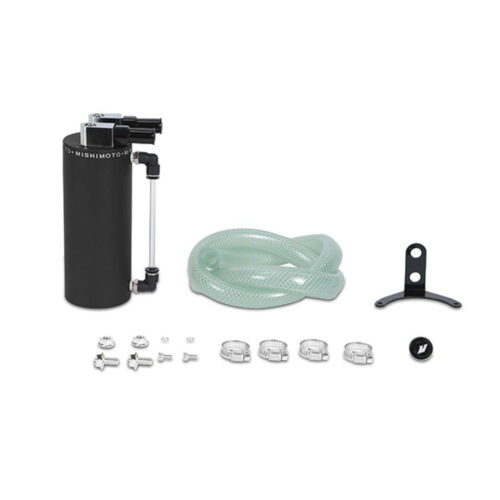
Catch Tanks & Reservoirs guide
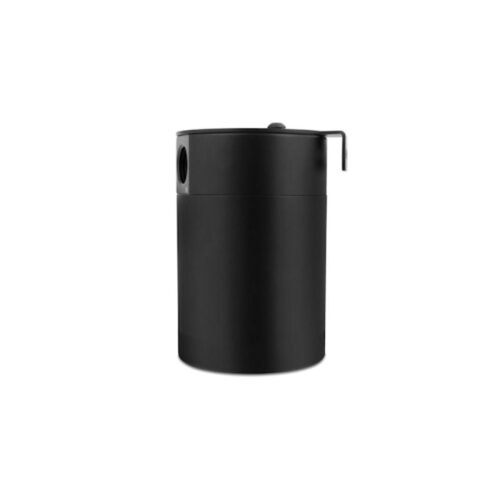
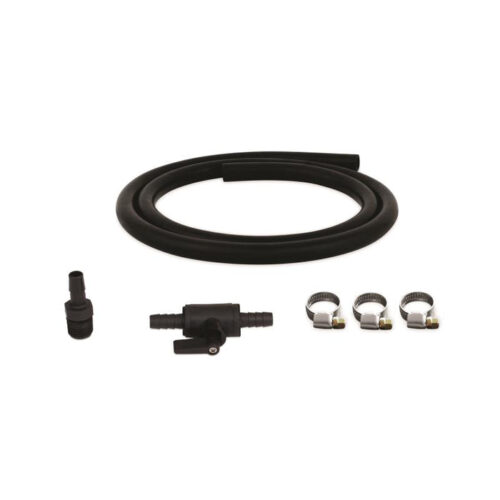
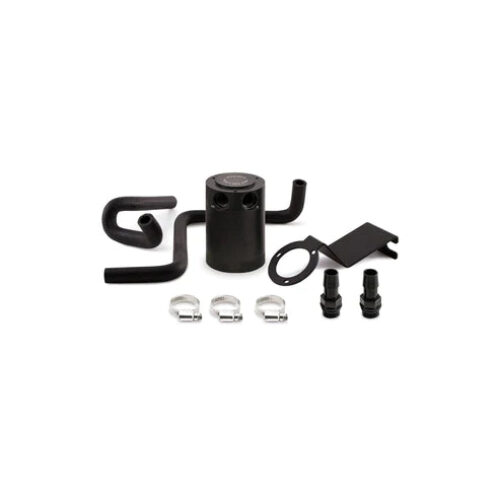
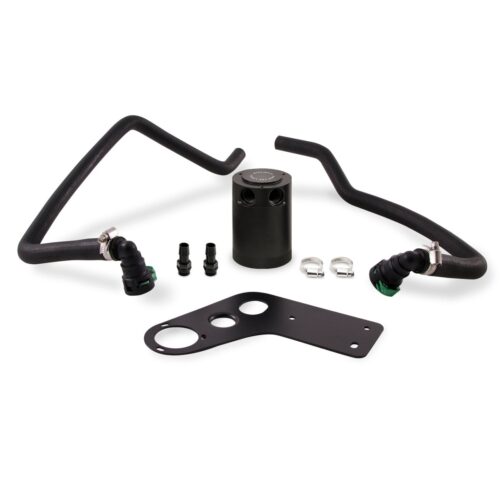
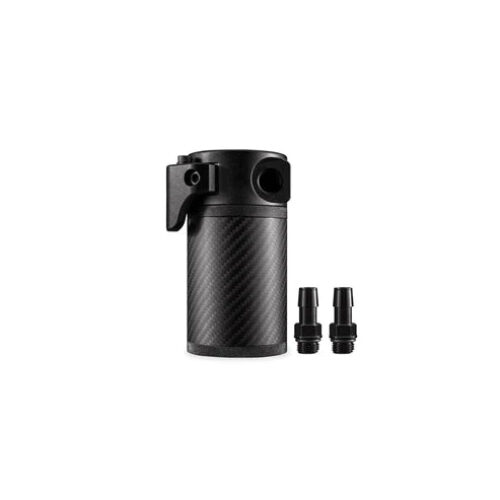
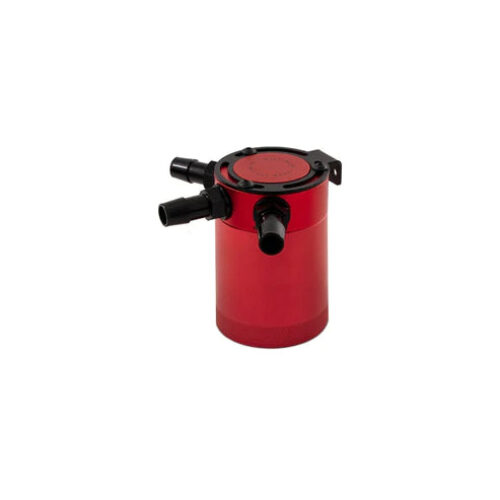
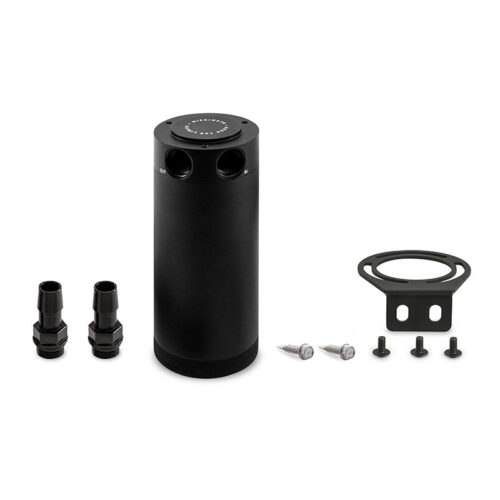
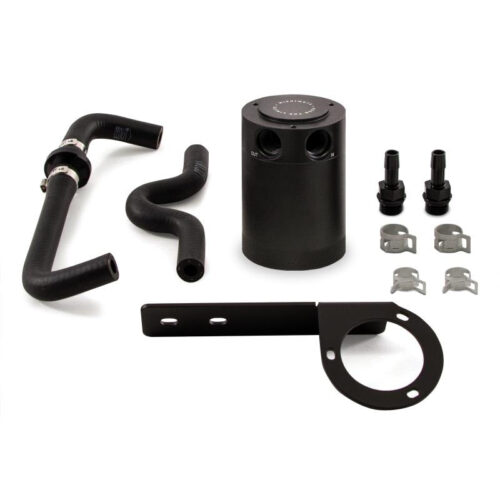
An oil catch tank, or catch can, sits in the crankcase breather line and traps the oil mist and condensate in blow-by gas before they reach the intake. This category holds universal and model-specific oil catch cans, aluminium oil and petrol catch tanks, and their breather caps, rollover valves, fittings and brackets.
Some combustion gas always leaks past the piston rings, and the crankcase must be vented or the pressure pushes oil past the seals. The ventilation system draws this blow-by into the intake, with oil mist, water vapour and unburnt fuel. The oil coats the intercooler and throttle, bakes onto the intake valves of direct-injection engines, and lowers resistance to knock.
A can slows the gas in a larger volume and forces it round baffles, where oil droplets strike the walls and drain down. Boost and sustained high load raise blow-by. Crankcase emissions rules for road use differ by country, and many require a closed system; venting through a breather cap is usually a competition setup.
Choose by job, then by size and plumbing:
- Oil or fuel: oil cans serve crankcase breathers. Petrol catch tanks include one titled for an injection pump. On a tank vent, a catch tank holds fuel pushed out by slosh or expansion.
- Rollover valves: AN8 valves close a vent line if the car turns over.
- Capacity: 1- and 2-litre tanks, and cans listed by size, such as 110 × 110 × 300 mm or 150 × 150 × 150 mm. More volume means less frequent draining.
- Ports: baffled cans with two or three ports, tanks with D08 or D10 connections, AN10 and AN12 tank connections, and M20×1.5 fittings for 1/2-inch or 5/8-inch hose.
- Fit and finish: model-specific cans are made for the car in the title, while universal cans may need brackets and hoses to suit. Finishes include silver, black, blue, red, orange, polished and carbon-fibre.
Mount the can below the ports it serves, with hoses falling steadily towards it, as any sag collects oil. Use oil-resistant hose of full port size that will not collapse under vacuum, and fit rollover valves upright as marked. Keep fuel vent lines away from the exhaust and out of the cabin.
Drain the can at every service and after each track day, and read the contents. Milky residue usually means condensation from short trips or cold weather, a fuel smell suggests rich running, and a growing quantity of oil points to rising blow-by. In winter, drain more often, since water can freeze and block the breather.

Store Information
TrackTool Factory
Sluispolderweg 7A
1505 HJ Zaandam
The Netherlands
KvK 97296902
BTW NL867990375B01
