
Top brands in Fan Controllers






Fan Controllers guide
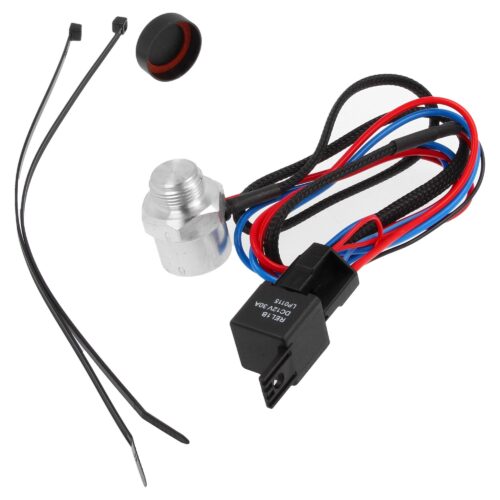
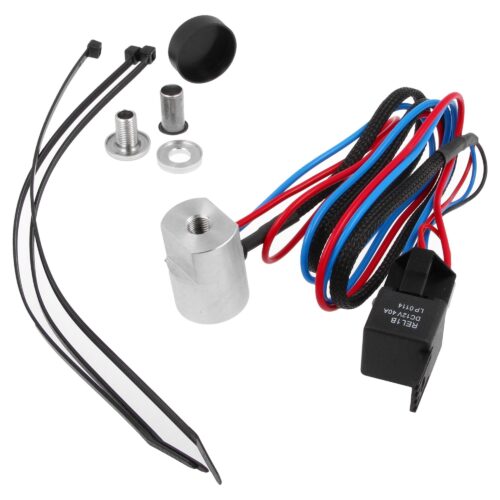
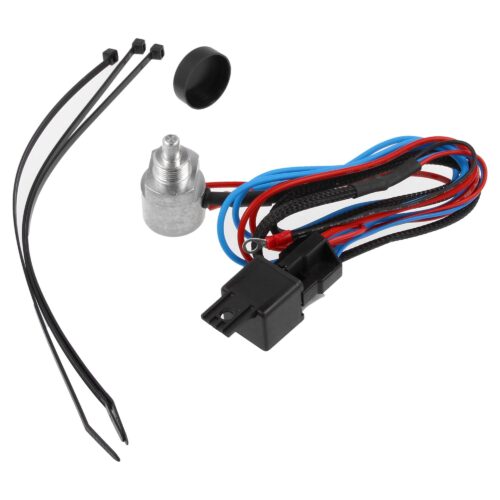
A fan controller switches an electric cooling fan on and off according to coolant temperature, so the fan runs only when the engine needs it. The controller reads the temperature through a sensor fitted in a coolant hose or a threaded port. The controllers listed, all in aluminium, come in versions for a range of hose sizes and port threads, plus a self-sealing one.
The switch-on point should sit above the thermostat’s opening temperature. Set lower, the fan runs whenever the engine is warm, loading the charging system for no gain. A gap between the switch-on and switch-off temperatures, called hysteresis, stops the fan cycling every few seconds.
Where the sensor sits changes what it measures. In the hose from engine to radiator it reads the engine’s outlet temperature and reacts early. In the radiator’s outlet hose it reads coolant that has already been cooled, so the fan switches later; either works if the switch point suits the location.
Pick the version by how the sensor will be fitted.
- Hose sizes: versions listed by diameter, 25, 28, 32, 35, 38 and 45 mm, to suit the size of the coolant hose.
- Threaded ports: M14 × 1.5, M22 × 1.5, 3/8 BSP with an internal or external thread, and 1/8 in. NPT. A tapered NPT thread seals on its flanks with a little sealant, while parallel metric threads seal with a washer.
- Load: drive the fan through a relay unless the controller’s instructions rate its output for the fan’s full current.
Place the sensor where coolant flows freely, such as a straight length of hose, and bleed the air around it, as a sensor in an air pocket reads low. A sensor that earths through its body needs clean metal-to-metal contact, which thread tape or thick sealant can break. Run the engine to working temperature, then check that the fan switches on and off at sensible points, both at idle and on the move.
Fuse the fan’s feed to suit the cable and keep every connector sealed against water. Re-check the switching points after any change of thermostat, radiator or coolant mix.

Store Information
TrackTool Factory
Sluispolderweg 7A
1505 HJ Zaandam
The Netherlands
Chamber of Commerce (KVK): 97296902
VAT: NL867990375B01