Brake System
Brake Grease & Lubricants
- 2 products
- 2 brands
- Ships from EU stock
- Brake Grease & Lubricants guide


Showing all 2 resultsSorted by latest
Brake Grease & Lubricants guide
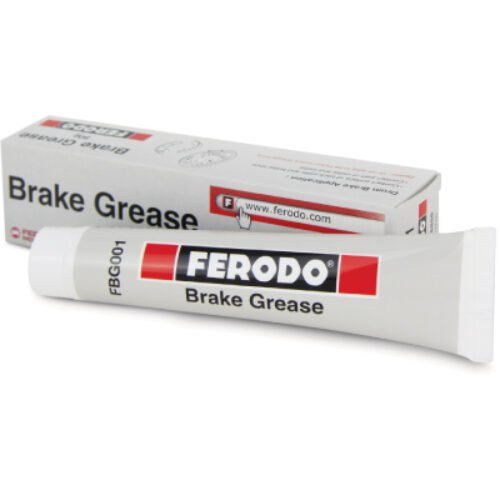
Brake grease keeps the moving contact points of a brake sliding freely and quietly, without breaking down at the temperatures brakes reach. Dedicated brake greases are offered, each in its maker’s own pack.
Pads shift in their caliper or bracket every time the brakes are applied and released. Without a film of grease, rust builds at the contact points, the pads hang up, and the brake drags, wears unevenly or squeals. Ordinary grease can melt and run at brake temperatures, and it can attack the rubber parts nearby.
Brake seals and boots are usually EPDM rubber, which swells when it meets mineral oil. Only a grease rated as safe for rubber belongs on slide pins or inside boots.
Before use, check three things on the label:
- Rubber compatibility: needed for guide pins, boots and anything touching a seal.
- Temperature range: it should comfortably exceed what the caliper sees, more so on a track car.
- Intended points: metal contact points such as pad ears, bracket slide surfaces and the back of the pad where pistons or caliper fingers press. On drum brakes, it goes on the shoe contact points of the backplate.
Clean contact points back to bare metal with a wire brush and brake cleaner first. Apply a thin film only, since surplus grease collects dust and can migrate onto the disc. Keep grease off pad faces, discs, shoe linings and drum surfaces: friction material that has absorbed grease or oil has to be replaced, not cleaned.
Wear gloves while greasing and wipe your hands before handling new pads. Re-grease the contact points at every pad change, and check that the pads still slide freely in the bracket.

Store Information
TrackTool Factory
Sluispolderweg 7A
1505 HJ Zaandam
The Netherlands
Chamber of Commerce (KVK): 97296902
VAT: NL867990375B01