

Top brands in Mufflers




Showing 1–48 of 224 resultsSorted by latest
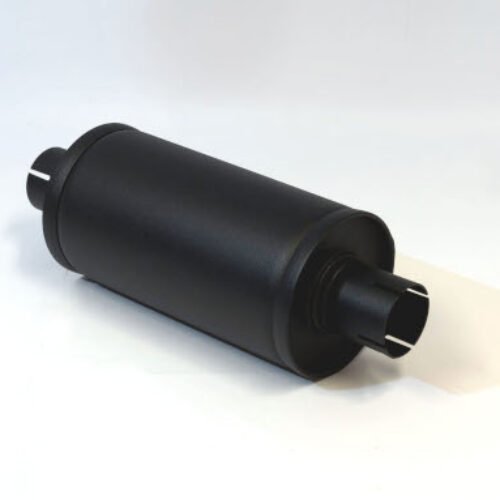
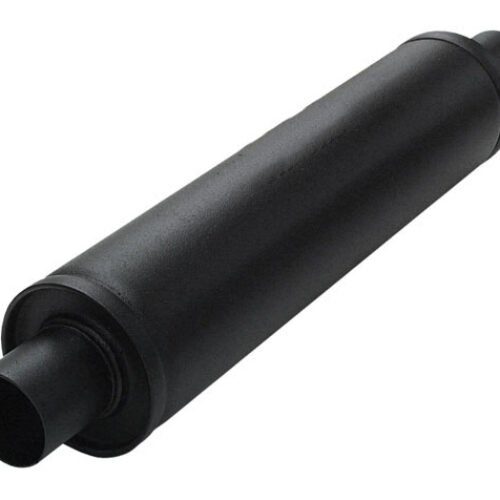
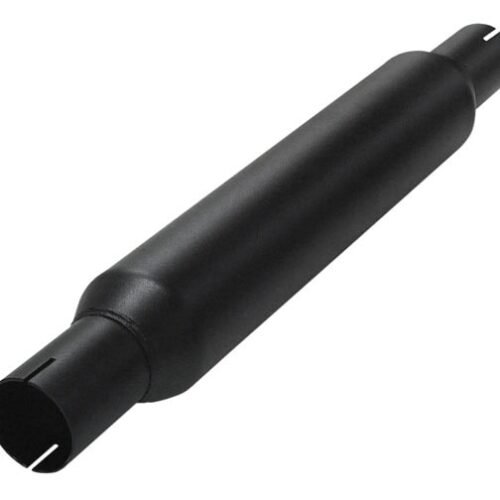
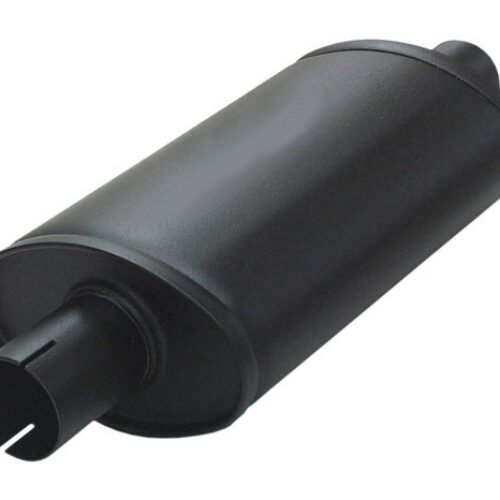


Mufflers guide
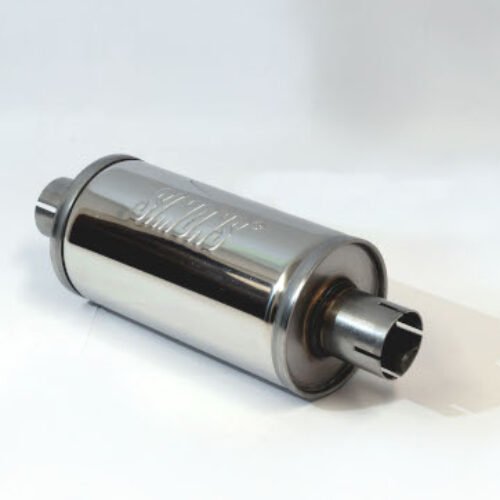
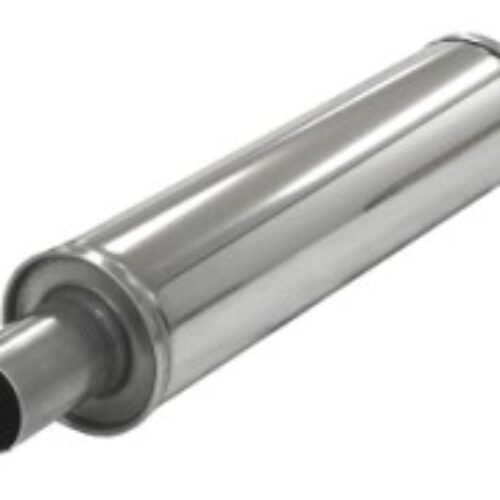
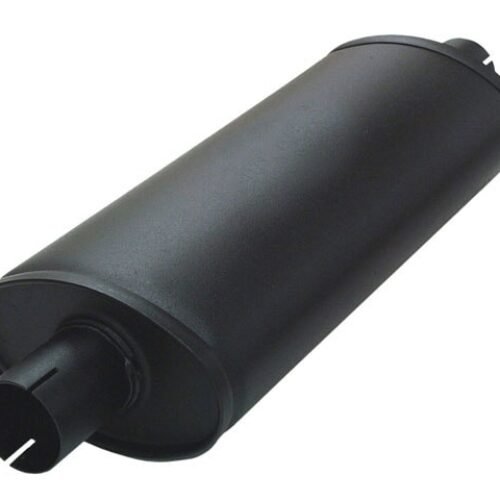
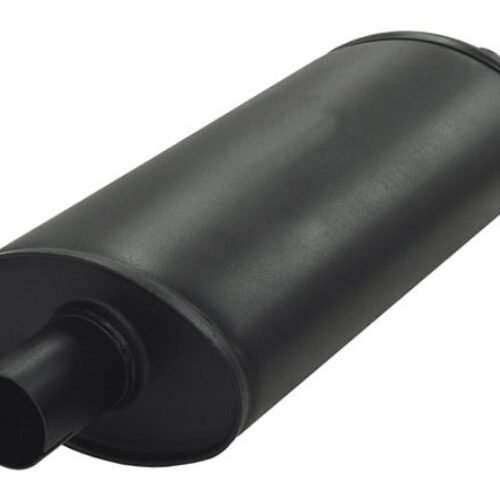
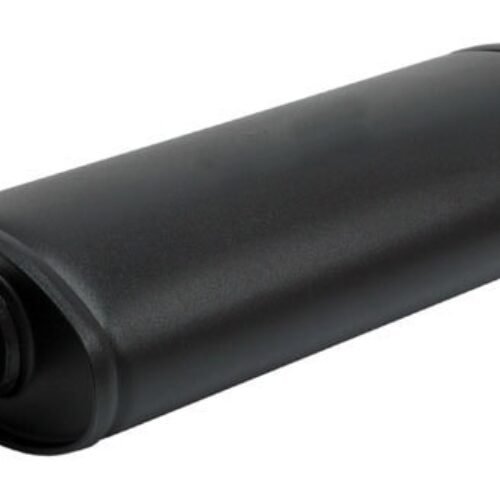
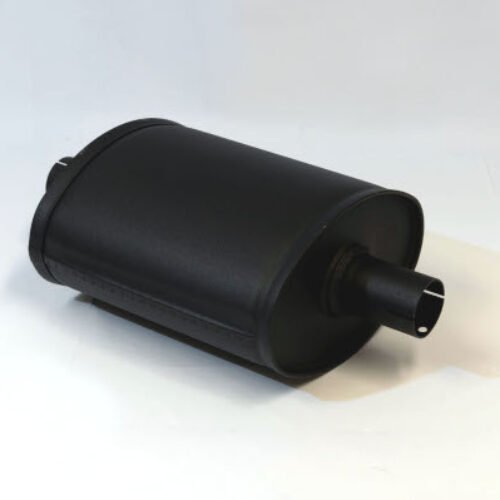
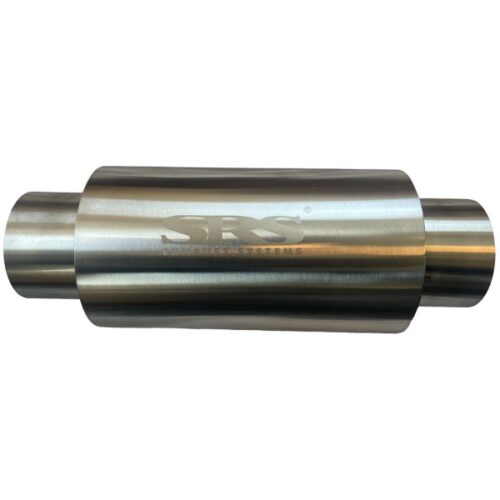
A silencer, or muffler, takes energy out of the exhaust’s pressure pulses before the gas leaves the car. The silencers and resonators here are universal parts for building or modifying a system, chosen by pipe size, case shape, length and material rather than by car.
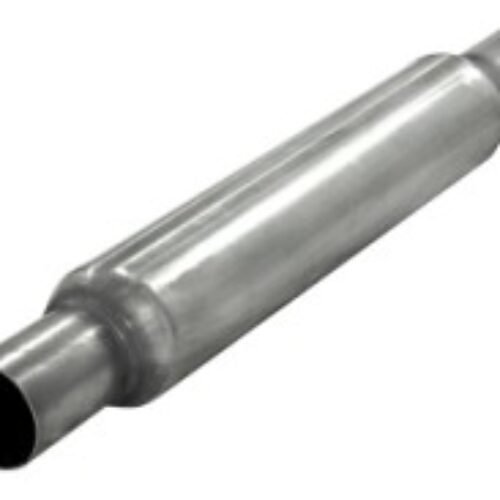
An absorptive, or straight-through, silencer runs the gas through a perforated core wrapped in fibre packing, which turns sound into heat. It adds little back pressure and works mainly on the higher frequencies. A reactive silencer uses chambers and baffles that reflect sound back on itself, which suits low frequencies but adds restriction. A resonator is a smaller unit, usually fitted ahead of the main silencer, that trims harsh notes and drone.
A bigger case and a longer core give the sound more room to lose energy, which helps most against low-frequency drone. Packing slowly breaks down with heat and gas flow, so a straight-through silencer gets louder with age.
Compare these details in the listings:
- Pipe size: connections run from 44.5 mm (1.75″) to 101.6 mm (4″), with 50.8, 63.5, 76 and 89 mm the common sizes. Match the size to the outside diameter of the pipe the silencer joins.
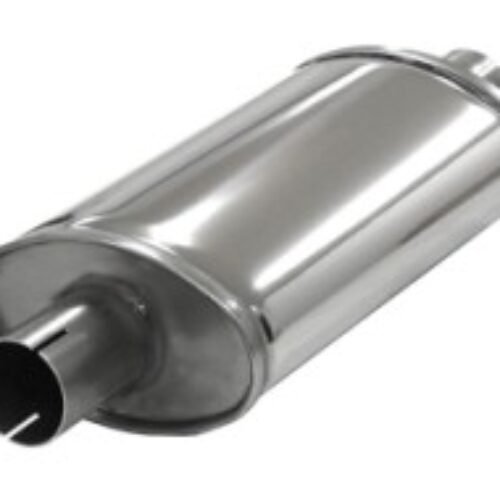
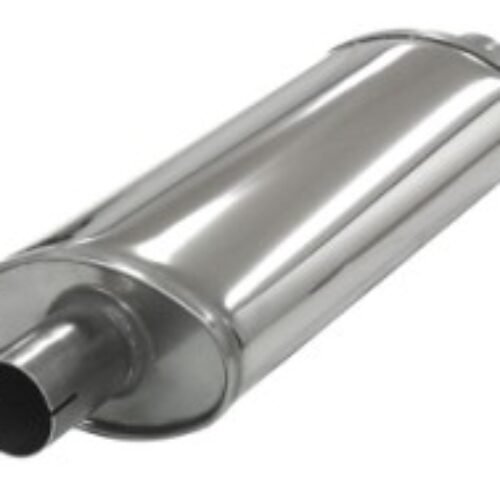
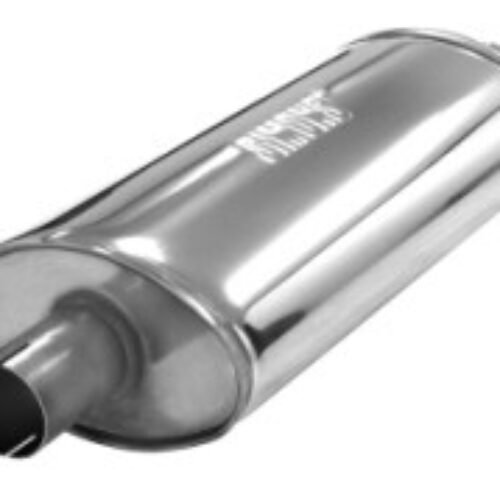
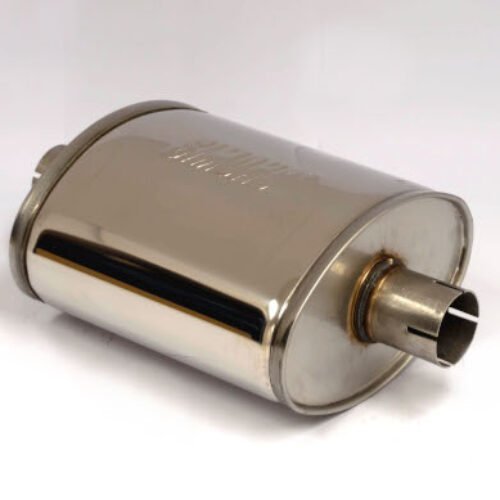
- Case shape: round cases such as 100, 125 or 200 mm across, or oval ones such as 115 × 185 mm, 140 × 270 mm or 4 × 9 in. Oval cases sit flatter under the floor.
- Length: case lengths such as 245, 350, 420, 625 and 830 mm, and resonators of 30 or 45 cm. More length usually means more attenuation at the same pipe size.
- Layout: silencers are listed with their connection layout, such as dual-in and dual-out, and some come with a built-in tip (63 mm in, 101 mm out).
- Material: stainless steel, including the 409 grade, resists acidic condensate. Mild steel rusts sooner, and aluminised steel resists rust only while its coating is intact.
A silencer near the front of the system runs hotter, which is hard on packing, while one at the rear mainly shapes the final note. Hang each silencer at both ends so its weight never rests on a joint, and keep it clear of the fuel tank, brake lines and floor.
Static and drive-by noise limits apply on the road and at many circuits, and they differ by country and event. Size the silencing for the strictest limit the car must meet. A rattle, a sudden rise in volume or soot at a seam usually means the case or packing has failed.

Store Information
TrackTool Factory
Sluispolderweg 7A
1505 HJ Zaandam
The Netherlands
KvK 97296902
BTW NL867990375B01
