
Brake System
Performance Brake Fluid
- 20 products
- 5 brands
- Ships from EU stock
- Performance Brake Fluid guide
Top brands in Performance Brake Fluid





Showing all 20 resultsSorted by latest


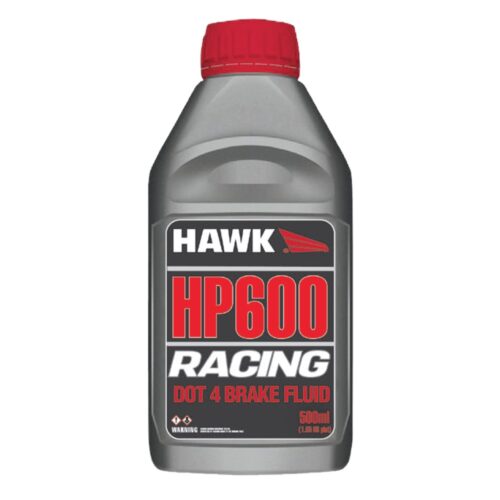



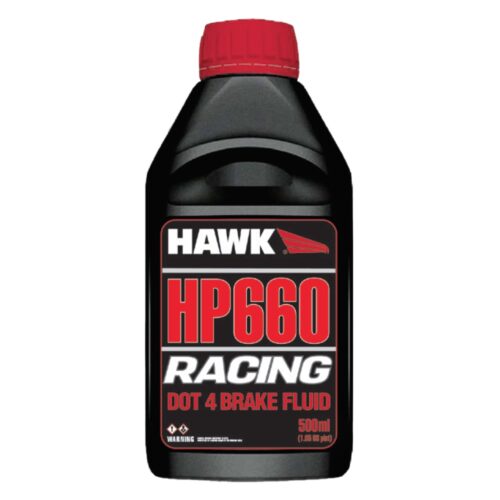
HP520 – Hawk All Purpose Brake Fluid; 500ml





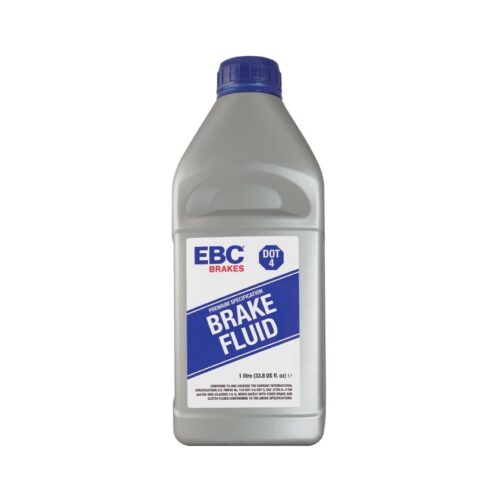
BF004 – EBC Brake Fluid 250ml
Performance Brake Fluid guide
Brake fluid carries the pedal’s force from the master cylinder to the calipers, and it has to stay liquid at the temperatures hard braking produces. The choice runs from DOT 4 and DOT 5.1 to dedicated race fluids, in bottles from 250 ml to 5000 ml.
Brake fluid barely compresses, which is what makes the pedal firm. When caliper heat pushes it past its boiling point, vapour bubbles form; vapour does compress, so the pedal goes long and soft. Glycol-based fluids also absorb water through hoses, seals and the reservoir vent, and that water lowers the boiling point.
Each fluid therefore has two figures. The dry boiling point applies to fresh fluid, the wet one to fluid that has absorbed a set amount of water. The DOT classes set minimum figures: DOT 4 at least 230 °C dry and 155 °C wet, DOT 5.1 at least 260 °C and 180 °C.
Choose by the car’s use and by quantity:
- DOT 4: the usual class for road and sport driving, and the one many cars specify.
- DOT 5.1: also glycol-based, with higher minimum boiling points and lower viscosity when cold. It mixes with DOT 4, but only a full flush gives its figures.
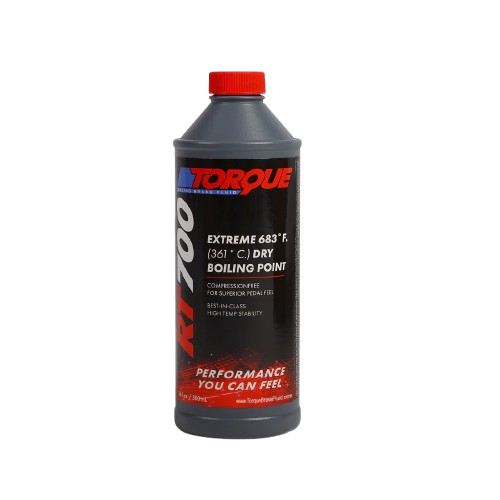
- Race fluids: made for a high dry boiling point. Compare dry and wet figures where the listing gives them; one race fluid here lists 361.8 °C dry and 226.1 °C wet.
- Bottle size: 250 ml or 500 ml for a top-up or a caliper bleed, 1000 ml for a typical full flush, 5000 ml for workshops and teams. An opened bottle takes in moisture, so buy what you will use soon.
Bleed from the corner furthest from the master cylinder to the nearest, unless the car’s manual gives another order, and never let the reservoir run low. Flush a hydraulic clutch that shares the reservoir at the same time. Keep glycol fluids apart from silicone-based DOT 5, which does not mix with them.
Road cars usually get new fluid every two years or at the interval the maker sets. A car used on track needs it more often: a full change before the season, and at least a bleed at the calipers after hard events. Brake fluid attacks paint, so cover the bodywork and rinse any spill with water straight away.

Store Information
TrackTool Factory
Sluispolderweg 7A
1505 HJ Zaandam
The Netherlands
KvK 97296902
BTW NL867990375B01
