
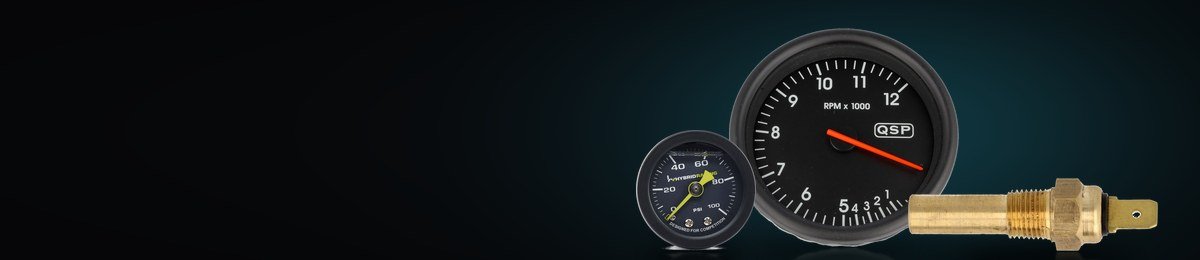
Top brands in Sensors



Showing all 12 resultsSorted by latest





Oil Pressure Sensor – 0-10 BAR

Water Temperature Sensor – 40-120 C



Sensors guide
Sensors and senders turn pressure, temperature or speed into an electrical signal that a gauge can display. This section holds senders for oil pressure, oil temperature and water temperature, a speed sensor, hose adapters for temperature senders, and dash instruments including a clock and a service timer.
Most analogue gauge senders are variable resistors. In a typical temperature sender the resistance falls as it warms, while in a pressure sender a diaphragm moves a wiper along a resistor. The gauge reads that resistance against a fixed curve, so a sender only reads true with a gauge built for the same curve.
The senders here are listed by the scale they serve: 0–10 bar for oil pressure, 40–120 °C for water and 50–150 °C for oil temperature. Pair each with a gauge of the same scale, ideally from the same maker, because curves differ between makers.
Choose by what you need to measure:
- Pressure and temperature senders: the scales above. Check the sender’s thread against the port or adapter it will go into.
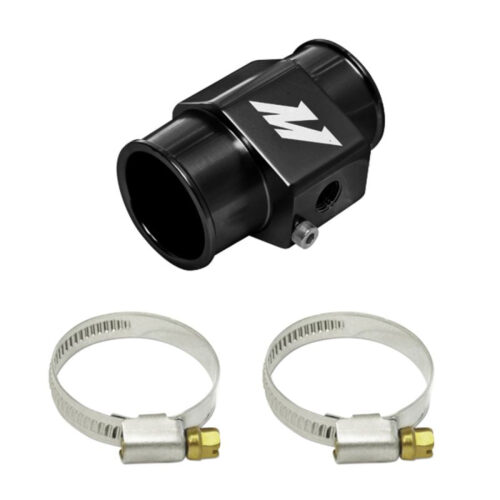
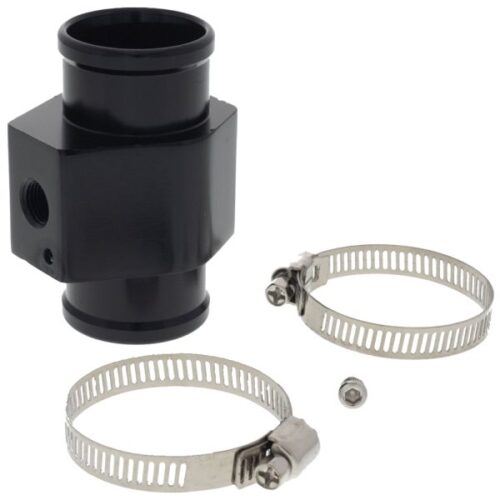
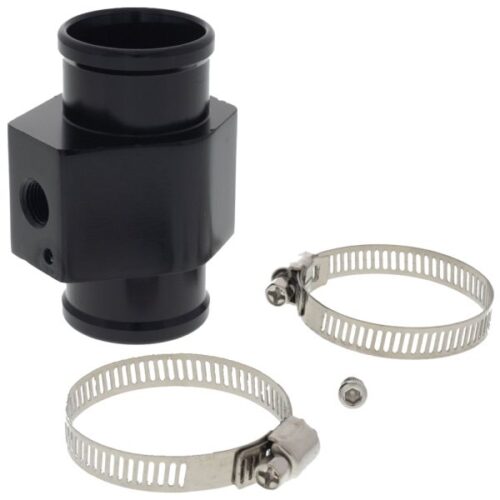
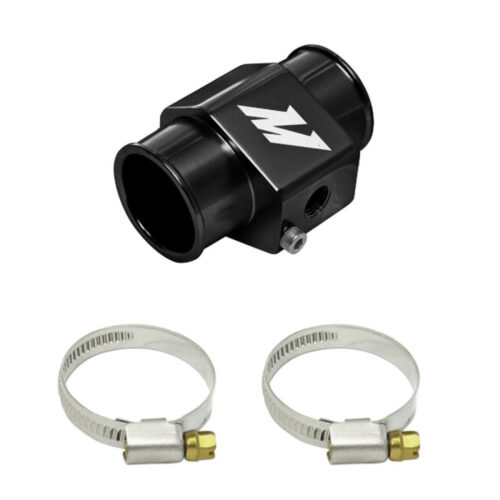
- Hose adapters: aluminium adapters for 32, 34 and 38 mm hoses, some in black, that add a sender port to a coolant hose.
- Speed sensor: reads teeth or magnets on a turning part and feeds pulses to an electronic speedometer, for cars without a usable speed signal.
- Instruments: a clock, a service timer and a gauge for a tube-type level sender. Where dimensions are given, they are 52 × 52 mm, the common gauge size.
A service timer counts engine running hours. On a track car that is a better guide to engine and gearbox servicing than distance, because hours at high load are what wear the parts.
Tighten senders by their hex, never by the body, and go gently with tapered threads in aluminium, which can crack a casting. Temperature senders belong fully immersed in flowing fluid, and pressure senders in a port that sees full oil pressure. Keep all sender wiring clear of ignition leads.
Senders that earth through their thread need metal-to-metal contact, so go easy with sealant. If a reading looks wrong, compare it with a test gauge before condemning the sender.

Store Information
TrackTool Factory
Sluispolderweg 7A
1505 HJ Zaandam
The Netherlands
KvK 97296902
BTW NL867990375B01
