
Top brands in Fuel Pressure Gauges



Hybrid Racing- -8ORB to 1/8th NPT Fuel Rail Fitting (Universal)
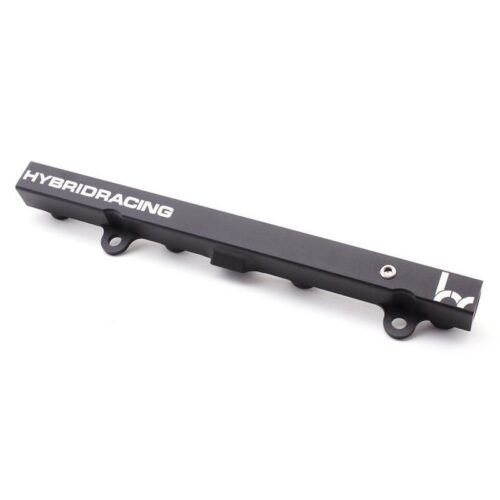
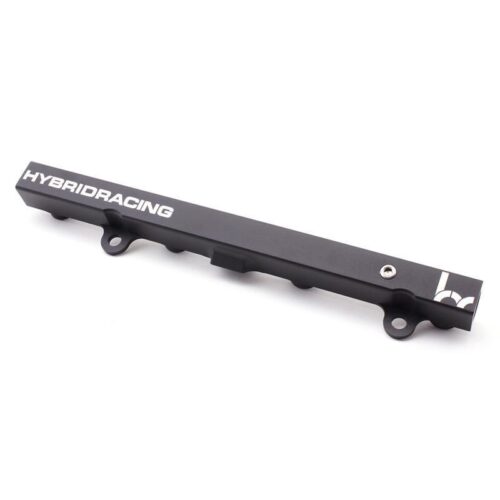
Hybrid Racing- K-Series Fuel Rail & Fittings (06-11 Honda Civic Si)
Fuel Pressure Gauges guide
A fuel pressure gauge shows the pressure feeding the injectors, which, together with injector size, sets how much fuel the engine can receive. This section holds a liquid-filled gauge, a fitting that puts a gauge on a fuel rail, and complete fuel rails with fittings listed for one engine family.
Injector flow depends on the pressure difference across the injector. On many systems the regulator raises fuel pressure as manifold pressure rises, keeping that difference steady under boost. A gauge shows whether it does, and pressure that sags under load points to a tired pump or a blocked filter.
The liquid fill damps the needle against pump pulses and engine vibration. The reading stays steady enough to set a regulator accurately, and the movement inside lasts longer.
What the parts here do:
- Gauge: a liquid-filled gauge for setting and checking pressure at the rail or regulator.
- Rail fitting: a -8 ORB to 1/8 NPT adapter that lets a gauge or sender take pressure from a -8 O-ring boss port. On the ORB side an O-ring makes the seal, not the straight thread; the NPT side seals on its taper.
- Fuel rails: complete rails with fittings, listed by engine family and model years in the title.
A mechanical gauge brings fuel to wherever it sits, so keep it in the engine bay, clear of exhaust heat, and never pipe fuel into the cabin. With a vacuum-referenced regulator, set base pressure at idle with its hose off and plugged, then refit it and check that pressure follows manifold pressure.
Depressurise the system before opening it, and work away from sparks and flames. Seal NPT threads with a fuel-resistant sealant, fit new O-rings on ORB ports, and check every joint for weeping with the pump running.

Store Information
TrackTool Factory
Sluispolderweg 7A
1505 HJ Zaandam
The Netherlands
Chamber of Commerce (KVK): 97296902
VAT: NL867990375B01