


RMT Racing Oil Pressure Gauge – 40° to 120°C, 51mm Mounting

Innovate Digital MTX-D Oil Temp. & Pressure Gauge (0-150PSI)

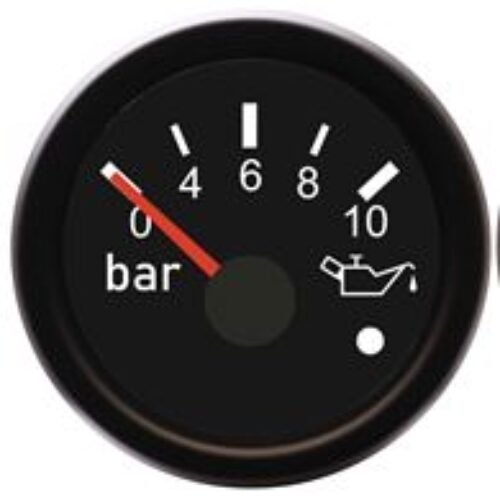
Oil Pressure gauge 0-10 BAR
Oil Pressure Gauges guide
An oil pressure gauge shows whether the pump is feeding the bearings, and on track whether the pickup ever runs short of oil. This page holds needle gauges, one supplied with its sender, and a digital gauge that shows oil pressure and oil temperature together.
Oil pressure rises with engine speed until the relief valve opens, and falls as the oil heats and thins. The same engine therefore shows different figures cold, hot, at idle and near the limiter. Learn the normal hot readings at idle and at high engine speed, because a drop from that baseline says more than any single number.
On track, watch for flicker in long corners or under hard braking. That usually means oil surge: the oil moves away from the pickup and the pump draws air, which the bearings tolerate poorly.
Choose by scale and fit:
- Scale: a scale that keeps both idle and full-load pressure readable suits most engines.
- Fit: check that the gauge suits the panel hole or pod.
- Sender: use the sender made for the gauge, as one with the same thread but a different curve reads wrong.
- Temperature too: the digital gauge adds oil temperature, which shows when the oil is warm enough for full load.
Take the pressure from a main gallery port or a filter-housing take-off, with a T-piece if the factory warning switch is to stay. Keep a warning light or alarm as well, because nobody watches a gauge constantly and pressure loss does damage in seconds. On engines with heavy vibration, mount the sender on a bracket with a short flexible line, and seal tapered threads with an oil-resistant sealant.
Recently Viewed Products

Store Information
TrackTool Factory
Sluispolderweg 7A
1505 HJ Zaandam
The Netherlands
Chamber of Commerce (KVK): 97296902
VAT: NL867990375B01