
Top brands in Wiring & Terminals



Showing 1–48 of 259 resultsSorted by latest
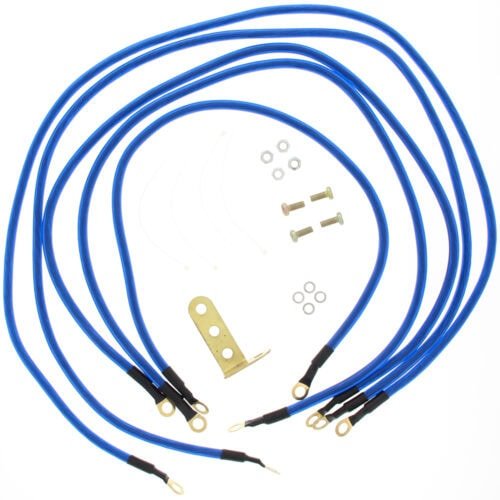


Wiring & Terminals guide
Wiring and terminals are the materials a loom is built from: cable, crimp terminals and connectors, plus the sleeving, grommets and ties that protect and hold it. The right cable size and sound joints keep the voltage at the load and stop heat building up in the loom. Conversion harnesses for engine swaps are listed here too.
Copper resistance turns current into voltage drop and heat. A 10 A load at the end of a 5 m one-way run of 1.5 mm² cable loses about 0.57 V in the feed alone. In 2.5 mm² cable, the same run loses about 0.34 V. Size cable for the run length as well as the current, because pumps and fans slow down on low voltage.
The joint matters as much as the cable. A correct crimp presses barrel and strands into one gas-tight mass that survives vibration. Solder alone stiffens the wire beside the joint, where vibration can then break it.
Most items are listed by size and colour.
- Cable: PVC mounting wire in sizes such as 0.75, 1.5, 2.5 and 6.0 mm², by the metre or on 100 m rolls. Colour-code the circuits for later fault-finding.
- Insulated terminals: push-on terminals with 4, 5 and 6.3 mm blades, fork and ring terminals for M3 and M4 studs, and butt joiners. Red takes cable up to 1.5 mm², blue 1.5–2.5 mm² and yellow 4–6 mm².
- Heavy cable lugs: uninsulated starter eyes for cable such as 10, 25 or 95 mm², with M10 or M12 holes, for battery, starter and earth leads.
- Connectors: two-pin multiconnectors and connecting strips with 6.3 mm contacts, and spare male and female pins for a common sealed connector type.
- Protection: self-closing braided sleeve such as 13, 19 or 32 mm, split loom tubing, SBR rubber grommets in several sizes, and cable ties.
Use a ratchet crimper with dies for the terminal: colour-coded dies for insulated terminals, and a hex or indent tool sized for heavy lugs. Strip only as much insulation as the barrel takes, then pull-test every crimp by hand. Seal heavy lugs and any joint in a wet area with adhesive-lined heat-shrink.
PVC insulation softens with heat, so keep runs clear of exhaust and turbo parts or protect them with heat-resistant sleeving. Support the loom at short intervals so connectors never carry its weight, and line every hole it passes through with a grommet. Label both ends of each new circuit and add it to the wiring diagram, so the next fault is quicker to find.

Store Information
TrackTool Factory
Sluispolderweg 7A
1505 HJ Zaandam
The Netherlands
Chamber of Commerce (KVK): 97296902
VAT: NL867990375B01