
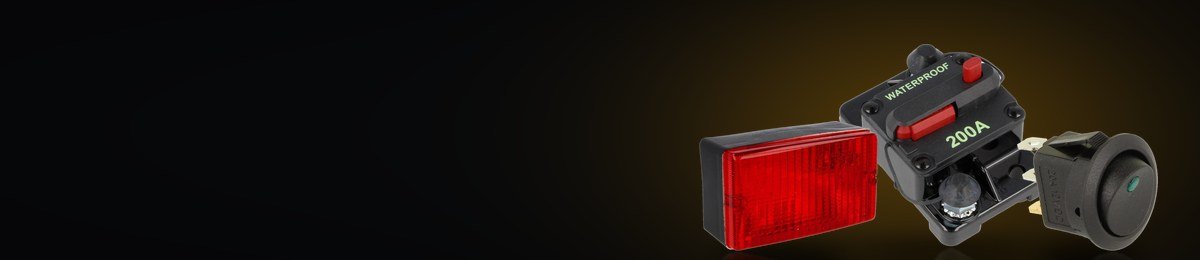
Top brands in Relays & Fuses

Showing 1–48 of 96 resultsSorted by latest






Relays & Fuses guide
Relays let a small switch or control signal turn on a heavy load, and fuses stop a fault from overheating the wiring. Here you will find 12 V and 24 V relays, glass, blade and ceramic fuses, manually resettable fuses, fuse holders and fuse boxes, including waterproof ones.
A relay is a switch worked by an electromagnet: a small coil current pulls in the contacts that carry the load. Automotive relays share standard pin numbers: 85 and 86 for the coil, 30 for the feed and 87 for the switched output. A changeover relay adds 87a, which is connected to 30 while the coil is off.
A fuse is a calibrated weak link that melts when the current stays above its rating for long enough. It protects the cable, so pick a rating below what the cable can carry and above the load’s normal current, with margin for motor start-up surges. The cable between the power source and the fuse has no protection, which is why the fuse belongs at the feed end.
The listings give type, size and rating.
- Relays: 12 V five-pin relays with a 40 A changeover contact or with a built-in fuse for up to 30 A, and a relay for 24 V systems.
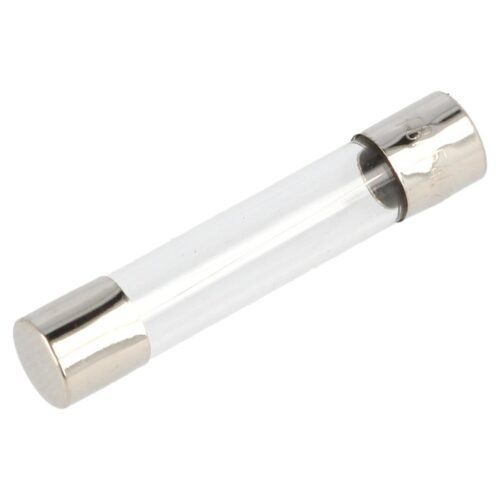
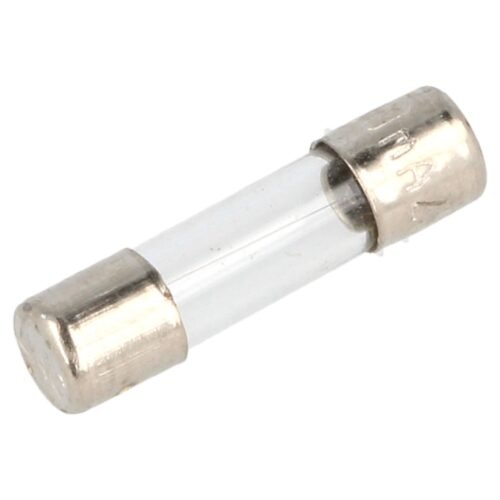
- Glass fuses: 5 × 20 mm and 6.35 × 32 mm sizes, in ratings such as 0.25, 3.15, 16, 25 and 35 A.
- Blade fuses: standard and mini sizes, singly in ratings such as 2, 20 or 40 A, or in assortments, colour-coded by rating.
- Ceramic fuses: the older torpedo type, as 40 A fuses or an assortment.
- Resettable fuses: manual-reset types, such as 5, 15 or 25 A, trip like a fuse and stay off until the button is pressed, so a fault cannot keep cycling.
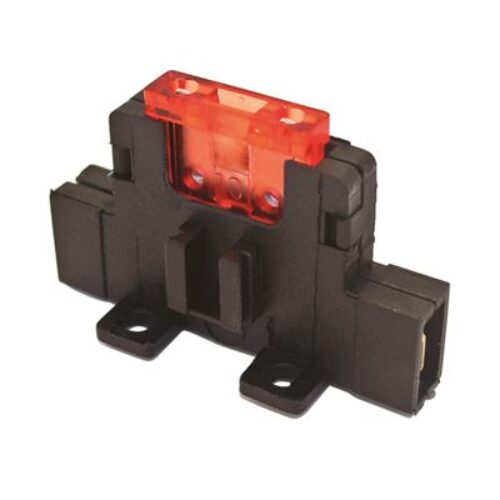
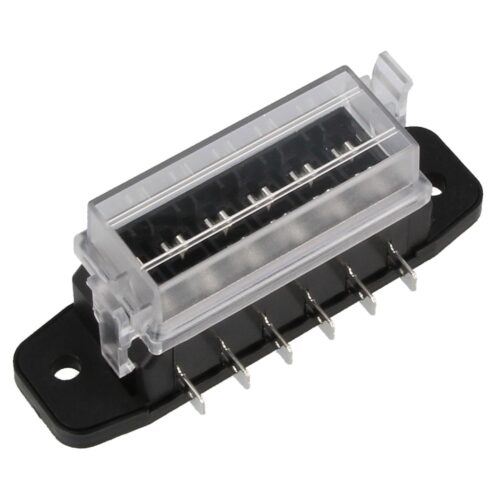
- Holders and boxes: holders for standard blade fuses, 6- and 12-way boxes with fuses, and waterproof boxes for 6, 8 or 10 fuses.
Mount relays with the terminals facing down so water cannot collect in them, and away from exhaust heat. When an ECU output drives the coil, use a relay with a suppression diode or resistor unless the output is built to absorb the switch-off spike. Crimp every connection properly, because a loose spade heats up under load and can melt the relay base.
Label each fuse position and carry spares of every rating in the car. A fuse that blows again straight away points to a fault, and a higher rating only moves the failure into the wiring.

Store Information
TrackTool Factory
Sluispolderweg 7A
1505 HJ Zaandam
The Netherlands
KvK 97296902
BTW NL867990375B01
