
Top brands in Sway Bar Bushings

Popular cars in Sway Bar Bushings
- Subaru Legacy BLSway Bar Bushings for the Subaru Legacy BL: 2 products
- Subaru Legacy BPSway Bar Bushings for the Subaru Legacy BP: 2 products
- Subaru Forester SGSway Bar Bushings for the Subaru Forester SG: 2 products
- Subaru Legacy BESway Bar Bushings for the Subaru Legacy BE: 2 products
- Subaru Legacy BHSway Bar Bushings for the Subaru Legacy BH: 2 products
- Toyota GT86 ZN6Sway Bar Bushings for the Toyota GT86 ZN6: 1 product
- Subaru Legacy BMSway Bar Bushings for the Subaru Legacy BM: 1 product
- Toyota GR86 ZN8Sway Bar Bushings for the Toyota GR86 ZN8: 1 product

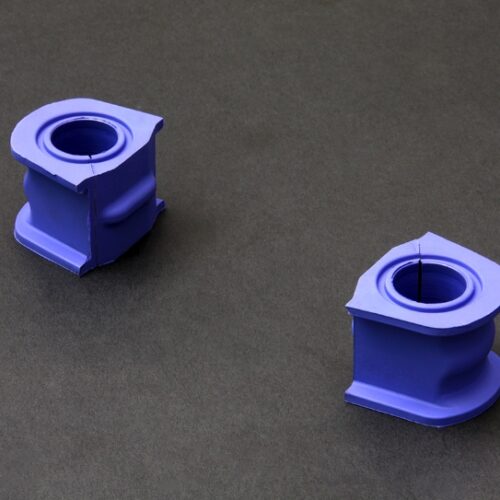


Sway Bar Bushings guide
Sway bar bushings, also known as anti-roll bar bushes, hold the bar to the body or subframe while letting it rotate. A bush sits in a bracket on each side of the car and clamps around the bar. You will find reinforced bushes here, and front and rear bushes named by vehicle.
An anti-roll bar works by twisting along its length, so its mounts should let it turn but not shift. A soft or worn bush lets the bar move in its bracket before it starts to twist, so roll resistance builds late and the car feels vague on turn-in. Worn bushes also let the bar knock or creak over bumps.
Original bushes are usually soft rubber, chosen to keep vibration and noise out of the body. A reinforced bush holds the bar more tightly, so roll resistance builds sooner, at the cost of more vibration. Firmer bushes often let the bar turn inside them rather than flexing with it, so their bore needs grease to stay quiet.
Match three things:
- Bar diameter: the bush bore must match the bar. Measure the bar where the bushes sit, especially if it is not the original bar.
- Axle: front and rear bars usually differ in diameter, so check the axle named in the title.
- Reinforced or not: some listings are marked reinforced. They suit fast road and track use where the extra vibration is acceptable.
Replace both bushes on a bar together, and check the end links too, as a knock blamed on the bushes often comes from a link. Clean rust and dirt from the bar where the bushes sit, since grit trapped in a bush wears it and makes it creak. Grease the bore only as the bush maker recommends, then tighten the brackets with the car at ride height.
Recently Viewed Products


Store Information
TrackTool Factory
Sluispolderweg 7A
1505 HJ Zaandam
The Netherlands
Chamber of Commerce (KVK): 97296902
VAT: NL867990375B01