
Top brands in End Links
Showing all 9 resultsSorted by latest




End Links guide
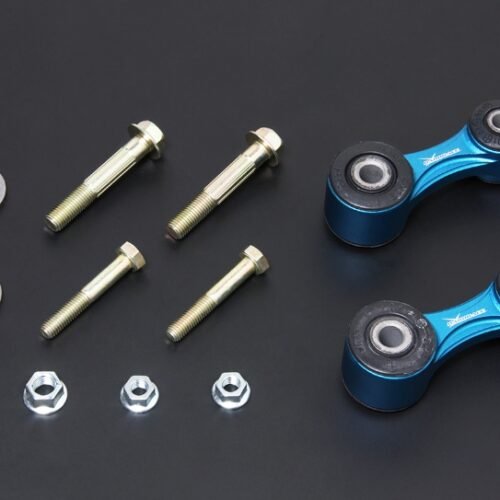
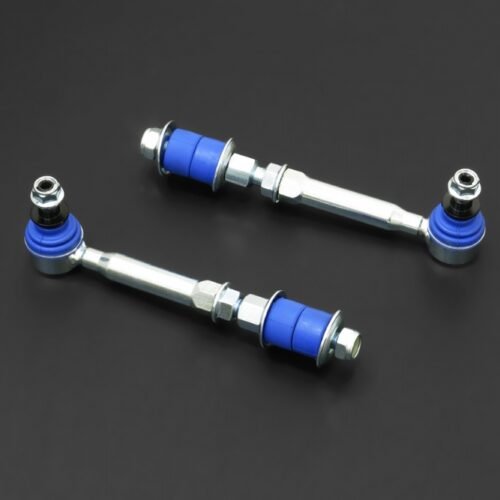
End links, also called drop links or stabiliser links, connect each end of the anti-roll bar to the suspension. They pass the bar’s force to the wheels so the bar can resist body roll. Front and rear links, reinforced links and universal link bushes are listed here.
As the car rolls, the outer suspension compresses and the inner extends. The anti-roll bar twists between them, and the links carry that twisting force into the arms or struts. The result is extra roll stiffness without stiffer springs.
Any play or soft bush in a link is movement the bar never sees. A worn link lets the bar act late and unevenly, and it often knocks over small bumps. Reinforced links are built for the higher loads of a stiffer bar, sticky tyres or regular track use.
What to check before ordering:
- Axle: front and rear links usually differ in length and mounting, so match the position in the title.
- Standard or reinforced: a reinforced link makes sense with a thicker or adjustable bar, or for track days.
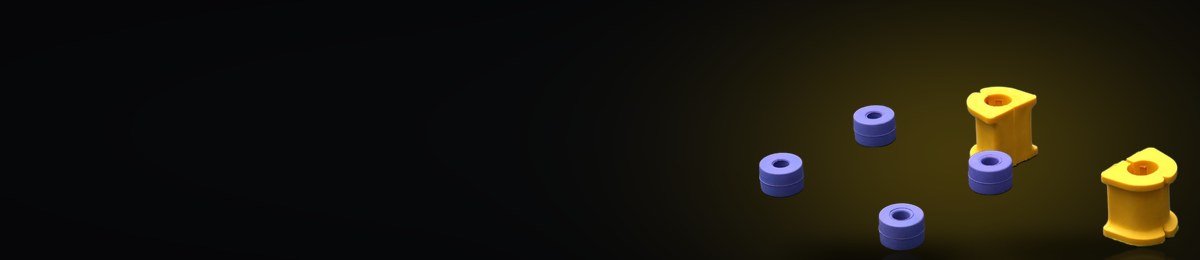
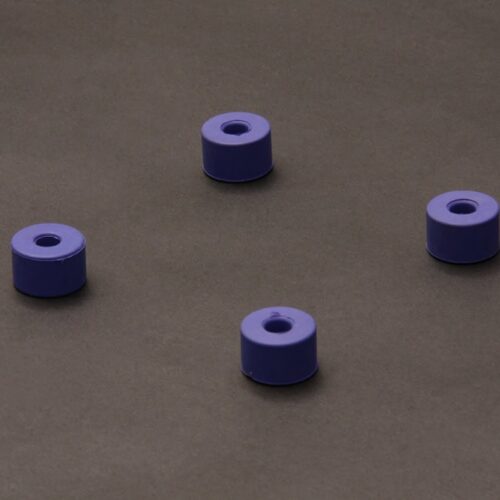
- Universal link bushes: replacement bushes for links that use them, so worn bushes can be renewed without replacing the whole link.
- Length: on a lowered car, links of original length can leave the bar at a steep angle. Check that the bar sits close to level at ride height.
Tighten links with the car on its wheels at ride height, or with both sides supported at the same height, so any bushes are clamped in their resting position. Where link length can be adjusted, set it so the bar carries no preload, as a twisted bar shifts weight between diagonally opposite corners.
On ball-jointed links, hold the stud with a key in its end while the nut is turned, so the ball does not spin. Check the joint boots for splits, and recheck the nuts after the first few drives.
Recently Viewed Products



Store Information
TrackTool Factory
Sluispolderweg 7A
1505 HJ Zaandam
The Netherlands
KvK 97296902
BTW NL867990375B01
