
Top brands in Vacuum Hose

Showing all 48 resultsSorted by latest
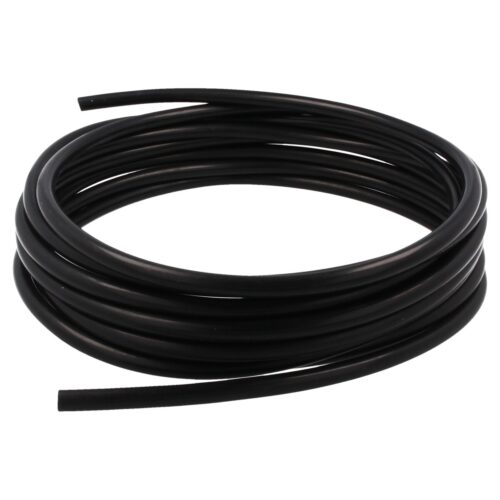


Silicon Hose 3m Pack – 4mm Reinforced Vac Hose – Black


Silicon Hose 3m Pack -3mm Vac Tube -Black


Vacuum Hose guide
Vacuum hose carries the small pressure signals a turbo engine depends on: to the wastegate actuator, boost controller, blow-off valve, gauges and manifold pressure sensor. This category holds silicone vacuum hose, plain and reinforced, from 2 to 19 mm bore, together with silicone blanking caps and spring clamps.
These lines see vacuum at idle and boost under load. A thin, plain wall can collapse under suction or balloon and split under boost, and either way the device at the far end receives the wrong signal. A leaking wastegate line, for example, lets the actuator see less pressure than the manifold, so the wastegate opens late and boost climbs.
On the manifold side, a split line lets in air that an air mass sensor has not measured, which leans the mixture and upsets the idle. Reinforced hose holds its shape both ways, and silicone tolerates the heat around a turbo.
Choose by bore, wall and colour:
- Bore: match it to the outside diameter of the nipple. Sizes run from small ones such as 3, 4 and 6 mm up to 10, 12 and 19 mm.
- Plain or reinforced: reinforced hose in 4, 6, 8 and 10 mm suits lines that carry boost, while plain tube suits lines that see little pressure.
- Length: sold by the metre, in 5 m lengths or in 3 m packs.
- Colour: black, blue, red or transparent. Colour-coding helps you trace lines, and transparent hose shows any oil or moisture inside.
- Accessories: silicone blanking caps from 4 to 19 mm to seal unused ports, and spring clamps for 6 mm hose.
Push each hose fully over its nipple and secure every line that carries boost with a clamp, so it cannot blow off. Route lines clear of the exhaust manifold, turbo housing and moving parts, without bends tight enough to kink. Short runs to an actuator or controller respond faster.
Silicone vacuum hose is not for fuel or oil, which make it swell and weaken, so use hose rated for those jobs on fuel lines and oily breathers. When boost or idle misbehaves, check these lines first; a pressure or smoke test quickly shows a split.

Store Information
TrackTool Factory
Sluispolderweg 7A
1505 HJ Zaandam
The Netherlands
KvK 97296902
BTW NL867990375B01
