Top brands in Couplers



Showing 1–48 of 177 resultsSorted by latest



Couplers guide
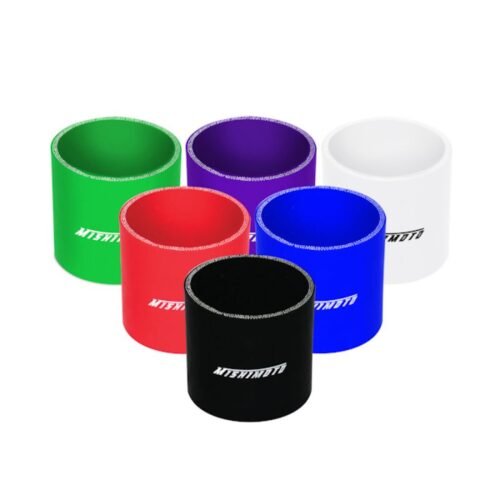
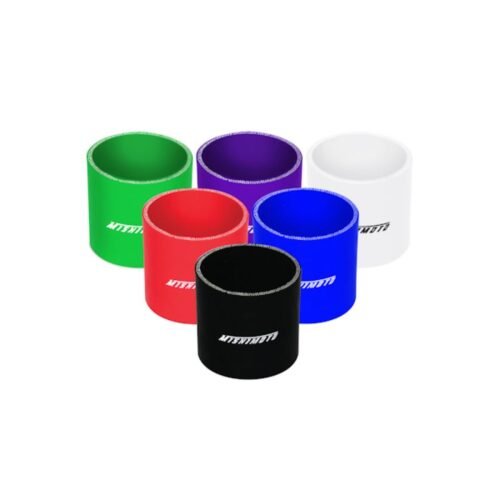
A coupler is a short straight sleeve that joins two pipes of the same diameter. In silicone, it also lets the engine move on its mounts while the pipes and intercooler stay fixed to the body. The range covers plain and hump silicone couplers, fuel- and oil-resistant couplers, aluminium joiners, and a few transition and 90-degree couplers.
On the boost side, pressure acts on the area of each pipe end and tries to push the joint apart. That force grows with the square of the diameter, so a large coupler sees far more of it than a small one at the same boost. Reinforcement plies keep the wall from ballooning, and a bead on each pipe end gives the clamp something to hold behind.
The main choices are:
- Silicone couplers: mostly 89 mm long, in diameters such as 19, 25, 51, 57, 63 and 76 mm, in black or blue.
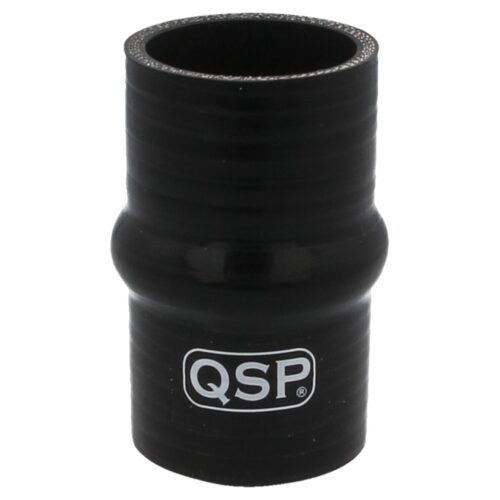
- Hump couplers: sizes such as 54, 60, 63, 70 and 80 mm. The hump absorbs more movement and misalignment than a plain sleeve.
- Fuel- and oil-resistant couplers: such as 51 and 57 mm, for pipes that carry oil mist from a crankcase breather.
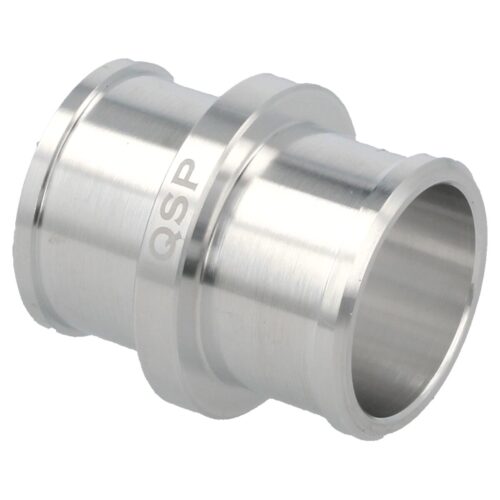
- Aluminium couplers: short joiners in silver or black, in sizes such as 13, 35, 51 and 89 mm, many listed at 46 mm long. They connect two hoses end to end and are sized by outside diameter.
- Transition and angled couplers: a 63.5 to 76 mm transition coupler, a 63.5 mm 90-degree coupler and a 90-degree reducer from 1.75 to 2.5 in.
Fit couplers onto clean, dry pipes, because oil or rubber lubricant left on a pipe lets the coupler creep off under boost. Push the pipes in until their ends nearly meet in the middle, leaving a small gap so they cannot rub. Each clamp belongs behind its bead.
Choose clamps for the coupler’s outside diameter once it is fitted, not for the pipe size. After the first runs under boost, re-check the clamps, as silicone relaxes a little under clamp pressure. Replace any coupler that is swollen, oily or cut at the clamp line.

Store Information
TrackTool Factory
Sluispolderweg 7A
1505 HJ Zaandam
The Netherlands
Chamber of Commerce (KVK): 97296902
VAT: NL867990375B01