

The Golf GTI with the Performance Pack is the Mk7 that club racers and track builders start from, and with good reason. It leaves the factory with the 340 mm front brakes of the Golf R, an electro-hydraulic front differential lock and around 1,350 kg to carry. Yet on any circuit, the standard car runs into the same limits. The pads and fluid give up within a few laps, and the front camber stops at about −1°. Oil and coolant temperatures climb through a long session, and the engine's breather lets oil into the intake under hard braking.
This is how we would build one. The work comes in three levels: spirited drives and first track days, regular track days, and a full track car. Each step covers the parts we list, what they do, the numbers that matter, and what owners and race teams who track these cars report. The GTI Performance is the reference car. Where the standard GTI, the Golf R or the Clubsport differs, we say so.
Three well-documented builds come up again and again, always under the same names. The race team is a UK motorsport team that took a GTI Performance from road car to club endurance champion, and built a second as a track car. The magazine car is an American magazine's long-term project GTI, driven on the road and on track. The logged GTI is a 2019 car whose owner records every session in detail and publishes the data.
The car: GTI Performance, Mk7 and 7.5
| Item | Specification |
|---|---|
| Engine | EA888 Gen 3 2.0 TSI: 230 PS in the Mk7 (2013–2017), 245 PS in the 7.5 (2017–2020) |
| Front brakes | 340 × 30 mm vented discs (minimum 27 mm), single-piston sliding calipers |
| Rear brakes | 310 × 22 mm vented discs (minimum 20 mm) |
| Front differential | VAQ: an electro-hydraulic multi-plate lock |
| Gearbox | 6-speed manual or 6-speed DSG; 7-speed DSG on the 7.5 Performance |
| Suspension | MacPherson struts at the front (55 mm strut), multi-link at the rear; DCC adaptive dampers as an option |
| Wheel fixing | 5 × 112, 57.1 mm centre bore, M14 × 1.5 bolts with an R13 ball seat, 120 Nm (confirm in your handbook) |
- GTI without the Performance Pack. It has 312 × 25 mm front discs (minimum 22 mm) and a solid rear disc of 272 or 300 mm, depending on the market, and an open front differential. Every brake step below applies, but the parts are a different size, so measure the disc before ordering.
- Golf R. The same order of work, with its own four-wheel-drive springs, coilovers and anti-roll bars. It is heavier, so it is harder on its tyres and brakes. Owners who track one change the Haldex coupling oil more often than the service plan asks, and have the pump filter cleaned at the same time.
- Clubsport and Clubsport S. The Clubsport's springs are about 10 % stiffer all round, with the front softened relative to the rear to cut the GTI's understeer. The brake sizes are the GTI Performance's, and one road test still called the Clubsport's brakes "the weakest link". The Clubsport S takes its own rear pads.
Three details decide which suspension part fits your car. The first is the front strut diameter: KW lists 55 mm for the GTI, and some kits come in 50 and 55 mm versions. The second is the front axle load, which splits several H&R sets at 1,010 kg; read it from the registration papers. The third is DCC adaptive damping, which needs dampers made for it or a cancellation module.
Before the first track day
Owners who track these cars advise driving the car largely standard at first, with some tuition if you can, and letting the first day show what it needs. The brakes are the exception. The standard pads fade within a few hard laps and the factory fluid can boil, so fit the level 1 fluid and pads before the first day. The checks below need few parts, if any, and each one deals with a known Mk7 quirk.
Driver aids
XDS imitates a locking differential by braking the inside front wheel, and on a circuit that turns into heat in the front brakes. The logged GTI's owner calls it "a murderer of brakes". The race team's car was over a second quicker on its second lap with XDS switched off. Set ESC to Sport, set the differential to its Sport setting in the Individual driving profile, and switch XDS off with a diagnostic tool. Some owners also code the differential's "Increased Traction" setting. Switch Front Assist off too: one owner had it brake hard at 115 mph (185 km/h) in the rain. Turn off the automatic door locking as well, so that marshals can open the car.
Oil, coolant and the breather
Fill the oil to the maximum mark, and never above it. On the logged GTI, an overfill of 1 to 1.25 litres sent oil straight into the crankcase breather. Under long braking, oil also collects at the front of the cylinder head and is drawn into the intake. You see it as smoke when you brake, and as oil use. One Golf R used 2 litres in two and a half hours of track time. Take a litre to the circuit. Check the level a few minutes after each session, on level ground, once the oil has drained back.
Check the coolant level with the engine cold. Never open the expansion tank on a hot engine. Look for coolant traces around the water pump and thermostat housing: leaks there are common on this engine, often around 40,000 km.
Tyres, tow eye and the paddock basics
Set the tyre pressures cold, then read them hot as you come in. Owners land between 32 and 38 psi (2.2 to 2.6 bar) hot, depending on the tyre, and the logged GTI found its best laps at about 35 psi hot. Screw the factory tow eye into the front bumper, because many organisers require a towing point. Check that the battery is held down and that nothing is loose in the cabin or boot. Bring a helmet made to a recognised standard.
Level 1: spirited drives and first track days
At this level the car stays a road car, and the money goes into the brakes, because they give up first. On the standard pads, track-day owners and the race team report about three hard laps before the fade sets in. The magazine car had nearly used up its factory pads and discs after 58 laps.
Brake fluid: the boiling point you actually have
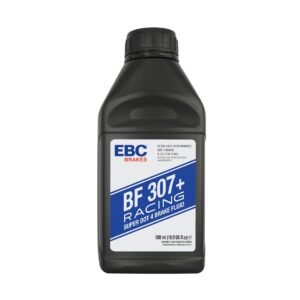
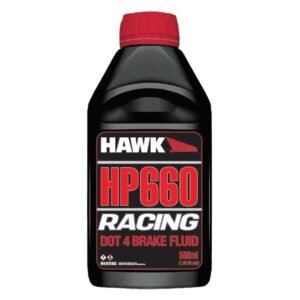
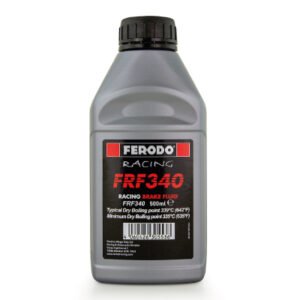
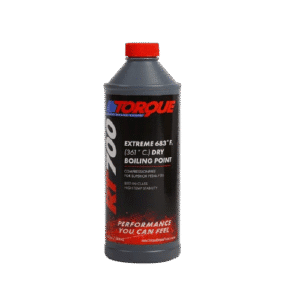
The dry boiling point is the figure for fresh fluid from a sealed can. The wet boiling point is the figure after the fluid has taken on about 3.7 % water, which a road car's fluid approaches with age. A road car lives on its wet boiling point, and the DOT 4 legal minimum for it is only 155 °C. The system holds about 1.2 litres, and Volkswagen specifies a DOT 4 fluid to its VW 501 14 standard. Three of the fluids below are sold as DOT 4 or DOT 5.1. Ferodo sells the FRF340 for race use only, and it is thicker at −40 °C than the DOT 4 limit allows. The RT700 listing gives no DOT class. EBC says not to mix BF307+ with other fluids, and our Hawk listings say the same, so flush the old fluid out completely rather than topping up.
| Fluid | Type | Dry / wet boiling point | Where it fits |
|---|---|---|---|
| Ferodo FBZ | DOT 5.1 | 270 / 185 °C | Fast road; thin when cold (800 mm²/s at −40 °C) |
| EBC BF307+ | DOT 4 race | 310 / 195 °C (typical) | Track days; EBC says change it every 2–3 events |
| Hawk HP660 | DOT 4 race | 320 / 195 °C (minimum) | Track days; Hawk says replace it every season |
| Ferodo FRF340 | Race | 339 / 199 °C | Circuit cars; Ferodo rates it for racing only |
For a car that is driven to the circuit, we would fit a DOT 4 race fluid such as the EBC BF307+ or the Hawk HP660. Change it every two or three track days, and at least once a year. Bleed every caliper until clean fluid runs through, and use a pressure bleeder if you have one. Some organisers also ask when the fluid was last changed.



Brake pads: friction and the temperature window
Every pad compound works inside a temperature window, and its friction coefficient (µ) changes across it. A road pad bites from cold but fades once the disc runs past its window. A race pad works the other way round: its window starts higher and reaches much further, to temperatures that would destroy a road pad. Some race pads also need heat before they bite. A level 1 pad must work from cold and still cope with a 20-minute session.
| Pad | Friction and temperature (maker data) | Road approval | Our view |
|---|---|---|---|
| Pagid Street+ | µ about 0.49–0.50 from 100 to 400 °C (from Pagid's graph) | ECE R90 | Road-legal; for the road and occasional track days |
| DBA Xtreme Performance | Semi-metallic carbon fibre; "high initial bite" (DBA) | ECE R90 | Road-legal; DBA also names club track days |
| Ferodo DS2500 | µ about 0.41 on average from 0 to 500 °C; falls to 0.31 at 700 °C | None (Ferodo) | The track-day pad most owners settle on |
| EBC RP-1 | µ 0.45, flat from 100 to 750 °C | None | Track pad; EBC suggests it for the Mk7 GTI |
| Ferodo DS3.12 | µ rising to a flat 0.54 from 450 to 700 °C; stable to 850 °C | None | Race pad for regular and long sessions |
For most level 1 cars, owners settle on the Ferodo DS2500, and we agree for track use. Ferodo gives it a working range from 0 to 500 °C, so it works on a cold morning. One Golf R owner found the factory brakes "hold up okay with DS2500s and good fluid", with heat issues late in a 25-minute session. On the road it has a catch: Ferodo gives it no ECE R90 approval, and does not recommend it for road use in countries that require R90. In those countries, fit Pagid's Street+ or DBA's Xtreme Performance for the road, and change to the DS2500 for track days. The Street+ is a road pad first: the magazine car wore a set out in about two hours of track time. EBC no longer recommends its Yellowstuff for dedicated track use, and one GTI owner who tracked EBC's Redstuff fast-road pad got smoke, blue discs and boiling fluid. Another owner warns against tracking it.
The Performance Pack's 340 mm discs take a different pad shape from the 312 mm discs of the standard GTI, so check the listing before ordering. Rear pads also differ between cars with the electric parking brake and cars with a handbrake lever, so order them by the car, not by the disc size. At the rear, the pads do a small share of the braking. Upgrade the fronts first, and never fit a more aggressive pad at the rear than at the front. The rear tyres would reach their grip limit first and make the car unstable under braking, even with ABS. On cars with the electric parking brake, open the pad-change mode with a diagnostic tool, then push the rear pistons straight back without turning them. Close the mode with the tool once the new pads are in, and keep a battery charger connected throughout. There is more on compounds in our article on brake pads for track use.



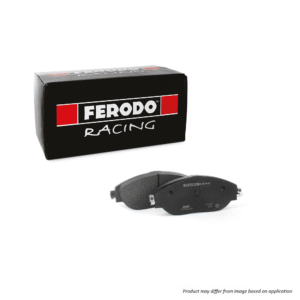
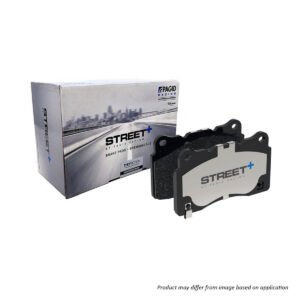
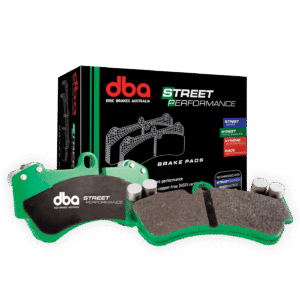
Bed new pads in as their maker describes; the procedure differs by compound. DBA asks for 10 to 15 firm stops from 50 to 10 km/h. EBC's RP pads want 10 light stops from 150 to 80 km/h, then 10 hard stops from 180 to 60 km/h. After three minutes at 80 km/h, end with 5 light stops from 150 to 80 km/h. Ferodo's race pads need 500 to 700 °C during bedding; the DS3.12 and DS1.11 we list are not the pre-bedded versions. Whatever the pad, finish with a cool-down drive, and do not hold the car on the brakes while they are hot.
Discs, lines and air
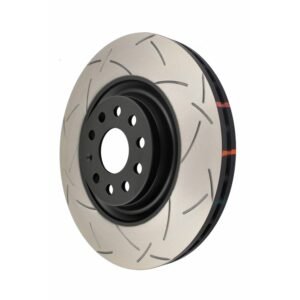
The standard 340 mm discs are 30 mm thick new, with a wear limit of 27 mm; DBA gives 28 mm for its 4000 Series disc. Use the limit stamped on your disc, and measure before the season. Fine heat cracks on the face are normal on a tracked disc. Retire it before the cracks reach the edge. The logged GTI retired its discs after 14 track days, once a fingernail caught in the cracks and several were close to the edge. When the discs are due, choose plain or slotted discs. Avoid drilled discs: DBA itself does not recommend them for track days.
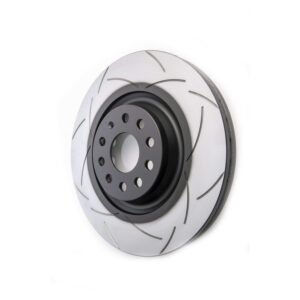
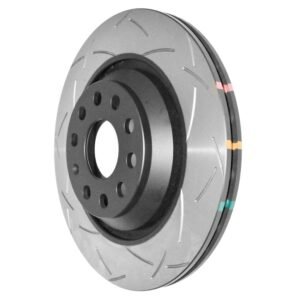
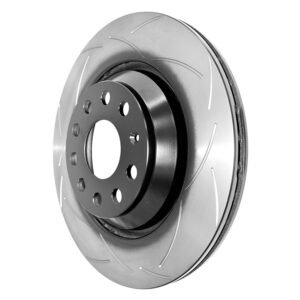
Of our one-piece discs, DBA's Street Series T2 is the road choice, with bi-directional slots and DBA's Kangaroo Paw ventilation, which uses pillars in place of straight vanes. The 4000 Series T3 is the one we would take to the circuit. Its high-carbon iron is heat-treated to relieve stress, and its Thermo-Graphic paint stripes show the peak temperature the disc has seen. DBA sells its discs singly, so order two per axle.
Braided stainless lines swell less than rubber hoses, so the pedal stays firmer. EBC's BLA1993-4L set covers all four corners. Fit it during the fluid change, so the system is bled only once.
Next comes air. Owners fit the brake air guides from the Audi RS3, parts 8V0 407 811 and 812, cable-tied to the lower wishbones, and call them "fairly effective". Trim the dust shields rather than removing them, because the ABS sensor wiring behind them can melt. The magazine car's 3D-printed deflectors lowered its peak caliper temperature only slightly. Even so, its brakes recovered within a few corners and only became a concern after 15 to 20 minutes on track.
Alignment
The standard front camber tops out at about −1°, and on track that wears the outer shoulders of the front tyres. Ask for the most negative camber the standard parts allow and zero toe at the front. The front subframe's bolt holes are oversized, so shifting it can even out the camber from side to side. The subframe bolts are stretch bolts, so have them replaced whenever the subframe is moved. Keep the printout, so the settings can be repeated. More camber needs other parts, which come at level 2.
Suspension for a fast road car
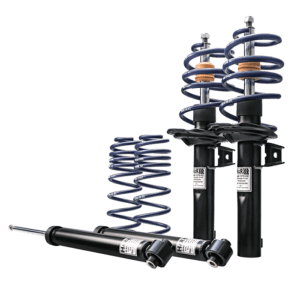
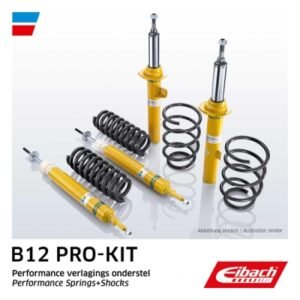
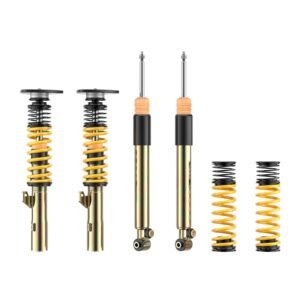
Leave the suspension alone for the first few track days unless the car covers mostly fast road miles. For a car that does, lowering springs or a matched spring-and-damper kit firm up the body control as a step before coilovers. H&R's springs lower the GTI by about 35 mm and work with DCC. Set 28840-1 is for front axle loads up to 1,010 kg, and 28840-2 from 1,011 kg. H&R's Cup Kits pair springs with matched dampers: the Comfort lowers about 35 mm at each end, the Sport about 50 mm front and 45 mm rear. Eibach's B12 Pro-Kit combines Pro-Kit springs with Bilstein dampers, and Eibach quotes up to 40 mm of lowering across the B12 range. A matched kit replaces the adaptive dampers, so a DCC car needs a cancellation module with it.
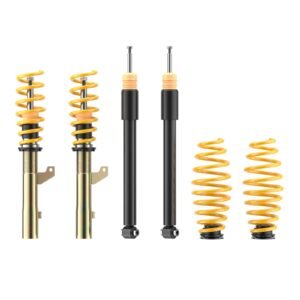
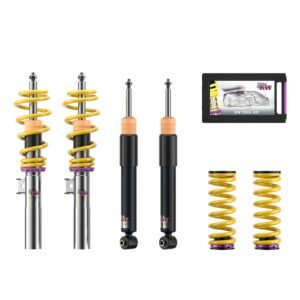
If you want height adjustment from the start, the entry coilovers are the ST X and the KW V1. Both have fixed damping, ST in galvanised steel and KW in stainless. Don't chase ride height: every centimetre lower changes the front geometry and uses up bump travel.
Level 2: regular track days
Once track days are a habit, the car has to last a full day and keep its tyres. This is where owners spend: better pads and air to the brakes, front camber and a stiffer rear anti-roll bar. Then come a second set of wheels for track tyres, a fix for the oil breather and, if the oil runs hot, an oil cooler. Owners rarely buy uprated discs at this stage, and one calls them a waste of money.
Race pads: the pairs that fit both ends
When the DS2500 starts running out of temperature, you feel it late in a session: the same stop takes more pedal effort. That is the point to step up to a race pair. Of the race pads we list, two pairs suit both ends of the 340 mm car:
- Ferodo DS3.12 front, DS1.11 rear. The DS3.12 builds to a flat µ of 0.54 between 450 and 700 °C. The DS1.11 holds a near-flat µ of 0.475 to 0.49 from 150 to 700 °C, and is kind to discs. Ferodo lists it for the rear of touring and GT cars, and for track cars on standard brakes. The logged GTI has done 15 track days on its factory calipers, and now runs this pair with a race fluid and RS3 air guides.
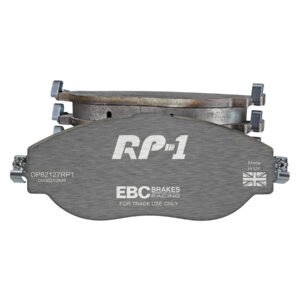
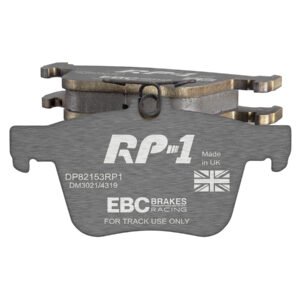
- EBC RP-1 at both ends. EBC names the Mk7 GTI as a car with strong servo assistance. That suits the RP-1's bite, which is lower and more progressive than the RP-X's: µ 0.45, flat from 100 to 750 °C.
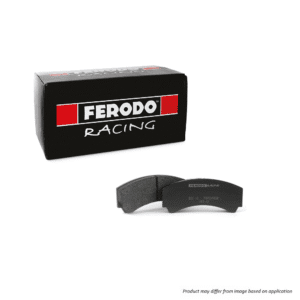
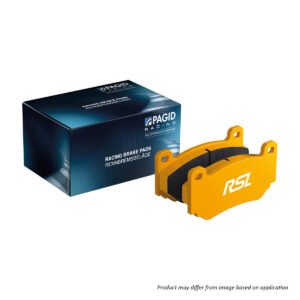
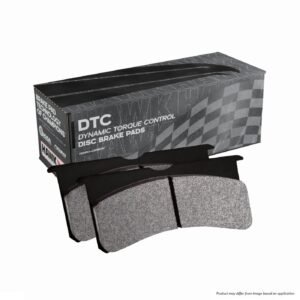
Pagid's RSL 29 and Hawk's DTC-60 are front pads only in our range, so pair them with a milder rear. Pagid describes the RSL 29 as medium friction with long pad and disc life. The magazine car ran a set through a week-long road and track event, then thousands of road miles and four more track days. They were still under half worn. Hawk rates the DTC-60 for use from about 205 °C, with an optimal window of 370 to 595 °C, so it needs heat before it works. Race pads are not road pads: none of them is road-approved, and they are noisy and dusty when cold. On a car that is driven to the circuit, fit them there and drive home on road-approved pads.

Wheels, tyres and studs
Summer road tyres overheat within a session. The race team's road tyres started to overheat after 12 to 15 minutes, while its track tyres held their grip through a 15- to 20-minute session. The usual answer is a second set of 18-inch wheels on track tyres, swapped in the paddock. We do not sell tyres, but we list the wheels.
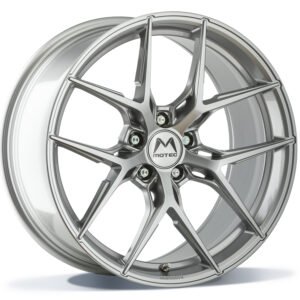
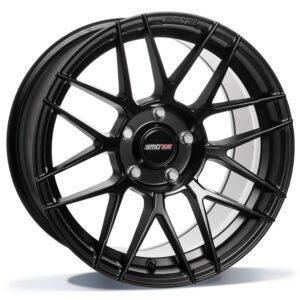
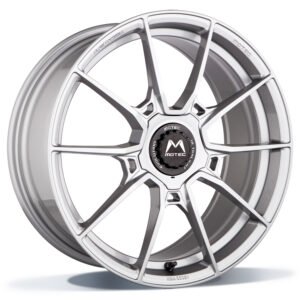
The size the documented builds agree on is 18 × 8.5 inches at ET42 to ET44, with 235/40 or 245/40 R18 tyres. A 255/40 R18 rubs slightly. Wider tyres need 9- or 10-inch wheels, and the 10-inch builds needed wider wings. The three Motec 8 × 18 ET45 wheels below weigh 7.8 to 7.9 kg, close to the 7.7 kg one owner quotes for the Clubsport's factory 18 × 7.5 wheels. They sit at the narrow end of the 18 × 8 to 8.5 window owners use. Their load ratings are 600 to 650 kg per wheel. Motec's approval assumes centring rings from 66.45 to 57.1 mm, which we do not list, and the 60° cone-seat bolts Motec supplies, tightened to 120 Nm. On the road, the approval covers 225/40 R18 tyres without conditions; check its conditions for other sizes.
On a car that changes wheels at every event, we would convert the hubs to studs. Studs spare the hub threads repeated bolt changes, and they hold the wheel while you fit it, so changes in the paddock get quicker and safer. Specialists screw the studs into the hub with a high-temperature thread locker and tighten them to the stud maker's figure, since kits differ widely. They let the thread locker cure as its maker specifies before driving. They torque the nuts to 120 Nm, check that torque again after the first hot session, and fit new studs every season. Match the stud length to the nut: long enough for full thread engagement, and with a closed nut, short enough not to bottom out inside it. Check that nothing behind the hub touches the stud. The nut seat must match the wheel: 60° cone for the Motecs. A stud conversion changes the fastening the wheel was approved with, so check what that means for road use where you live.
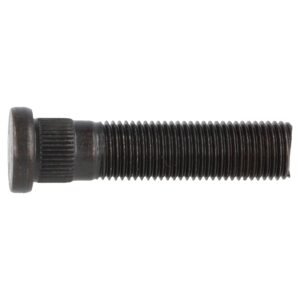
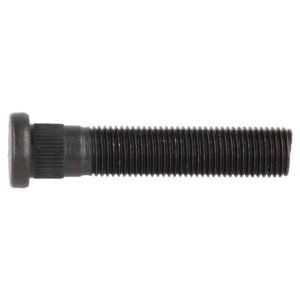
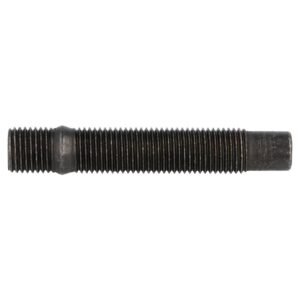
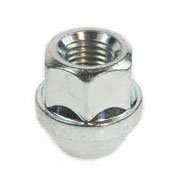
The ST part in that list is an open M14 × 1.5 nut with a 60° cone seat, although its title calls it a wheel bolt.
Front camber and coilovers
The documented Mk7 builds agree that front camber is the biggest single chassis gain. On track, owners run −2° to −2.5° at the front and about −1.8° to −2° at the rear. The heavily developed cars run about −3° to −3.2° at the front. The magazine car kept its standard dampers but got camber mounts and springs about 20 % stiffer, which lowered it about 25 mm. It reached −2.25°, and the magazine wrote that it "completely changes the character of the car". On a car that also covers road miles, one owner warns that much more than −1.5° at the front wears the inside shoulders quickly. Measure tyre temperatures across the tread rather than guessing. The race team aims for a spread of 5 to 10 °C, inside hottest.
We list no separate camber plates for the Mk7. In our range, the route to adjustable camber is the ST XTA. Its aluminium uniball top mounts adjust the front camber, not the caster, and it comes with linear race springs and helper springs. Factory parts are another route. The logged GTI's owner fitted the front knuckles of the later Audi RS3 (8Y) and measured about −0.4° more camber per side. One owner found the Clubsport S knuckles added about −0.5°, and the race team gained about 1° from the Clubsport's front hubs.
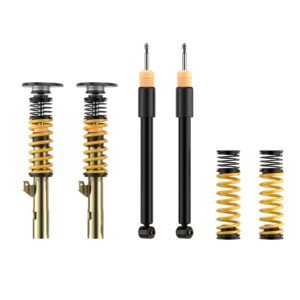
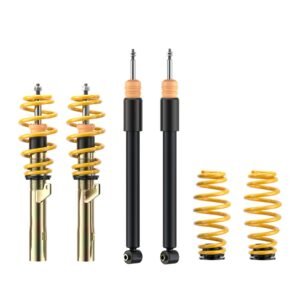
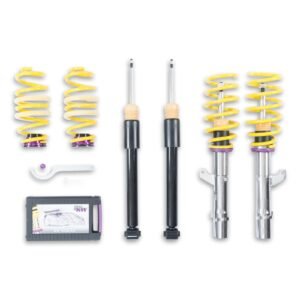
At this level, dampers with adjustable rebound are enough for a car that is driven to the circuit and home again. ST's XA and KW's V2 both have 16 rebound settings, ST in galvanised steel and KW in stainless. Start from the maker's base setting, change one thing at a time and note every click. For DCC owners, the premium option is KW's DDC Plug & Play, which keeps the factory damping buttons working. Otherwise, a cancellation module stops the warning lights when passive dampers go in.


Anti-roll bars
Nearly every documented build runs a stiffer rear bar of 25 to 26 mm, and the effect has been timed. The magazine car went from 1:22.44 to 1:21.67 with its new rear bar on the stiffest setting. On a later visit, with the new front bar on soft as well, it set 1:20.99. The race team kept the standard front bar on its race car. H&R warns that a stiffer front bar on its own tends to add understeer. Fit camber first, then the rear bar, and change one setting at a time.
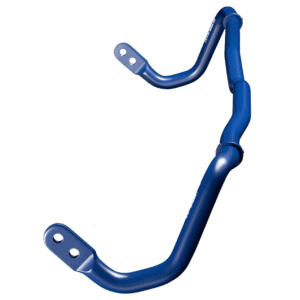
H&R's kits pair a front bar of 26 or 28 mm, with two settings, and a fixed rear bar of 24 or 26 mm for the multi-link rear. Eibach lists a 28 mm front bar with two settings and a 25 mm rear bar. The standard rear drop links are plastic, so the magazine car fitted adjustable metal links with its stiffer bar.

The oil breather, the catch can and the oil cooler
At this level the breather costs power as well as oil. The logged GTI recorded up to 18° of knock retard in hard right-handers as oil reached the intake. Owners usually fit a catch can: on one tuned Golf R, the can collected over 500 ml in half a day. The logged GTI's owner tried a factory route instead: the Mk8 Golf's breather valve. His parts were 06K 103 210 D, 06Q 103 495 B and 06M 906 094, plus a vacuum cap. On his first track day with it, at a different circuit, he saw no perceptible oil use. On an earlier day, before the change, he had used 1.4 litres (1.5 US quarts) over three 20-minute sessions. Treat it as one owner's experiment: he later found a modified version of the valve unsuited to 2019-on cars.
We list universal baffled catch cans. Connecting one to the Mk7's breather needs vehicle-specific hoses and fittings, so it is a job for an experienced workshop. Drain the can after every track day.
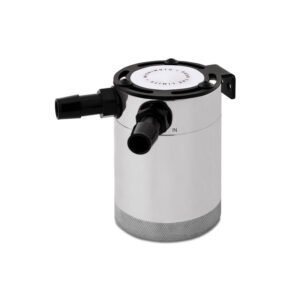
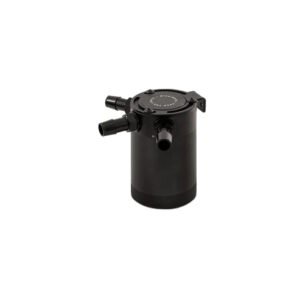
Golf R owners report oil temperatures from 117 to 138 °C on track. They disagree about the limit: some are relaxed about 125 °C sustained, others want it below 120 °C. The oil temperature on the dashboard is the real sensor reading, the logged GTI's owner found. A logger may show the ECU's modelled value instead, which can be up to about 17 °C out once an oil cooler is fitted. The coolant gauge is different: the race team's dash sat at 90 °C while its logger read over 110 °C. Use cool-down laps to bring the oil temperature down. If it still sits above 120 to 130 °C, fit an oil cooler: the race team advises one for any car that does regular track days.
Choose a kit made for the EA888. Some keep the factory oil-to-water cooler and add an air-to-oil cooler; others replace the factory cooler with an adapter plate. We do not list one for the EA888. Where it goes matters. One Golf R had its oil cooler in front of the intercooler, and on track its intake air ran about 31 °C (55 °F) above ambient. Moving the cooler to the centre and adding a duct cut intake temperatures by 59.5 % in street tests. On track, the car gained 8 to 9 mph (13 to 14 km/h) on a long straight.
Gearbox and engine mounts
The DSG copes with track work. In manual mode it still changes up by itself at the limiter, until its software is changed. Its gearing is long: the race team saw 132 mph (212 km/h) in fourth. Specialist data puts the 6-speed DSG's torque cut at 138 °C, with drive lost above 145 °C, so watch its temperature in long sessions. The race team fitted a larger 13-row DSG oil cooler, a factory part from another MQB car. Owners also fit an insert in the lower engine mount, the "dogbone". It cures wheel hop under hard acceleration, at the cost of more vibration at idle.
Level 3: a full track car
At this level the car is built for the circuit first. Expect to trailer it, or to accept a harder ride, more noise and more maintenance on the road. For reference, the ceiling is Volkswagen's own Golf GTI TCR race car. It runs 378 mm front discs with six-piston calipers and a multi-plate limited-slip differential, at a minimum of 1,230 kg with the driver.
Suspension set up for the circuit
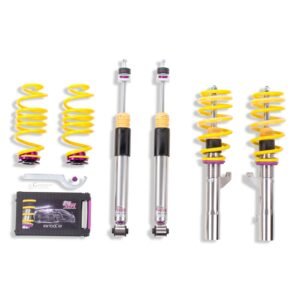
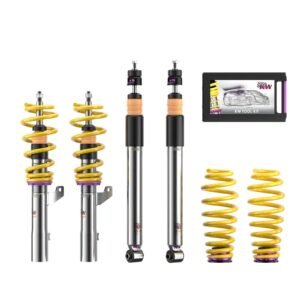
Now the dampers need separate compression adjustment. KW's V3 adds 12 low-speed compression settings to its 16 rebound settings, in stainless steel. KW lists a separate V3 for cars with DCC, which switches the adaptive system off. ST's XTA plus 3 goes further, with 24 low-speed and 24 high-speed compression settings, adjustable rebound, race springs and the uniball top mounts. High-speed compression controls how the car takes kerbs and bumps. Low-speed compression controls how quickly the body rolls and pitches as you turn in, brake and accelerate; the springs and anti-roll bars decide how far.
Set the car up with corner weights and a full alignment. The race-prepared cars run −2.5° to −3° at the front and −2° to −2.5° at the rear, with zero toe. Spring rates are rarely published, but the examples cover a wide range. The magazine car ran 210 lb/in front and 280 rear (about 37 and 49 N/mm). A UK specialist's road-and-track coilover uses 8 and 9 kg/mm (about 78 and 88 N/mm), and the logged GTI runs 450 lb/in (about 79 N/mm) at the rear. Lowering a strut car drops its front roll centre further than its centre of gravity, which lengthens the roll lever and adds roll. Roll-centre ball joints correct this on a lowered car, but they are disputed. The logged GTI ran them at standard height and found them "nearly undriveable at the limit" from bump steer.
Brakes for long sessions
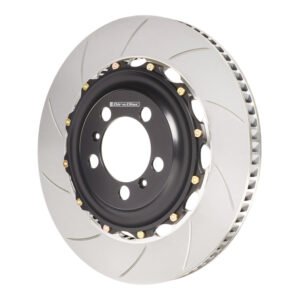
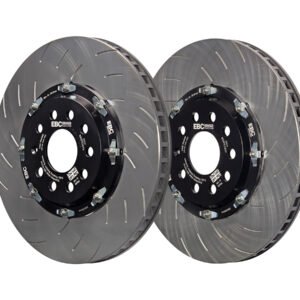
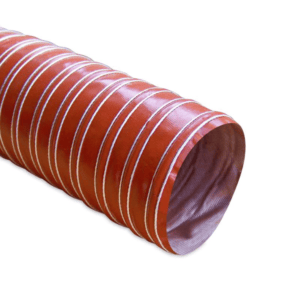
Keep the race pairs from level 2 and add two-piece floating discs at the front. Girodisc's A1-171 weighs 9.21 kg against 10.80 kg for the standard disc, by Girodisc's figures. That saves about 1.6 kg of unsprung, rotating mass at each front corner. The disc has an aluminium centre and replaceable friction rings. Duct air to the centre of each front disc, too, where the vanes draw it through. Heat-resistant silicone ducting is in the list below.
A big brake kit comes into play on tuned cars and in long races. The race team's two GTIs ran six-piston kits, while a 343 hp time-trial GTI kept the factory brakes with track pads. In a testimonial EBC published, a tuned Golf R owner moved his braking point at an American circuit from the 500 board to nearly the 400 board. We do not list a big brake kit for the Mk7. If you fit one, check the master cylinder match and the brake balance, and plan for race pads, since most kits come with road-grade pads.

Cooling
A tuned GTI runs hot in a long session. Without an oil cooler, the race team's second GTI reached 130 °C oil and 110 °C coolant after 15 to 20 minutes at Donington, on a 16 °C day. On a tuned car, fit the oil cooler from level 2 first.
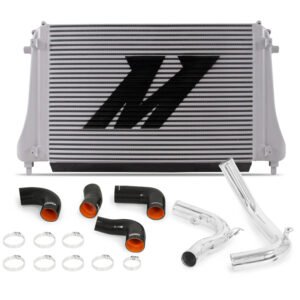
The GTI's standard intercooler is smaller than the Golf R's, and on a tuned car the intake temperature rises over a few laps. The magazine car slowed after two laps at pace until it had a larger intercooler. But size is not everything. The race team's large intercooler starved the radiator of air and sent the coolant above 110 °C. The team went back to a factory intercooler, the Golf R's, and recommends a factory one below about 340 to 350 hp.
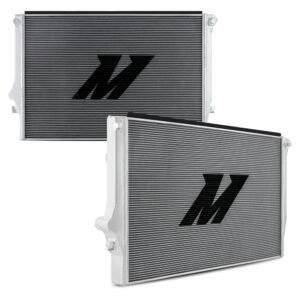
A bigger radiator alone rarely fixes coolant temperature. Mishimoto's own test of its radiator, with a 42 mm core against 27 mm standard, showed a coolant drop of only about 3 °C (5 °F) on a Golf R. What the radiator changes is construction: welded aluminium tanks in place of the factory's crimped plastic ones. Mishimoto lists both its intercooler kit and its radiator for 2015-on cars, and the intercooler kit for manual and 6-speed DSG gearboxes only. Its hot-side pipe may not fit a car with the 7-speed DSG. On a tuned car, log oil, coolant and intake temperatures before and after fitting either.
Seat, harness and safety equipment
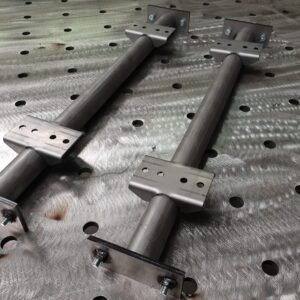
A bucket seat holds you in place, so your hands steer instead of bracing. Choose an FIA-approved seat. Under the FIA rules, an 8855-1999 seat is valid for five years from the date on its label, plus two years with the maker's extension label. The OMP TRS is a tubular-steel seat of about 10 kg. Recaro's Profi SPG is a glass-fibre shell of about 7 kg, and keeps its FIA approval only on Recaro's own side mounts. Recaro does not allow its race shells on the road, except at licensed events. The FIA asks for supports of at least 3 mm steel or 5 mm aluminium, fixed at four points or more. The bolts must be at least 8 mm, with counter plates of at least 40 cm² behind each point.
The seat also needs a base made for the Golf's floor, which we do not list. The RMT frame below is universal: a workshop adapts it to the car. Seat mounting is safety-critical, so have it done by a workshop that does it regularly. The standard front seats carry side airbags, so removing them lights the airbag warning. One owner cleared the warning with a resistor in the car's seat connector. Disconnect the battery before touching any airbag connector, or leave the job to a workshop.


A harness needs a bucket seat and proper anchor points, and the anchors must sit within the harness maker's angle limits. A harness bar holds the belts but gives no rollover protection, and on a road car the standard belts must stay usable. The RMT Racing harnesses below carry FIA 8853-2016 approval, which runs to the date on the label, so check it before a competition. Choose 2-inch shoulder straps if you wear a head and neck restraint, and 3-inch straps if you do not.


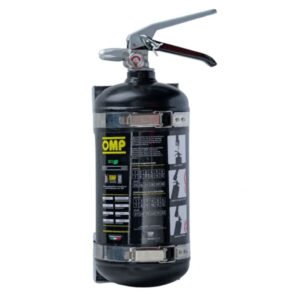
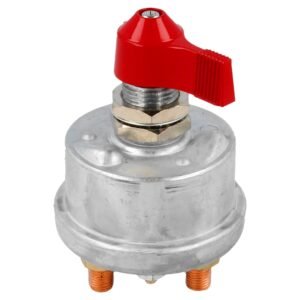
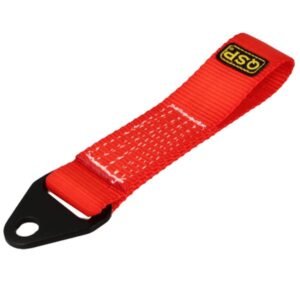
Complete the car with an extinguisher mounted on brackets within the driver's reach, and a towing strap at the rear. Have a battery cut-off switch wired by an auto electrician, so that it also stops a running engine.


Engine and drivetrain
Tune last, after the brakes, suspension and cooling, because more power loads all three. Owners of manual cars report the clutch slipping once the engine is tuned. DSG owners can have the gearbox software tuned with the engine, which also ends the automatic upshift at the limiter. The standard IS20 turbo on the race team's second GTI cracked at about 300 hp. The big-power builds in our research made 343 to 360 hp on IS38-based turbos.
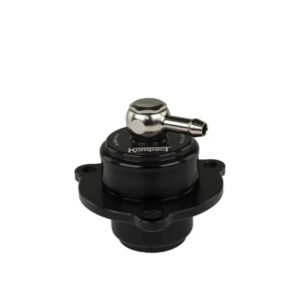
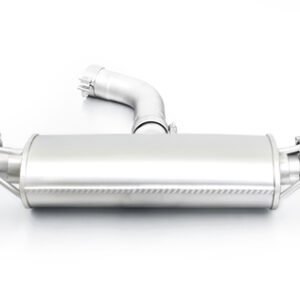
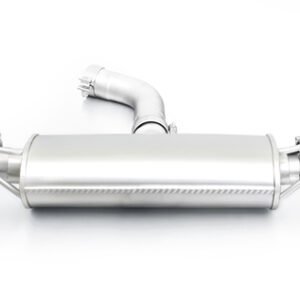
For a tuned engine, we list Turbosmart's Kompact diverter valve for the Mk7 GTI and R: an aluminium, fully recirculating valve in the factory position. A non-Performance GTI with more power needs a limited-slip differential, because the open differential spins the inside wheel. We list Remus cat-backs for both the Mk7 GTI and the 7.5 GTI. Facelift cars with a petrol particulate filter take Remus's GPF-back system.
Noise limits decide which exhaust version suits your circuits, and they vary by event. One organiser's 2026 track days at Donington run 103 dB static and 98 dB drive-by, and at Snetterton 105 dB static and 92 dB drive-by. The Nürburgring's public sessions allow 95 dB(A), measured close to the exhaust. Check the limits before you choose a version without a resonator.


Set-up targets by level
| Setting | Level 1 | Level 2 | Level 3 |
|---|---|---|---|
| Front camber | Most negative the standard parts allow (about −1°) | −2° to −2.5° | −2.5° to −3° |
| Rear camber | Standard | About −1.8° to −2° | −2° to −2.5° |
| Toe | Zero front | Zero front | Zero front and rear |
| Tyre pressure, hot | 32–38 psi (2.2–2.6 bar), by tyre | About 35 psi (2.4 bar); tread centre level with the shoulders' average | The tyre maker's hot window |
| Tyre temperature, inside to outside | — | Inside 5–10 °C hotter | Inside 5–10 °C hotter |
| Front / rear pads | DS2500 / DS2500 on track; Street+ / Street+ on the road where R90 is required | DS3.12 / DS1.11, or RP-1 / RP-1, on track only | As level 2, with floating front discs |
| Brake fluid | DOT 4 race fluid, every 2–3 events | As level 1 | Race fluid, before every event |
| Oil temperature | Watch it; cool-down laps | Breather fix; oil cooler above 120–130 °C | As level 2; log it |
At every track day
- Short sessions. Run 15 to 20 minutes, then a cool-down lap with as little braking as possible.
- No parking brake. Don't leave it on after a session. Park in gear or in P on level ground, so the hot pads do not mark the discs.
- Fluids. Check the oil a few minutes after each session, on level ground, and top up only to the maximum mark. Check the coolant only once the engine has cooled.
- Pads. Check the remaining pad thickness at lunch: a road pad can be worn out within a weekend.
- Tyres and wheels. Read the tyre pressures hot as you come in, and check the wheel torque at lunch.
- Tyre temperatures. Read the inside, centre and outside of each tyre as soon as you stop. The spread tells you about camber, and the centre against the edges about pressure.
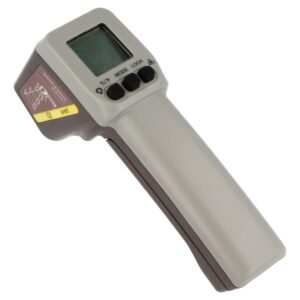
An infrared thermometer reads only the surface, which cools within seconds, so read the tyres straight away and compare the readings with each other.
The parts we have matched to the car by fitment are all on the Golf Mk7 page. The fluids, wheels, studs, engine-bay and safety parts in this guide are only in the lists above.
Frequently asked questions
Do I need a big brake kit for a Mk7 GTI on track days?
Not on a Performance Pack car at standard power. With race fluid, a track pad pair and air to the brakes, owners report the factory 340 mm brakes coping well. The logged GTI did 15 track days on them in about 18 months. Tuned cars are a different matter: one owner says a Stage 1 tune already pushes the factory brakes, and the race team found them struggling at 300 hp. A big brake kit pays off on tuned cars and in long races.
Which brake pads suit a Mk7 GTI that is driven to the track?
Most owners settle on the Ferodo DS2500, a track-day pad that works from cold. Ferodo gives it no ECE R90 approval and does not recommend it for road use in countries that require R90. In those countries, fit an R90 pad such as Pagid's Street+ or DBA's Xtreme Performance for the road, and change to the DS2500 for track days. Race pairs such as Ferodo DS3.12 front with DS1.11 rear are for the circuit only: fit them there and drive home on road-approved pads.
How much camber does a Mk7 Golf need on track?
The standard car stops at about −1° at the front. Owners run −2° to −2.5° on track, and dedicated cars −3°. Getting there needs adjustable top mounts, such as those on the ST XTA coilover, or other aftermarket or factory parts.
Why does my Mk7 smoke under braking on track?
Under long braking, oil collects at the front of the cylinder head and is pulled through the crankcase breather into the intake. Keep the oil at the maximum mark and never above it, and fit a catch can. The logged GTI's owner cured it with the Mk8 Golf's breather valve, but that is still one owner's experiment.
Wheel bolts or studs for track days?
Bolts are fine for occasional days. If you change wheels at every event, studs spare the hub threads and make changes quicker and safer. Fit the studs with a high-temperature thread locker to the stud maker's torque, and let it cure as its maker specifies. Torque the nuts to 120 Nm and check them again after the first hot session. Match the nut seat to the wheel and the stud length to the nut, and replace the studs every season.
Does a Mk7 GTI need an oil cooler?
For occasional days, cool-down laps are usually enough. Golf R owners see 117 to 138 °C on track, and the race team's tuned GTI reached 130 °C after 15 to 20 minutes on a cool day. For regular track days, or once the oil sits above 120 to 130 °C, fit an oil cooler kit made for the EA888. Mount it where it does not heat the intercooler.

Store Information
TrackTool Factory
Sluispolderweg 7A
1505 HJ Zaandam
The Netherlands
KvK 97296902
BTW NL867990375B01
