Engine Internals · ARP
Engine Accessory Hardware
- 73 products
- 3 brands
- Ships from EU stock
- Engine Accessory Hardware guide
Top brands in Engine Accessory Hardware



Popular cars in Engine Accessory Hardware
- Honda Civic EKEngine Accessory Hardware for the Honda Civic EK: 1 product
- Honda Civic EGEngine Accessory Hardware for the Honda Civic EG: 1 product
- Honda Civic EDEngine Accessory Hardware for the Honda Civic ED: 1 product
- Honda Integra DCEngine Accessory Hardware for the Honda Integra DC: 1 product
- Honda CRX EDEngine Accessory Hardware for the Honda CRX ED: 1 product
- Honda CRX EHEngine Accessory Hardware for the Honda CRX EH: 1 product
- Honda CR-V RD1Engine Accessory Hardware for the Honda CR-V RD1: 1 product
- Honda Integra DAEngine Accessory Hardware for the Honda Integra DA: 1 product


Hybrid Racing- Formula Coil Pack Cover (00-08 S2000)

ARP Sport Compact M10 X 1.25 X 55mm Stainless Accessory Studs (8 Pack)


ARP 5 HP Briggs And Straton Jr Dragster SS 12pt Acc Kit

ARP Sport Compact M8 X 1.25 X 57mm Stainless Accessory Studs (8 Pack)

ARP M10 X 1.25/1.50 X M55 Stainless Steel Accessory Studs (8 Pack)

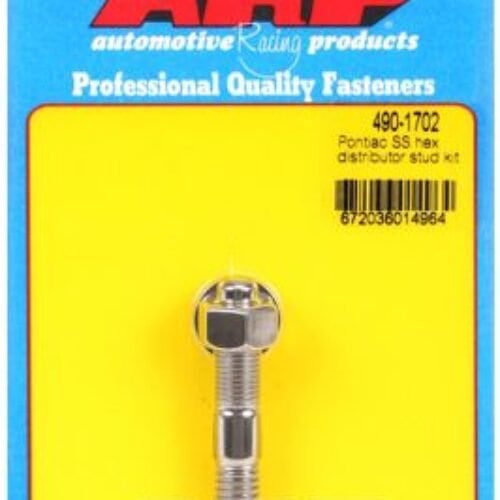


ARP Suzuki/Hayabusa GSX1300R SS 12pt Accessory Bolt Kit

ARP Sport Compact M8 X 1.25 X 51mm Stainless Accessory Studs (4 Pack)

ARP Sport Compact M8 X 1.25 X 51mm Stainless Accessory Studs (8 Pack)
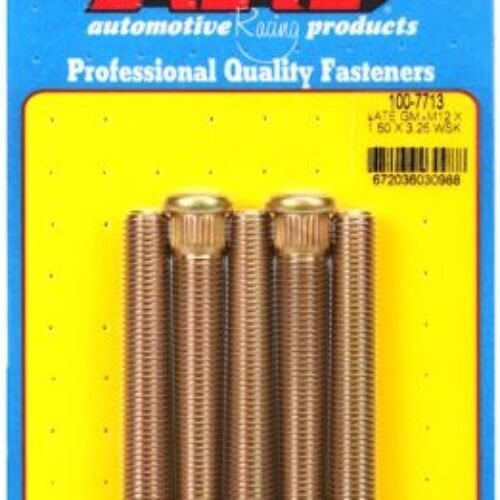
ARP Late Model GM/Camaro/Firebird/Corvette M12x1.50in Wheell Stud Kit

ARP Sport Compact M10 X 1.25 X 48mm Stainless Accessory Studs (8 Pack)
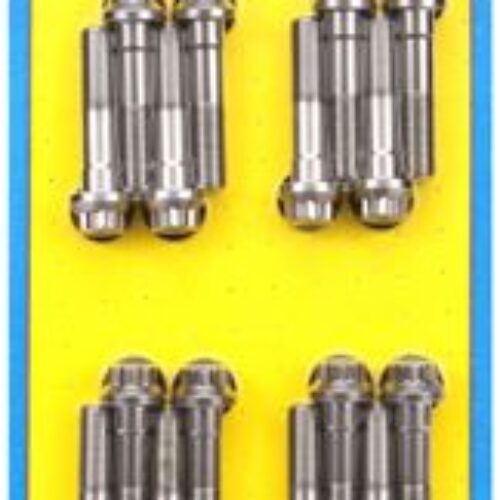
ARP L19 Venolia/Brooks/KB Aluminum Rod Replacement Bolts


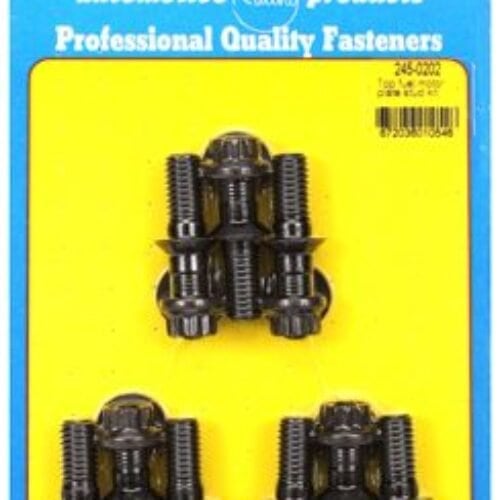
top Fuel Motor Plate W/1/4″ Spacer Stud Kit


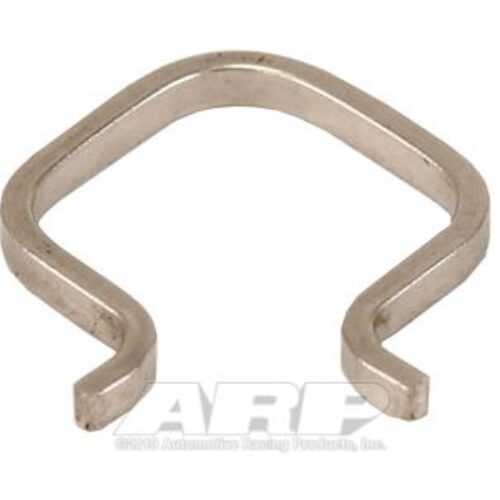

5 HP Briggs & Straton Jr Dragster SS Hex Acc Kit

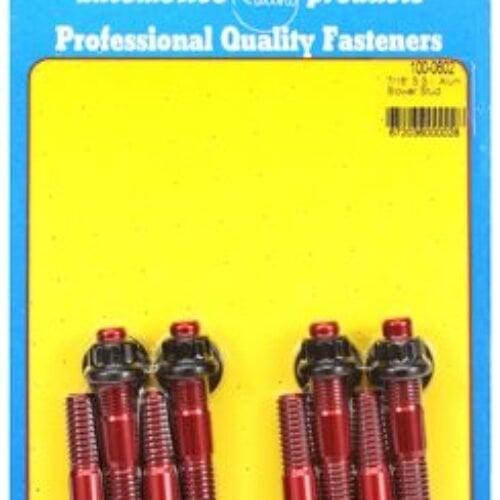
ARP Break-Away Blower Stud Kit Alu 7/16×2.500″


Muncie 4-SPD ’63-68 Case Bolt Kit Black Oxide Hex

Muncie 4-SPD ’63-68 Case Bolt Kit Stainless Hex


Muncie 4-SPD ’69-75 Case Bolt Kit – Black Oxide Hex


Muncie 4-SPD ’69-75 Case Bolt Kit Stainless Hex
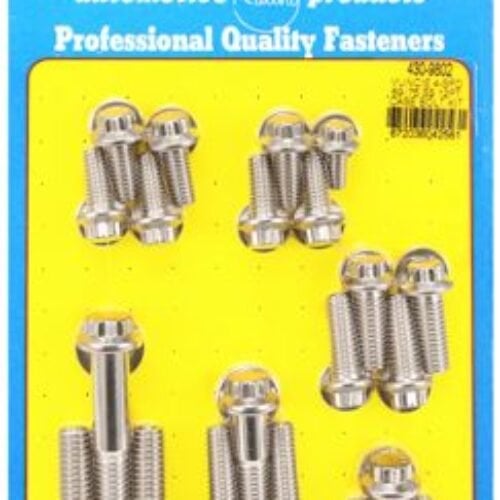
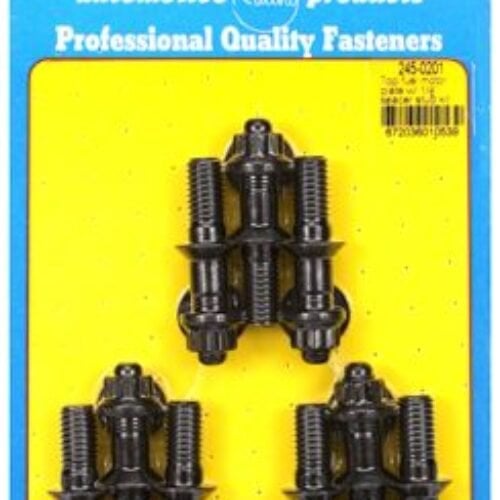

Wilwood Drive Plate Bolt. 7/16. Drilled 12 Pt. 5pcs
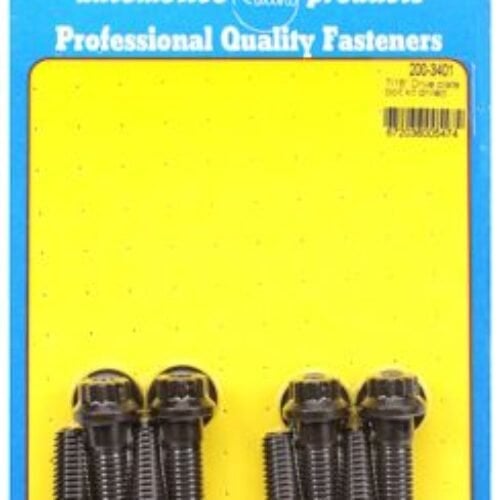
Wilwood Drive Plate Bolt. 7/16. Drilled 12 Pt. 8pcs
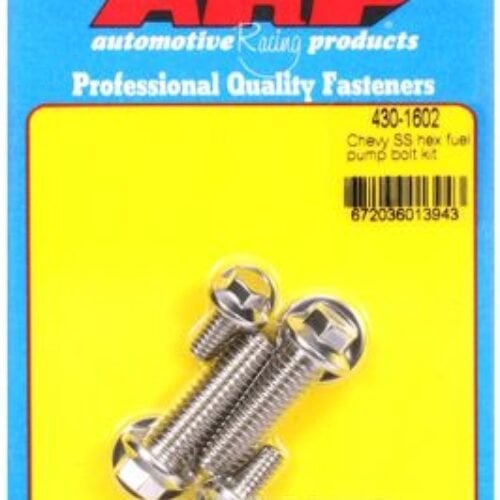

ARP Chevy LT1 6.2L Ignition Coil 12pt Stainless Steel Bolt Kit

ARP Chevy LT1 6.2L Ignition Coil Hex Stainless Steel Bolt Kit
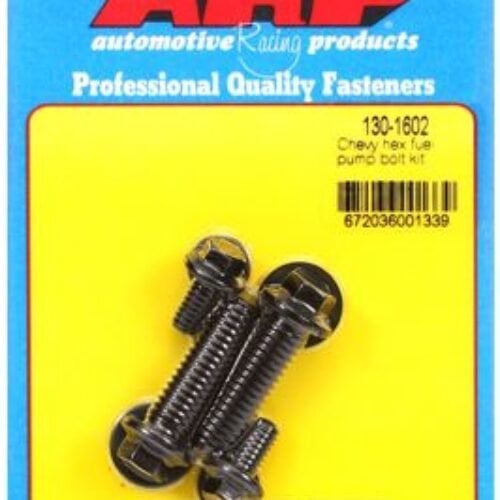

ARP Chevy Small Block LS Series 12pt Engine And Accessory Bolt Kit
Engine Accessory Hardware guide
Engine accessory hardware fastens the parts mounted on the outside of the engine and gearbox: ignition coils, distributors, mechanical fuel pumps, superchargers, valve covers and transmission cases. ARP bolt and stud kits replace the factory hardware on these parts, and universal stainless accessory studs are listed alongside.
Accessory joints are rarely highly loaded, but they live with constant vibration. Their usual failure is self-loosening: each time the joint slips sideways under vibration, the fastener turns back a little. Enough clamp load stops the slip, and matched fasteners tightened to one figure make that clamp load consistent across the joint.
Studs help in two ways. They locate a heavy part, such as a supercharger or a bracket, while it is lowered into place, and they spare aluminium threads from repeated removal. A common rule of thumb is that a steel fastener in aluminium needs thread engagement of about twice its diameter.
The titles describe each kit:
- Engine and gearbox kits: coil and coil-bracket bolts, distributor studs, fuel pump bolts, valve cover bolts, case bolts and studs, and transmission mount studs.
- Universal studs: stainless accessory studs in packs of 8, such as M8 x 1.25 in 51 mm or 57 mm lengths, and M10 x 1.25 at 48 mm.
- Supercharger studs: aluminium blower stud kits, such as 7/16 x 2.500 in or 7/16 x 2.880 in, including a break-away version.
- Finish and head: black oxide or stainless steel, with 12-point or hex heads in socket sizes such as 3/8 in, 1/2 in, 8 mm and 12 mm.
- Other items: plate retaining clips in 1/4-28 and 10-32, a drive flange kit, an M12 x 1.50 wheel stud kit and coil pack covers.
Tighten to the figure for the part being clamped, not to what a strong fastener could take. A thin bracket or an aluminium thread can give way long before the fastener does. Fit studs finger-tight, using a hex key where they have a socket in the end. Use thread-locking compound where the original assembly called for it, and the specified lubricant elsewhere.
On a gearbox case, tighten the bolts gradually in a cross pattern so the halves pull together evenly. After fitting, make sure no wiring, hose or cable is trapped, and re-check the fasteners after the first run.

Store Information
TrackTool Factory
Sluispolderweg 7A
1505 HJ Zaandam
The Netherlands
Chamber of Commerce (KVK): 97296902
VAT: NL867990375B01