
Fits your 3 BL · 2008–2014
Pressure Plates for Mazda 3 BL
- 2 parts fit
- Ships from EU stock
- Pressure Plates guide
- All 22 in Pressure Plates
Showing all 2 resultsSorted by latest

Pressure Plates guide
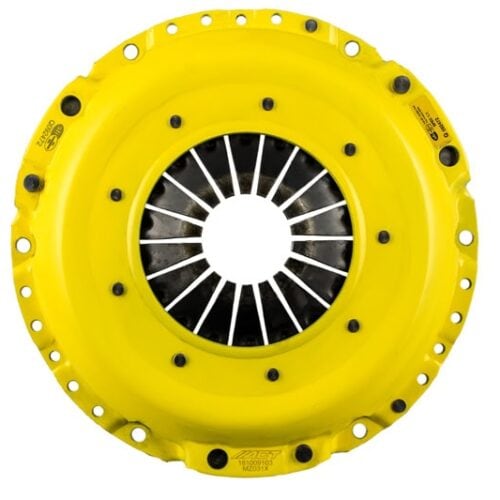
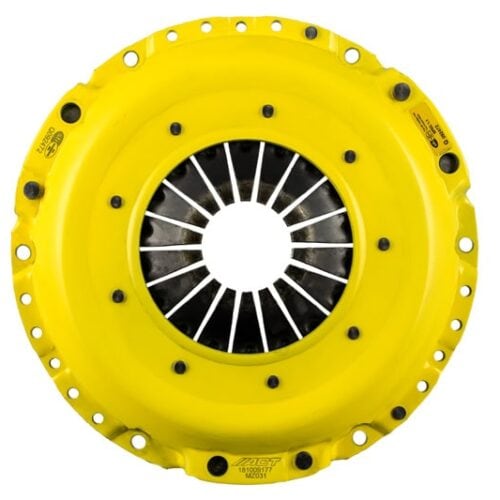
The pressure plate, or clutch cover, bolts to the flywheel and clamps the disc against it with a diaphragm spring. Pressing the pedal relieves that clamp so the disc can turn freely. The plates here come in two uprated grades, both made to hold more torque than a standard cover.
Clamp load is the factor the pressure plate controls. With the same disc, doubling the clamp load in theory doubles the torque the clutch can hold before it slips. Uprated plates raise the load through a stiffer diaphragm spring or changed leverage, which normally means a heavier pedal and more work for the release bearing, fork and hydraulics.
A diaphragm spring’s release force rises to a peak and then eases as the fingers travel, which shapes the effort you feel at the pedal. The clamp load also depends on the spring’s installed height, which changes as the disc wears thinner. Past the wear limit it falls away, and even a sound cover will slip.
When choosing, consider:
- Grade: the base grade suits moderate gains in torque. The stronger grade, marked by an X at the end of the part number, suits larger gains or harder use.
- Disc match: pair the plate with a disc of the same diameter and a friction material that suits the load and the car’s use.
- Release system: a heavier plate needs a release bearing, fork and hydraulics in good order, and a driver who accepts the extra pedal effort.
- Part number: each plate is listed by part number, so confirm it against the car and engine before ordering.
Locate the cover on its dowels, centre the disc with an alignment tool, and tighten the bolts a turn or two at a time in a diagonal pattern. That way the cover pulls down evenly without distorting. Use new bolts where the maker calls for them, and torque them to the specified figure.
Never reuse a plate whose friction face is cracked, heat-blued or deeply scored. A plate normally goes in with a new disc and release bearing, because the three wear together.
Recently Viewed Products
22+ Volkswagen GTI MK8 (MQB) Performance Intercooler Kit, P – MMINT-MK8-22KP
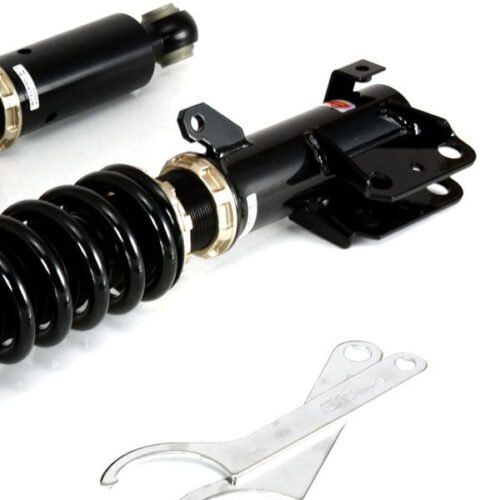
BMW 120/130i 04-13 M52.6 Coilover Kit BR-RA – I-11-BR-RA

Store Information
TrackTool Factory
Sluispolderweg 7A
1505 HJ Zaandam
The Netherlands
KvK 97296902
BTW NL867990375B01
