
Top brands in Mirrors


Popular cars in Mirrors
- Honda Civic EKMirrors for the Honda Civic EK: 4 products
- Honda Civic EGMirrors for the Honda Civic EG: 4 products
- Honda Civic EJMirrors for the Honda Civic EJ: 4 products
- Honda Civic EDMirrors for the Honda Civic ED: 2 products
- Honda CRX EDMirrors for the Honda CRX ED: 2 products
- Honda Integra DCMirrors for the Honda Integra DC: 1 product
Showing all 15 resultsSorted by latest




Side Mirrors Carbon Spoon (Manual) (Civic 95-01 2/3dr)

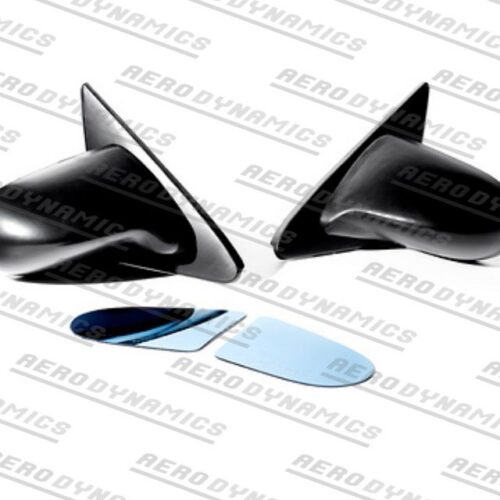
Aerodynamics – Spoon Side Mirrors ABS (Manual) (Civic 87-91 3dr/CRX 87-93)

Aerodynamics – Spoon Side Mirrors ABS (Electrical) (Civic 91-96 2/3dr)
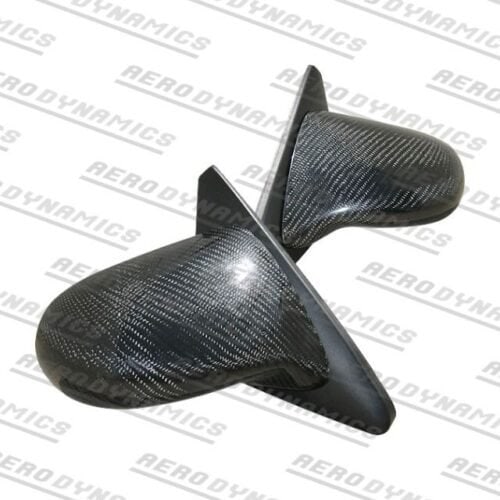
Aerodynamics – Spoon Side Mirrors Carbon (Manual) (Civic 91-96 2/3dr)


Mirrors guide
Aero side mirrors replace the factory door mirrors with compact, streamlined housings on slim stalks. They reduce frontal area and weight a little and give the car a cleaner side view. The range holds ABS and carbon mirrors with manual or electric adjustment, along with replacement glass, mirror brackets and rubber fillers.
A door mirror sits in fast air beside the A-pillar, so its size and shape affect drag and the turbulence along the side windows. A small aero housing presents less area to the flow, although the gain on a whole car is modest. The trade-off is a smaller glass and a narrower field of view, which matters in traffic and when faster cars close in on a track day.
Mirrors for road use must give a minimum field of view, and approved units carry an E-mark. Check the marking and your local rules before fitting a smaller mirror to a road car.
Four details decide the right pair:
- Adjustment: electric versions are set from a mirror switch and need matching wiring, while manual ones are set by hand.
- Housing: ABS can be painted to match the body, while carbon saves a little more weight and is usually finished in clear lacquer.
- Model and doors: each pair is listed for a model generation and door count, as the mirror mounting changes between generations.
- Brackets and spares: mirror brackets in 45 or 51 mm diameter, a rubber filler set for the brackets, and replacement glass for the aero mirrors.
Seal the base to the door so water cannot run inside, and pass electric wiring through the factory grommet. Tighten the fixings evenly so the housing does not shake, then set the glass from the normal driving position. On the first fast drive, check that the image stays steady and the glass sits firmly in its housing. Wash carbon housings with mild soap and protect the lacquer with wax.
Recently Viewed Products


Store Information
TrackTool Factory
Sluispolderweg 7A
1505 HJ Zaandam
The Netherlands
KvK 97296902
BTW NL867990375B01
