Top brands in Wastegate Spring Kits

Showing all 19 resultsSorted by latest

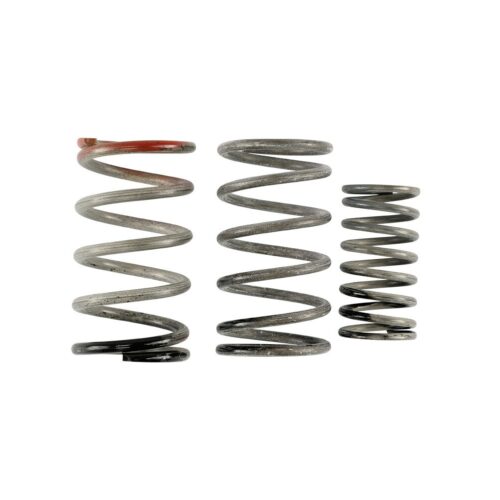




Gen4 / IWG WG38/40/45/50L 7PSI OUTER SPRING – BROWN/PINK
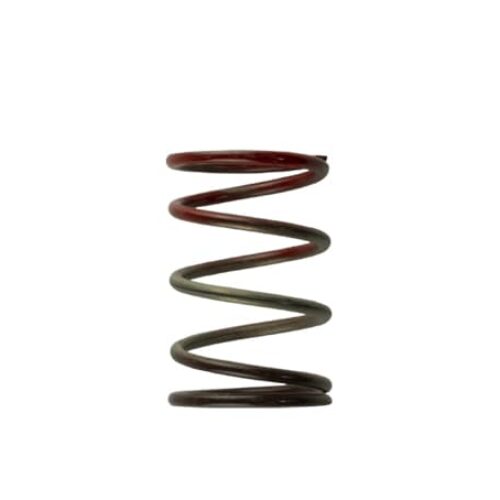
Gen4 / IWG WG38/40/45/50L 11PSI MIDDLE SPRING – BROWN/RED

Gen4 / IWG WG38/40/45/50L 7PSI MIDDLE SPRING – BROWN/PURPLE


Gen4 IWG and WG38/40/45/50L Spring Replacement Kit

Gen4 / IWG WG38/40/45/50L 10PSI OUTER SPRING – BROWN/BLUE
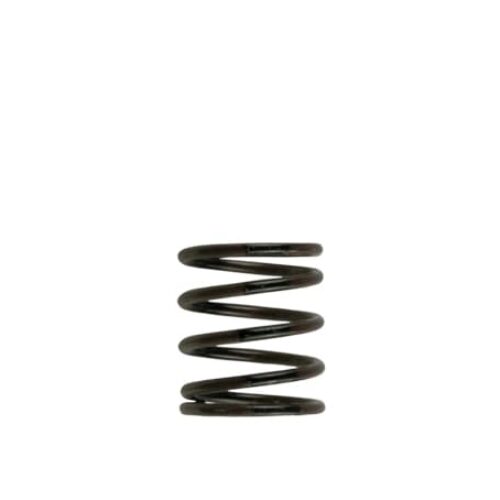
Gen4 / IWG WG38/40/45/50L 3PSI INNER SPRING – BROWN/BLACK
Wastegate Spring Kits guide
The spring in a wastegate sets the base boost, because the valve stays shut until boost acting on the diaphragm overcomes the spring’s force. Spring kits let you move that point up or down, or renew springs that have weakened with heat. This section holds single springs and complete kits for external wastegates and internal wastegate actuators.
Without a controller, the spring alone holds the valve shut against boost on the diaphragm and exhaust pressure on the valve face. A spring that is too soft lets the valve crack open early, so boost builds more slowly and can fall away at high engine speed. A spring that is too firm sets a floor, because a controller fed only by boost pressure cannot bring boost below its rating. Many gates use nested inner, middle and outer springs, and their ratings roughly add up.
Pick by gate, then pressure:
- Gate and generation: springs are listed for 38/40, 45/50 and 60 mm gates and internal actuators, in two generations. Match both.
- Earlier generation: inner, middle and outer springs from 3 to 11 psi, each with a two-colour code, such as brown/blue for the 10 psi outer spring.
- Later generation: 3 and 7 psi springs for 45/50 mm gates and 3, 5 and 14 psi springs for internal actuators. Springs of 10, 25 and 40 psi suit particular gate versions named in the title.
- Complete kits: a set of springs for one gate size or actuator, useful for building a combination on a rolling road or renewing tired springs in one go.
Choose the combination that gives the lowest boost you will ever run, such as a safe setting for low-octane fuel, and let the controller add the rest. Keep the gap between spring and target moderate, as a very soft spring leaves the controller more work and makes boost less stable. On high-boost engines, a firmer spring also helps keep the valve seated against the higher exhaust pressure.
The top cap sits under spring load, so release its screws or collar gradually and evenly. Seat each spring on its locating step, inspect the diaphragm and O-rings while the gate is open, and refit the cap so it sits square. Note the combination you fitted, then check the new base boost with the controller at its minimum setting before raising it.
Recently Viewed Products


Store Information
TrackTool Factory
Sluispolderweg 7A
1505 HJ Zaandam
The Netherlands
Chamber of Commerce (KVK): 97296902
VAT: NL867990375B01