
Turbo
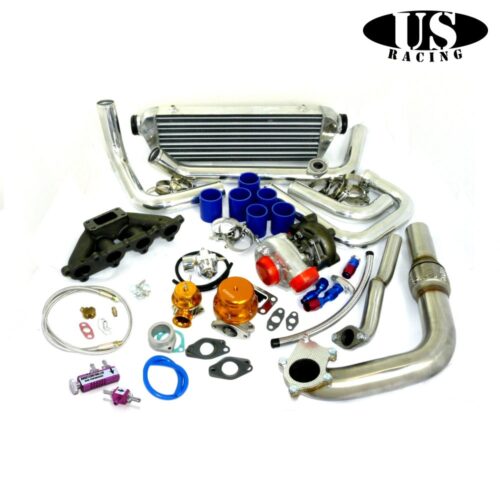
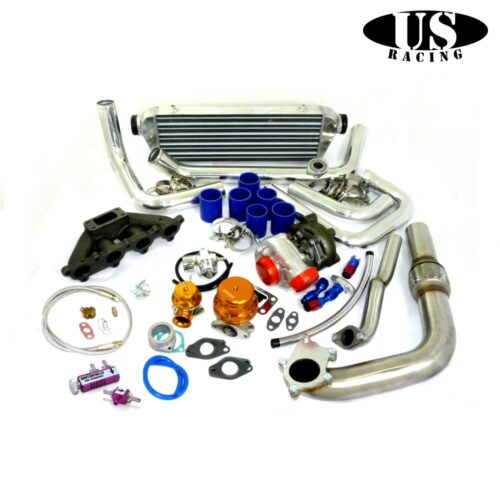
A turbocharger uses energy in the exhaust to drive a compressor that pushes more air into the engine. This section covers the turbo itself and everything that controls, feeds and protects it: wastegates, blow-off valves, boost controllers, actuators, oil lines, gaskets, clamps and heat shielding. It also has the housings, compressor wheels and centre-section kits used to rebuild or re-specify a turbo.
Choosing a turbo starts with the power target and the engine size, which point to a frame size. Then match the ends: the turbine housing flange to your manifold, the outlet to your downpipe, and the compressor inlet and outlet to the intake and charge pipes. The turbine housing’s A/R is the main tuning choice on the hot side. A smaller figure favours earlier boost; a larger one favours flow at high revs. The listings also give the bearing type, which affects the oil supply the turbo needs.
A bigger turbo is rarely the only change:
- the fuel system has to keep up, so check the injectors and pump;
- the intercooler and charge pipes need to carry the extra air;
- the exhaust manifold studs and gaskets see more heat;
- the engine calibration must be redone.
Boost has to be controlled by a wastegate sized for the flow, and a blow-off or diverter valve looks after the compressor when the throttle closes. Heat shields and blankets protect nearby wiring, hoses and brake lines.
Showing all 2 resultsSorted by latest


Store Information
TrackTool Factory
Sluispolderweg 7A
1505 HJ Zaandam
The Netherlands
KvK 97296902
BTW NL867990375B01
