
Coilovers
A coilover combines spring and damper in one unit, usually with a threaded body so that ride height can be set by moving the spring seat. Depending on the design, the damping is fixed or adjustable, and some systems are controlled electronically.
To choose, start with how much adjustment you will actually use:
- Height-only coilovers set the stance and leave the damping as supplied.
- Sets that adjust damping as well let you firm up for a track day and soften again for the road.
- Electronically controlled systems suit cars that already have adaptive dampers from the factory.
Where the product data records it, you will also see monotube or twin-tube construction, spring rates in kg/mm and the approval paperwork, such as a TÜV certificate or part type approval.
Coilovers are specific to body style as well as model, and often to drivetrain. Check that a set is listed for your hatchback, estate, saloon, coupé or convertible, and for two- or four-wheel drive where that matters.
Setting up is part of the job. After fitting, set the ride height evenly side to side, then have the alignment done, and on a track car the corner weights as well. Adjustable top mounts or camber plates help if you want more negative camber than the standard mounts allow. Adjustable drop links keep the anti-roll bars level on a lowered car. Cars with factory adaptive dampers need either an electronic coilover system or a cancellation kit to avoid warning lights.
Showing all 7 resultsSorted by latest
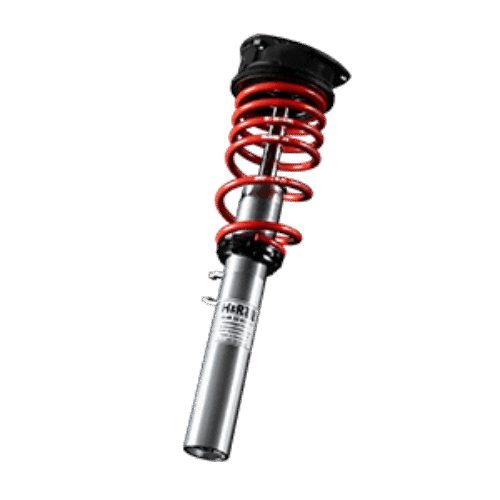
H&R Monotube HONDA CIVIC Type MA/MB/MC 29928-2
H&R Monotube HONDA CIVIC Type EG/EH/EJ/EK 29928-1






Store Information
TrackTool Factory
Sluispolderweg 7A
1505 HJ Zaandam
The Netherlands
KvK 97296902
BTW NL867990375B01
