
Exhaust Headers
An exhaust header replaces the cast manifold of a naturally aspirated engine with individual steel pipes, called primaries, that merge into a collector. Shaped and sized well, it uses the engine’s own exhaust pulses to help empty the cylinders. Alongside direct-fit headers, the range includes universal collectors, gaskets, flexible joint parts and manifold stud kits.
When a pulse reaches the collector, a low-pressure wave travels back up the primary. If the pipe length is right, that wave arrives at the exhaust valve during valve overlap and helps pull out the burnt gas, which is called scavenging. Pipe length and diameter set the engine speed at which this works most strongly.
A 4-1 header joins all four primaries in one collector and usually favours high revs. A 4-2-1 header first pairs the cylinders that fire furthest apart, then joins the two pairs, which tends to spread the gain across a wider mid-range.
Choose by layout and the parts around it:
- Layout: 4-1 or 4-2-1. Where the material is listed it is stainless steel, in some cases polished SUS 304. Some have a 2.5″ collector outlet or two lambda sensor bosses, and some come with gaskets.
- Universal collectors: 4-1 collectors take primaries of 38, 42, 45 or 48 mm into a 63.5 mm outlet, for building a header of your own.
- Gaskets: header gaskets, two-piece header gaskets and plates, and donut (ring) gaskets of 45, 51, 60 and 63 mm for the joint between header and mid-section.
- Flexible joint parts: springs and M8 × 70 mm bolts for a spring-loaded joint, which lets the system flex as the engine moves.
- Stud kits: eight-piece M8 × 1.25 kits in 32 or 38 mm lengths, with 10 mm 12-point nuts. The broached studs take a 3 mm hex key, so they can be screwed into the head without a stud tool.
Offer the header up before fitting the gasket, and check its clearance to the steering shaft, brake lines and subframe. Screw the studs into the head by hand, then tighten the nuts in steps from the centre outwards. A spring-loaded joint needs its bolts tightened until the springs reach the stated length, not until they are solid.
Re-tighten the nuts after the first heat cycles if the gasket maker asks for it, and route wiring and hoses well away from the primaries. A header without road approval is for competition use where the rules allow. Where the original manifold has a catalyst built in, a header without one also removes it.
Showing all 9 resultsSorted by latest


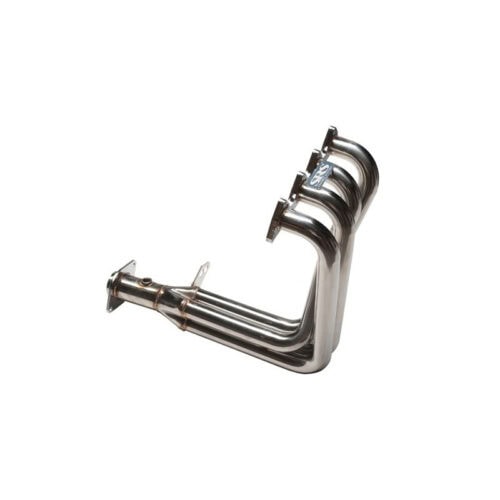

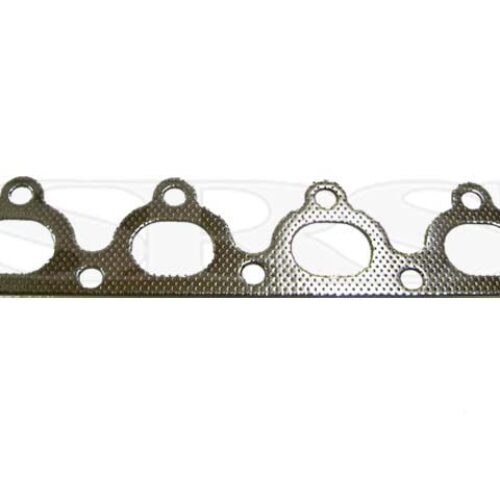

4-1 Header Stainless Steel (Honda D-Engines)

Recently Viewed Products

ARP GM Turbo 350 / 400 W/ Aftermarket Convert Torque Converter Bolt Kit
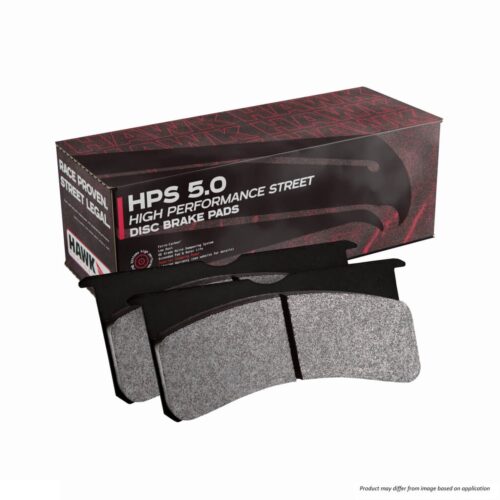
HB543B.760 – Hawk HPS 5.0 Brake Pads; Front
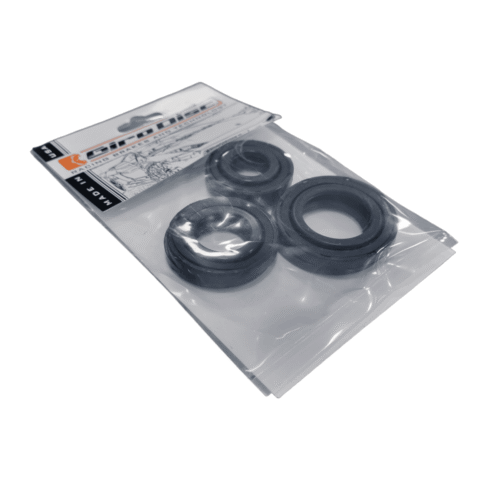
CCRK1-091 – Girodisc Caliper Rebuild Kit; Front

Store Information
TrackTool Factory
Sluispolderweg 7A
1505 HJ Zaandam
The Netherlands
KvK 97296902
BTW NL867990375B01
