
Fits your Impreza GH · 2007–2014
ECUs for Subaru Impreza GH
- 5 parts fit
- Ships from EU stock
- ECUs guide
- All 134 in ECUs
Showing all 5 resultsSorted by latest



ECUs guide
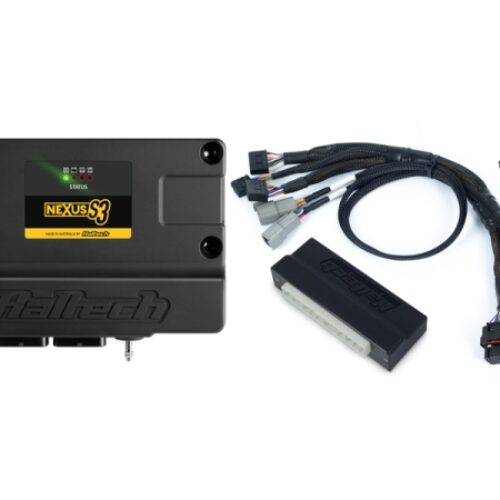
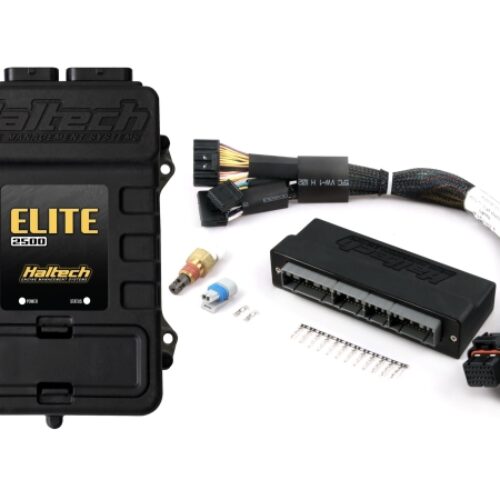
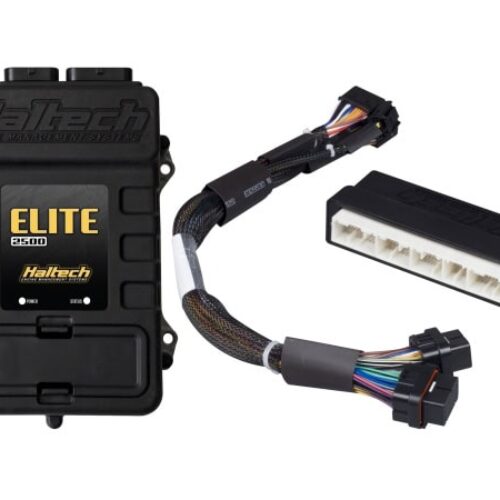
A standalone ECU replaces the factory engine computer with a fully programmable one. It runs fuel injection and ignition timing and, depending on the build, idle speed, boost, electronic throttle, variable cam timing and engine protection. This section holds the units, alone or in kits with the harness, adapter or plugs they need.
The ECU reads crank and cam position, throttle angle, manifold pressure, temperatures and lambda, then sets injector pulse width and spark advance for each firing event. With every table open, it can be mapped for larger injectors, a different turbo, new cams or another fuel. Over CAN it can share data with a dash, expanders and a power distribution module.
On a track car the protection strategies matter as much as the maps. The ECU can cut power, hold rpm or lower boost when oil pressure, fuel pressure, coolant temperature or lambda leave their safe band. A log then shows what happened.
Choose the wiring route first, then the size of unit:
- Plug-and-play adapter kits: an adapter harness joins the ECU to the car’s own loom. Kits are listed by model, chassis or engine code.
- Direct plug-in units: the ECU itself takes the factory plugs in place of the original computer, for the model named in the title.
- Terminated harness kits: the ECU comes with a ready-made engine loom for one engine family, some drive-by-wire ready and others for a cable throttle.
- Universal wire-in kits: the ECU with a 2.5 m (8 ft) flying-lead harness, for swaps and custom builds. Bare units, alone or with a plug and pin set, suit a loom made from scratch.
- Size of unit: kits are listed for four-, six- and eight-cylinder engines and for rotaries. Larger units add inputs and outputs, so count what the engine needs first.
- Engine-specific units: some units are built around one engine family, named in the title, with matching harnesses and adaptors listed separately.
Mount the ECU where it stays cool and dry, usually in the cabin, away from ignition parts, and give it its own fused and relayed supply. Run power grounds as the diagram shows, and return sensor grounds to the ECU’s sensor ground pins. Shield crank, cam and knock wiring, grounding the shield at the ECU end only.
Before the first start, check every input in the software and test injectors and coils. Once it cranks, confirm the timing with a timing light. Set protection limits before any full-load dyno run, and save every map version.

Store Information
TrackTool Factory
Sluispolderweg 7A
1505 HJ Zaandam
The Netherlands
KvK 97296902
BTW NL867990375B01
