
Sway Bars
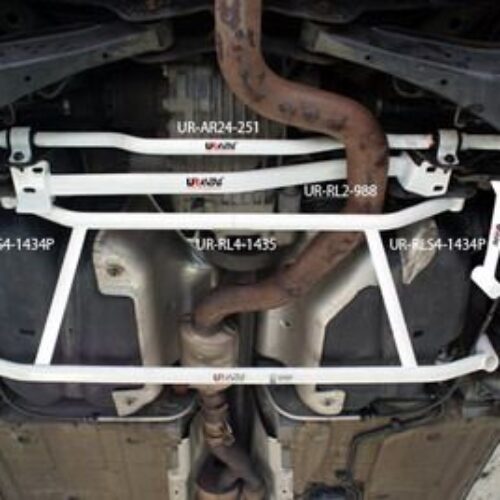
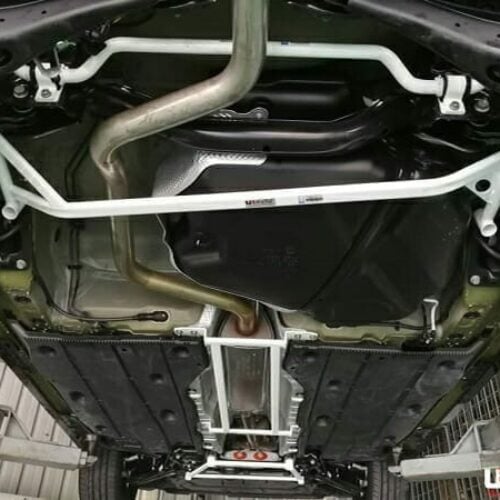
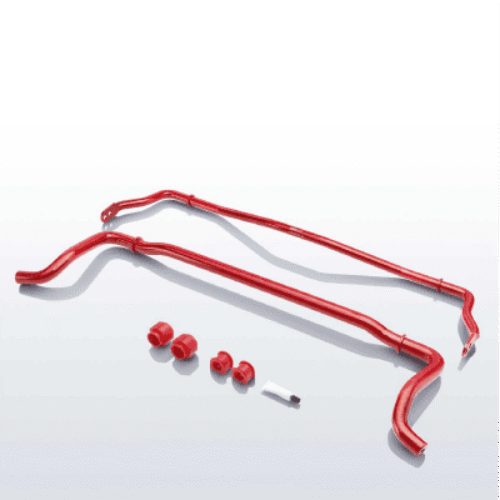
An anti-roll bar, or sway bar, links the left and right suspension on one axle. When the car leans in a corner the bar twists and resists the roll, keeping the body flatter; when both wheels rise together over a bump, it does very little.
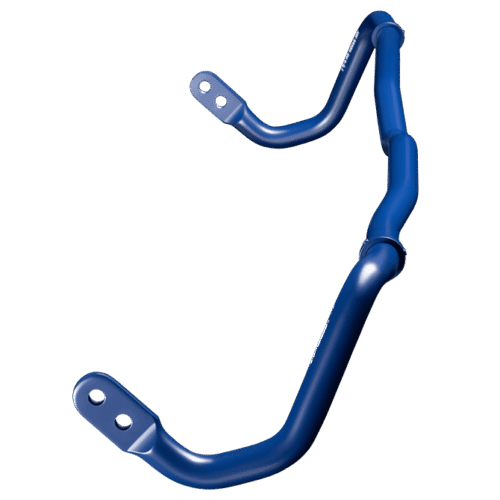
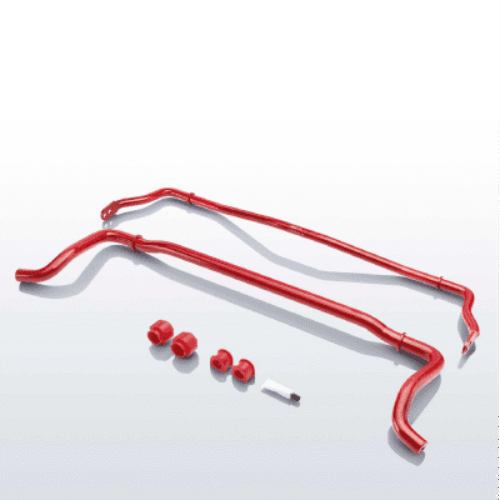
Bars are sold per axle, front or rear, or as front-and-rear kits, and are listed by diameter. A thicker bar of the same design is stiffer, and the stiffness rises steeply with diameter. Some bars are adjustable, with two or three mounting holes at the ends, so the stiffness can be changed without buying another bar. Many kits also show their approval paperwork in the product data, such as a TÜV certificate, a part type approval or a general operating permit.
The front-to-rear balance is what changes the handling. A stiffer front bar tends to add understeer, the car pushing wide at the front, while a stiffer rear bar tends to reduce understeer or bring in oversteer. Change one end at a time and drive the car before going further; with an adjustable bar, start from the middle setting.
When fitting, set the drop links so that the bar is not twisted with the car at rest on its wheels, which on a lowered car usually means adjustable links. Fit new bushes with the bar, greased if the maker says so, and check the clearance to brake lines and the exhaust through the full suspension travel.
Showing all 11 resultsSorted by latest


H&R Stabi.kit Golf VI. SCIROCCO 33014-2
H&R Stabi.kit AUDI A3 8P.GOLF V 1K + R32. 4WD 33220-1
H&R Stabi.kit Golf VI. SCIROCCO 33014-1





Store Information
TrackTool Factory
Sluispolderweg 7A
1505 HJ Zaandam
The Netherlands
KvK 97296902
BTW NL867990375B01
