

Fits your Civic MA · 1994–2001
Control Arm Bushings for Honda Civic MA
- 1 part fits
- Ships from EU stock
- Control Arm Bushings guide
- All 23 in Control Arm Bushings
Showing the single result
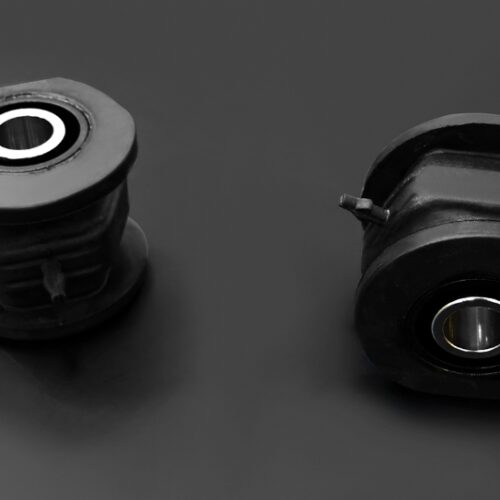

Control Arm Bushings guide
Control arm bushings are the flexible joints between a suspension arm and the subframe or body. They let the arm pivot while resisting movement in other directions. Firmer replacement bushes for upper and lower arms are listed by position, including compliance and tension rod bushes.
An original rubber bush is a compromise. It has to pivot, soak up noise and impacts, and still hold the wheel against cornering, braking and drive forces. Under load the rubber deflects, so camber, toe and caster shift slightly, and age and wear make that movement larger and less predictable.
A firmer bush deflects less, so the alignment stays closer to its set values under load and the steering answers more directly. The trade-off is more noise, vibration and harshness in the cabin. Bush materials run along that scale, from soft rubber through firmer rubber and polyurethane to metal spherical joints, each step more precise and less forgiving.
The large rear bush of many front lower arms is a compliance bush, deliberately soft fore and aft so the wheel can give over bumps. Firming it steadies caster and toe under braking, but impacts reach the body more sharply. A tension rod bush carries braking loads; when it wears, the wheel shifts back under braking, which shows as pull, wander or a clunk.
To find the right bush:
- Position: titles give the axle, the arm and, where an arm has two bushes, front or rear. Each position does a different job, so match the title to the bush being replaced.
- Vehicle: the models a bush is listed for are in its title; confirm against the original part before ordering.
- Use: these bushes are firmer than the originals, which suits fast road and track driving. On rough roads, the extra harshness shows most at the compliance and tension rod positions.
- Pairs: replace bushes across the axle together so both sides behave the same.
Pressing bushes needs a press or a proper bush tool, with the arm supported close to the bore so it does not bend. Clean the bore, check it for cracks or ovality, and use only the lubricant the bush maker allows.
Tighten pivot bolts with the car on its wheels or the hub jacked to ride height. A bush clamped at full droop is twisted at ride height, which wears it early and can lift the car slightly. Have the alignment checked afterwards, as new bushes can move camber, toe and caster.
Recently Viewed Products
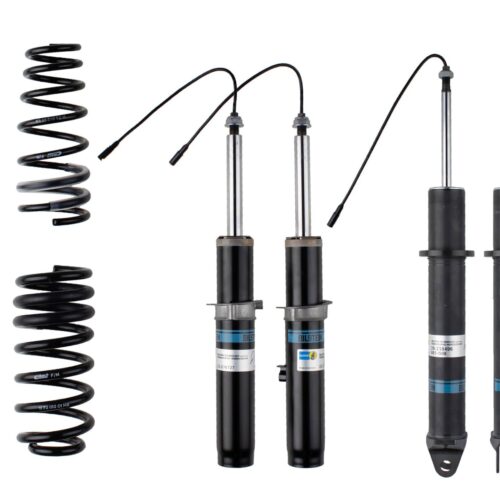
Bilstein B12 Pro-kit Porsche 911 (991) 3.4 . 3.8 4S +PASM
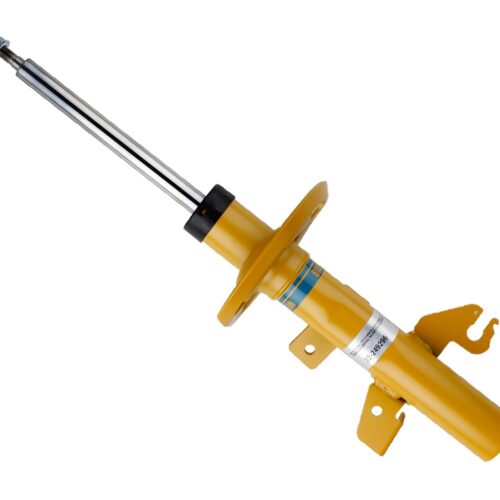


Hybrid Racing- Hybrid Racing Formula Exhaust System (17-21 Civic Type-R)

Store Information
TrackTool Factory
Sluispolderweg 7A
1505 HJ Zaandam
The Netherlands
KvK 97296902
BTW NL867990375B01
